

13 Apr What are the 4 main environmental systems on the planet?
Reviewed 4 October 2026 · Current ESS SL and HL course, first assessment 2026.
The four main environmental systems commonly used to introduce Earth system science are the geosphere, atmosphere, hydrosphere and biosphere. These spheres interact through transfers of matter and energy; they are not isolated compartments.
Four main environmental systems: a clear overview
Geosphere: rocks, soils and Earth’s interior
The geosphere includes rocks, sediments, soils and the deeper Earth. The mantle is mostly solid rock that can deform and move slowly; it is not a globally molten layer. Earth has a liquid outer core and a solid inner core. See NASA’s Earth facts and its explanation of Earth’s layers.
Weathering, erosion and tectonic processes change Earth’s surface. Soil also illustrates interactions: mineral material, water, air and living organisms contribute to its properties and processes.
Atmosphere: the envelope of gases
The atmosphere is the gaseous envelope around Earth. It exchanges energy and matter with other spheres and is involved in weather, climate and the movement of moisture.
Evaporation transfers water into the atmosphere. Condensation and precipitation connect atmospheric processes to water on land and in oceans. Avoid confusing the atmosphere’s composition with the separate question of how energy moves through the Earth system.
Hydrosphere: water in its different forms
The hydrosphere includes Earth’s water in liquid, solid and gaseous forms, including oceans, rivers, lakes, groundwater, ice and water vapour. Frozen water is often considered separately as the cryosphere. Different frameworks divide the Earth system differently, so a four-sphere model is an introduction rather than the only valid classification.
For example, NASA’s Earth system research treats the cryosphere as a separate research sphere. Be clear about which framework you are using.
Biosphere: living systems
The biosphere includes living organisms and the parts of Earth where life occurs. It connects with air, water, rocks and soils through processes such as photosynthesis, respiration and nutrient cycling. Humans are part of it.
Do not define the biosphere as being limited to the upper 100 metres of the ocean. Its extent follows the occurrence of life rather than an arbitrary depth boundary. See NASA’s biosphere overview.
How the four systems interact: a rainfall example
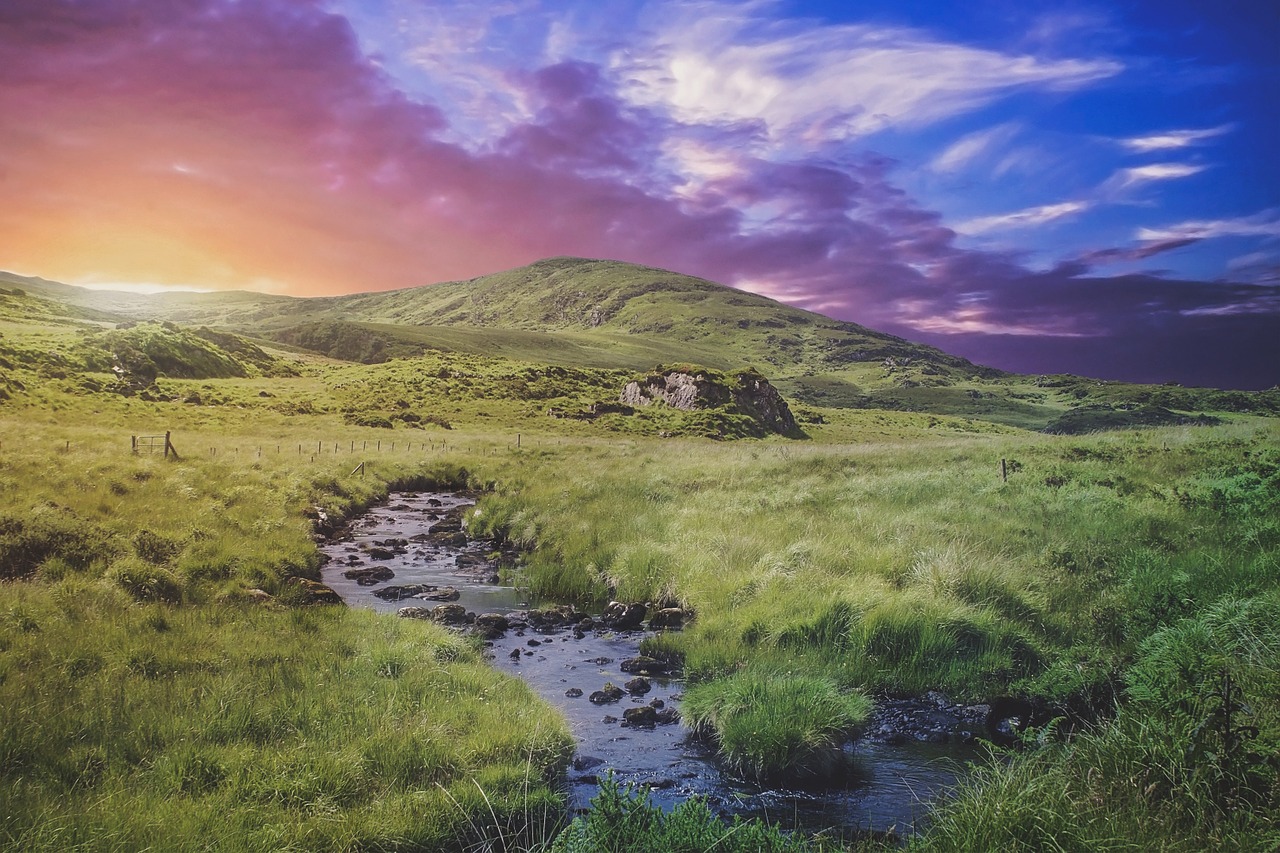
Consider rain falling on a vegetated hillside. Water moves from the atmosphere into surface water and soil. Some infiltrates, some runs off, and some becomes available to organisms. Surface conditions and vegetation can influence these pathways.
In this example, water belongs to the hydrosphere, atmospheric moisture connects to the atmosphere, rocks and soil connect to the geosphere, and vegetation connects to the biosphere. The explanation becomes useful when you describe the processes linking them rather than simply listing the names.
Transfers, transformations and system boundaries in ESS
In an ESS systems model, a transfer changes the location of matter or energy, while a transformation changes its state or form. Movement of water along a river is a transfer; evaporation involves a change of state. Choose a boundary and make the model clear before describing inputs, outputs, flows and stores.
For a hillside investigation, ask which processes and areas your model includes. A boundary is a modelling choice; it does not mean that the hillside has no connections with the wider environment.
Apply this to current IB ESS SL and HL
For the course with first assessment in 2026, use systems thinking to connect environmental processes and societal actions. The four spheres above are a scientific teaching framework, not four official ESS syllabus units. Check the official IB ESS guide and the IB course update for the current course.
An original practice task is to explain how replacing vegetation with paving could change water movement on a hillside. Identify the processes, the evidence needed and a limitation of your explanation. This is a learning exercise, not an IB examination question.
Read how people depend on, adapt to and modify environments for societal examples, and the current ESS exam guide for assessment formats.
Practise systems explanations in your ESS lessons
If you can name the spheres but struggle to explain their interactions, bring a diagram, case study or exam question to a lesson with Marija Maletz. You can work on tracing flows, distinguishing transfers from transformations and building an answer that explains the relevant processes. For an IA, bring a proposed question and available evidence to discuss a feasible investigation.
Need help applying this to your ESS work?
Explore online IB ESS tutoring for SL and HL with Marija Maletz or request a free 20-minute trial. Bring your level, the question or topic you find difficult, and your availability.
No Comments