


20 Aug Online ESS Tutoring: Lessons, IA Guidance and Exam Practice
Individual ESS tutoring can focus on the topic, exam skill or investigation choice you find difficult. It is one form of support, rather than a guaranteed fastest route to higher marks. Start by explaining your SL or HL level, assessment session and current difficulty.
- Personalized sessions built around IB assessment criteria and command terms
- Support from Marija Maletz, with 13 years of teaching experience and more than 10 years as an IB ESS examiner.
- A low-risk trial lesson before you commit to a package
Pro Tip: Bring your last graded IA draft or a recent past paper to your first session. A tutor can diagnose gaps in minutes instead of spending a full lesson figuring out where you stand.
| Point | Details |
|---|---|
| Start with a trial | Book a trial lesson to see how tutoring targets your specific weak areas. |
| Bring your work | Past papers or IA drafts let the tutor diagnose issues immediately. |
| Look for examiner experience | Tutors who have marked IB exams understand what scores well. |
Key Takeaways
ESS support can combine explanations, suitable practice and discussion of feedback. Progress depends on the student’s starting point and independent work; neither examiner experience nor a fixed lesson plan guarantees a grade.
| Point | Details |
|---|---|
| Book a trial first | Test fit with a diagnostic session before committing to a full package. |
| Match format to need | Choose single deep-dives, weekly sessions, or IA packages based on your deadline. |
| Expect gradual gains | Review progress through the student’s ability to explain and apply ideas independently. No fixed number of sessions predicts an IA result or exam improvement. |
| Vet tutor credentials | Prioritize examiner experience and a demonstrated IA/EE track record over price alone. |
| Esstutor’s approach | Individual ESS tutoring with Marija Maletz. For Geography, confirm the topic and scope of support before booking. |
Table of Contents
- What Does Online IB ESS Tutoring Actually Cover?
- Is Online Tutoring Right for SL or HL Students?
- How Can Tutoring Support ESS Learning?
- Lesson Prices and Reviewing Progress
- How Do You Choose a Trustworthy IB Tutor?
- What Happens in Your First Trial Lesson?
- How Relevant Experience Can Inform Tutoring
- Book a Trial IB ESS Tutoring Session Today
- Where to Go for Official IB Information
- Frequently Asked Questions
- Sources
What Does Online IB ESS Tutoring Actually Cover?
A paid, personalized session isn’t a lecture. It’s built around what you’re stuck on, whether that’s a shaky IA research question, a Paper 2 essay that never quite hits the top mark band, or a syllabus topic you never fully understood in class. Esstutor structures sessions around four core areas: topic teaching, IA and EE guidance, past paper practice, and exam technique coaching.
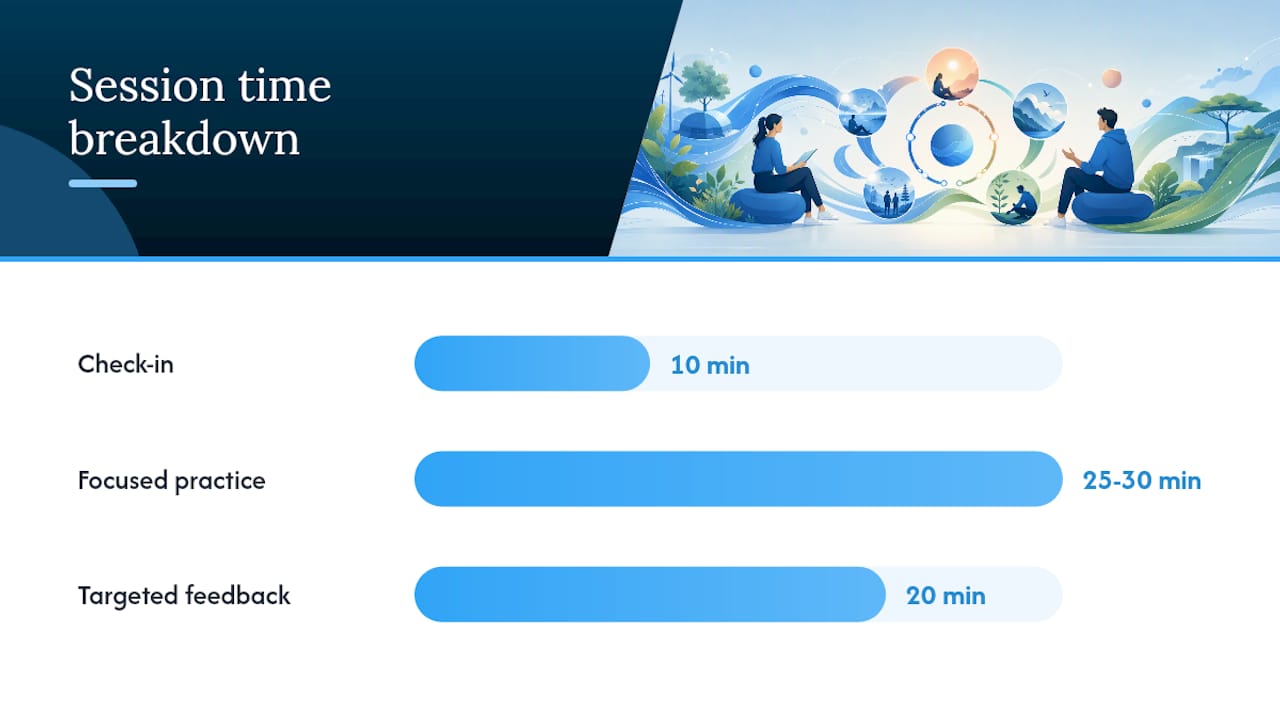
A typical 60 minute lesson might break down like this:
- A 10 minute check in on what you’ve worked on since the last session and what’s confusing you now
- 25–30 minutes of suitable practice, such as explaining a method choice or answering an exam question. The student makes their own assessed research and writing decisions.
- 20 minutes of targeted feedback, with specific action items to complete before the next lesson
Lessons take place online using agreed arrangements. Bring a specific question or task, and discuss what guidance is permitted for assessed work. A tutor should not directly rewrite IA or EE text; the student must make and explain their own choices.
Materials matter more than people expect. A tutor familiar with IB ESS notes and textbook resources can point you to the right specimen material fast, rather than spending lesson time hunting for examples.
Pro Tip: Before your session, write down the exact command term from a question you got wrong, “evaluate,” “discuss,” “to what extent,” and ask your tutor to unpack what the examiner actually wanted. That single habit fixes more lost marks than generic revision.
Is Online Tutoring Right for SL or HL Students?
Whether you’re in ESS or Geography, SL and HL students hit different walls, and a good tutoring plan reflects that.
| Factor | SL focus | HL focus |
|---|---|---|
| Depth of content | Core syllabus mastery and exam confidence | Core content plus additional HL-only topics |
| Data skills | Basic data interpretation and short-answer structure | Advanced synthesis of quantitative and qualitative data |
| Extra demands | Streamlined revision toward Paper 1 and 2 | HL extensions such as Global Interactions in Geography, requiring more complex case study integration |
| IA/EE pressure | Manageable within standard fieldwork scope | The ESS IA uses the same investigation requirements and criteria at SL and HL. HL exam extensions do not create a separate, more demanding IA rubric. |
Common reasons students book: a stalled IA that needs a clearer research question, an EE that needs framing around ESS or Geography criteria, general exam revision heading into mocks, retake preparation, or a single stubborn topic (carbon cycling, population dynamics, biodiversity loss) that keeps costing marks. Parents of HL students in particular tend to book once they notice the volume of data synthesis required just isn’t clicking in class.
Pro Tip: If you’re deciding between SL and HL tutoring focus, ask your school for your most recent internal grade breakdown by criterion. It tells you exactly where a tutor’s time is best spent.
How Can Tutoring Support ESS Learning?
Examiner-led tutoring works through a repeatable cycle, not vague encouragement to “study harder.”
- Diagnostic. The tutor reviews a recent IA draft or past paper response to find exactly where marks are lost.
- Targeted practice. You work on the specific skill involved, structuring an argument, interpreting a data set, applying a command term correctly.
- Rubric mapping. Your work gets checked directly against the ESS unifying concepts and assessment structure or the equivalent Geography criteria.
- Apply feedback: Use explanations and suitable practice to develop your understanding. Do not repeatedly submit assessed drafts to a tutor for rewriting or assume a tutor’s estimate confirms an official mark band.
A conclusion should answer the question using the evidence and acknowledge uncertainty. Discuss how the reasoning can be improved without assuming a particular edit places the work in a predetermined mark band.
Relevant examiner experience can inform discussion of assessment requirements. It is one part of choosing suitable subject support, alongside clear teaching and a good fit; it does not mean that self-study is ineffective or that the tutor can predict an official mark.
- Faster identification of command-term misreadings
- Rubric-specific feedback instead of generic “make it better” comments
- Fewer repeated errors across successive past papers
Rubric literacy is the real lever. Students who understand how examiners interpret command terms tend to structure answers examiners can actually credit, rather than answers that are merely accurate.
Lesson Prices and Reviewing Progress
Esstutor’s regular paid lessons last 60 minutes. The trial is a separate FREE 20-minute introduction. See the current prices and packages and agree a useful focus rather than assuming this article offers 30-, 45- or 90-minute products.
The time needed depends on the student’s starting point, goals and independent practice. Review progress using subsequent answers, clearer explanations and more accurate data interpretation. A fixed number of sessions does not guarantee a particular grade or completion date.
Compare the total price, lesson duration, package validity and included support before buying. Examiner experience does not create a universal price premium or guarantee better results. Esstutor’s current lesson and package prices are listed on its pricing page.
- Single sessions suit urgent, deadline-driven needs
- Weekly sessions suit steady, term-long improvement
- Choose a package only when the number of lessons fits your needs. A package does not include unlimited draft reviews or tutor rewriting of assessed work.
Lesson materials: Confirm what is included before booking. Any recording needs an appropriate agreement about permission, access and storage; it is not an automatic part of Esstutor lessons.
How Do You Choose a Trustworthy IB Tutor?
Not every tutor claiming IB expertise actually understands how the exams are marked. A short checklist saves you from an expensive mistake.
Look for:
- IB examiner experience or several years teaching the DP subject directly
- A demonstrated track record helping students with IA and EE work
- Willingness to offer a sample or trial lesson before you commit
- A clear, individualized lesson plan rather than a generic syllabus run-through
- Specific, measurable targets tied to your actual weak areas
Watch for red flags. Anyone promising a guaranteed grade is overstating what any tutor can control, since final marks depend on moderation and the student’s own work. Anyone offering to write or heavily edit your assessed IA or EE content is crossing a line the IB’s own tutoring guidelines explicitly warn against, and it puts your academic integrity at risk. A tutor who can’t speak fluently about command terms or mark bands likely hasn’t spent real time with IB assessment.
- Request a short demo lesson before paying for a full package
- Ask for an anonymized sample lesson plan or session structure
- Confirm directly how the tutor handles academic integrity around assessed work
Pro Tip: A page like what makes a great IB ESS tutor is worth reading before you book anywhere, since it lays out exactly which credentials should matter to you.
What Happens in Your First Trial Lesson?
The FREE trial lasts 20 minutes and introduces the student’s needs and possible next steps. The focus can be agreed in advance; a detailed diagnostic, marked draft and complete study plan are not all included in this short introduction.
When reading testimonials from any tutoring service, look past generic praise. The useful ones mention specific outcomes tied to IA improvement, exam technique, or examiner-informed feedback, not just “great tutor, very helpful.”
For an IA concern, identify one issue you would like to understand, such as how to make a question focused or select an appropriate graph. Tutoring should teach you how to make and justify your own decisions.
Set concrete goals for your first three lessons: one for diagnosis, one for applying the fix, one for confirming it stuck. Track progress by comparing draft versions or past paper scores across those sessions rather than relying on how confident you feel.
- Session 1: diagnostic and quick win on the most pressing issue
- Session 2: applied practice on the identified gap
- Session 3: review and confirm the fix holds under exam conditions
Bring your most recent graded work and a specific question you want answered. Book a trial at esstutor.net to see the process firsthand.
How Relevant Experience Can Inform Tutoring
Marija Maletz has 13 years of teaching experience and more than 10 years as an IB ESS examiner. Understanding command terms and assessment criteria can help guide practice, but a tutor cannot determine an official final mark in advance.

Read the command term alongside the content and mark allocation before answering. This is a skill students, teachers and tutors can practise; it is not restricted to examiners.
Book a Trial IB ESS Tutoring Session Today
Esstutor gives you something a textbook or a school study group can’t: feedback from someone who has actually marked IB scripts and knows exactly what separates a mark band 4 answer from a mark band 6. Every lesson is built around your IA draft, your exam weaknesses, or your EE structure, not a fixed curriculum you have to fit yourself into.
The FREE 20-minute trial is a short introduction to discuss your needs and a starting point for support. It does not promise a detailed diagnostic, a marked full draft or a complete action plan.
- Direct rubric alignment on every piece of feedback you receive
- Examiner-level insight into how command terms are actually marked
- Practice built entirely around your syllabus gaps, not a generic lesson plan
Start with a trial lesson through the IA support page and bring your most recent draft or past paper response to get the most out of it.
Where to Go for Official IB Information
Check the official ESS subject page and Geography subject page for syllabus scope, plus recent ESS curriculum updates for assessment changes.
- IB subject briefs: official syllabus and assessment structure
- Curriculum update pages: what’s changed and why it affects your revision
- Esstutor’s ESS resource pages: notes and materials tutors reference in lessons
Bring your markscheme to every tutoring session. It keeps feedback grounded in exactly what examiners are checking for.
Frequently Asked Questions
Is online IB ESS tutoring as effective as in-person tutoring?
Online sessions work well for IB ESS because most of the work, IA drafts, past papers, markscheme walkthroughs, happens on screen anyway. Screen sharing and shared documents replicate the in-person experience closely, and you gain scheduling flexibility a local tutor may not offer.
The number of lessons depends on the student’s needs, available time and independent practice. Agree a focused goal, then review whether subsequent work shows clearer understanding; no standard session count guarantees improvement.
Can a tutor help write my IA or EE?
No, and you should avoid any tutor who offers to. Tutors can guide structure, feedback, and technique, but the assessed work has to be entirely your own under IB’s academic integrity rules.
ESS and Geography are distinct courses with their own assessment requirements. ESS HL includes extensions in environmental law, environmental and ecological economics, and environmental ethics; Geography HL includes its own Global Interactions extension. For Geography support, confirm the scope before booking.
How do I know if a tutor has real examiner experience?
Ask directly, and request a short demo lesson. A tutor with genuine marking experience will speak specifically about mark bands and command terms rather than general encouragement.
Sources
- Geography in the DP – International Baccalaureate®
No Comments