


29 Aug IB Geography Case-Study Revision: Micro-Card Templates
A micro-card is a compact note for a named geographical case: place, relevant process, evidence, responses and evaluation. Use it to organise revision, then adapt the evidence to the question. There is no required number of cards per theme. Geography IA fieldwork has separate primary-data requirements; published case notes cannot replace that investigation.
TL;DR:
- Use accurate, relevant evidence and evaluation. Check coverage instead of assuming two cases per theme will outperform a different portfolio.
- Micro-cards should include specific statistics, policy responses, and an evaluation line that explains what worked, didn’t, or remains uncertain, aiding effective exam application.
- Cases must align accurately with IB themes, demonstrate transferability across question types, and be regularly updated with recent data or policy changes.
- Selecting cases that answer causes, impacts, and responses enhances versatility, while vague actors and outdated data can weaken evaluation quality.
- Practicing claim-evidence-evaluation structures, revising evaluation lines, and receiving targeted feedback improve exam performance more than memorizing facts alone.
Table of Contents
- Geography Fallstudien IB: What the IA and Exam Papers Actually Require
- Choose Cases for Coverage and Comparison
- The Micro-Card Template You Should Actually Memorize
- Fieldwork Methods, Sampling, and Honest Limitations
- Three Micro-Card Research Templates
- Deploying These Cards Across Paper 1, Paper 2, and Paper 3
- Connecting Case Study Theory to Real Places
- Common Selection Mistakes and How to Avoid Them
- Keeping Case Studies Current Without Starting Over
- What Actually Separates a Strong Case Study From a Weak One
- Discuss Suitable Geography Support
- Sources
Geography Fallstudien IB: What the IA and Exam Papers Actually Require
Before you build a single case study, know what the examiner is scoring. IB Geography’s internal assessment asks for a clear research question, a defensible method, organized data, real analysis, and an honest evaluation of what the fieldwork could and couldn’t show. That last part trips up more students than any other. A case study without an evaluation line reads like a report, not an IB submission.
Examiners consistently reward four things, according to the International Baccalaureate Organization: relevance to the exact question asked, concrete evidence rather than vague generalization, evaluation that stays consistent from start to finish, and visible awareness of method. You can memorize twenty facts about the Aral Sea and still lose marks if you never say what the data can’t tell you.
Before you pick your case studies, check them against this:
- Does the case map cleanly to a named IB theme (hazards, urban environments, freshwater, tourism, or the changing origin and use of resources)?
- Can you state one specific statistic or date without checking notes?
- Does the case include at least one management response or policy you can evaluate?
- For IA-linked cases, is there a one-line note on sampling or data reliability?
A theme-mapping resource like the IB DP Geography case studies map is worth bookmarking early, since it organizes cases by theme and perspective rather than by country, which mirrors how exam questions are actually structured.
Choose Cases for Coverage and Comparison
Build enough depth to explain each case accurately, while checking that the full syllabus is covered. Contrasting examples can help comparisons, but two cases per theme are not automatically sufficient and no card count predicts a mark.
- Pick two contrasting cases per theme. A rapidly urbanizing city in a lower-income country paired with a shrinking or planned city in a higher-income country gives you an automatic compare-and-contrast structure for Paper 2 essays.
- Anchor each case to one memorable detail. A single statistic, year, or named policy is worth more than a paragraph of general description you’ll forget under exam pressure.
- Test transferability before you commit it to memory. Ask whether the case could answer a question on causes, a question on impacts, and a question on management responses. If it only fits one angle, keep searching.
- Mix scales deliberately. Pairing a local or regional case with a national or global one, as recommended by practitioners mapping IB DP Geography case studies, gives you both the granular detail examiners want and the big-picture framing that comparative essays reward.
Treat a contrasting pair as one revision exercise rather than a universal target. Add cases when the syllabus or practice questions require different evidence.
The Micro-Card Template You Should Actually Memorize
Here’s the format worth committing to memory, because you’ll reuse it across every paper:
- Orientation (1 line): where and roughly when.
- Driver or process (1 to 2 lines): what physical or human process is causing the change.
- Two impacts (each with one supporting detail): one environmental, one socioeconomic, ideally with a number attached.
- Responses (1 to 2 lines): what management, policy, or adaptation happened.
- Evaluation (1 line): what worked, what didn’t, or what remains uncertain.
For fieldwork revision, note what was actually sampled, where, when and with which limitations. Do not insert a template such as a “30-point transect” into an exam answer or IA unless it describes genuine, relevant evidence.
Mapping this to a paragraph is straightforward: state your claim, back it with the impact detail from your card, then close with the evaluation line. That claim-evidence-evaluation structure is the same one recommended for structuring a geography essay, and it works because it forces you to stop describing and start arguing.
Pro Tip: Write your evaluation line first, before you fill in the impacts. If you can’t state what’s uncertain about a case, you don’t know it well enough yet to use it in an exam.
Fieldwork Methods, Sampling, and Honest Limitations
Your IA lives or dies on method-awareness, not on how much data you collected. Choose a method that actually fits your research question rather than the one your class already knows:
- Transects work well for gradient questions, like distance-decay from a river channel or a central business district.
- Questionnaires or surveys suit perception-based questions, tourism impact studies, or community responses to hazards.
- Secondary data: Published data can provide context or comparisons. Geography IA requires primary fieldwork data; a wholly secondary-data report does not replace that investigation. Agree a feasible plan with your teacher.
Explain reliability in enough detail for the investigation. Identify a specific source of uncertainty or bias, its likely effect where known, and a feasible improvement. A single sentence is not a universal requirement or sufficient evaluation for every IA.
Data snapshot practice: present one figure, then interpret it in a single sentence. A bar chart showing river velocity increasing from 0.3 to 1.1 meters per second downstream means nothing to an examiner unless you immediately say what process that pattern suggests.
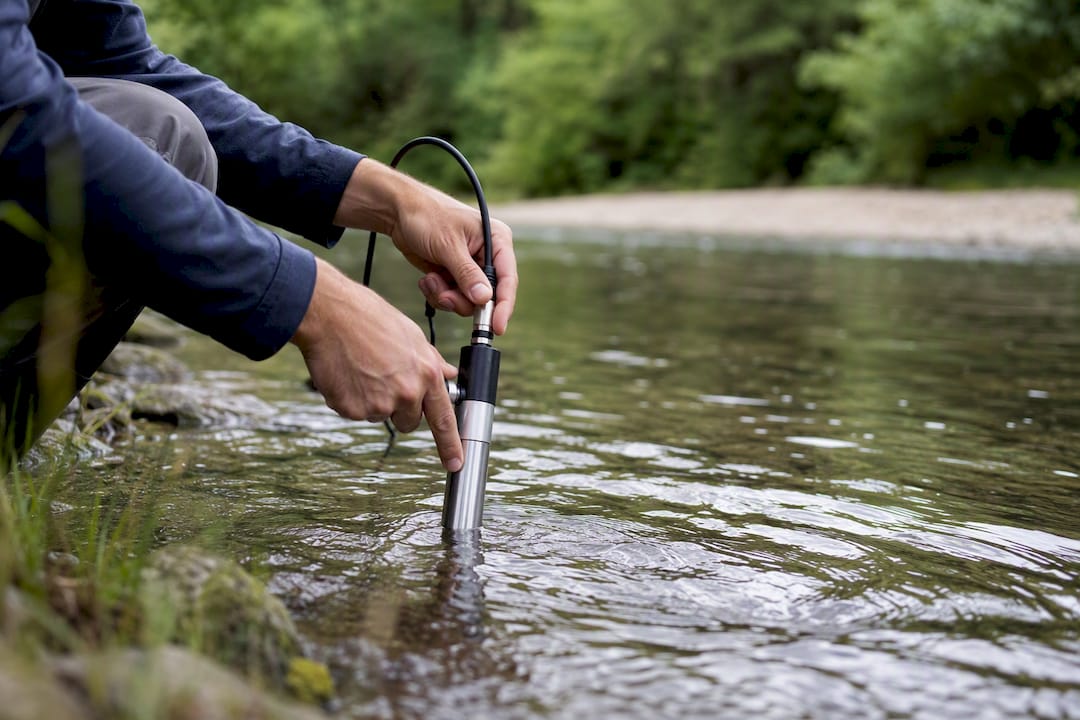
Where available, school-approved advice from a field centre or researcher can help you evaluate a method. It does not establish that supported projects score more highly, and the investigation, interpretation and writing must remain your own.
Three Micro-Card Research Templates
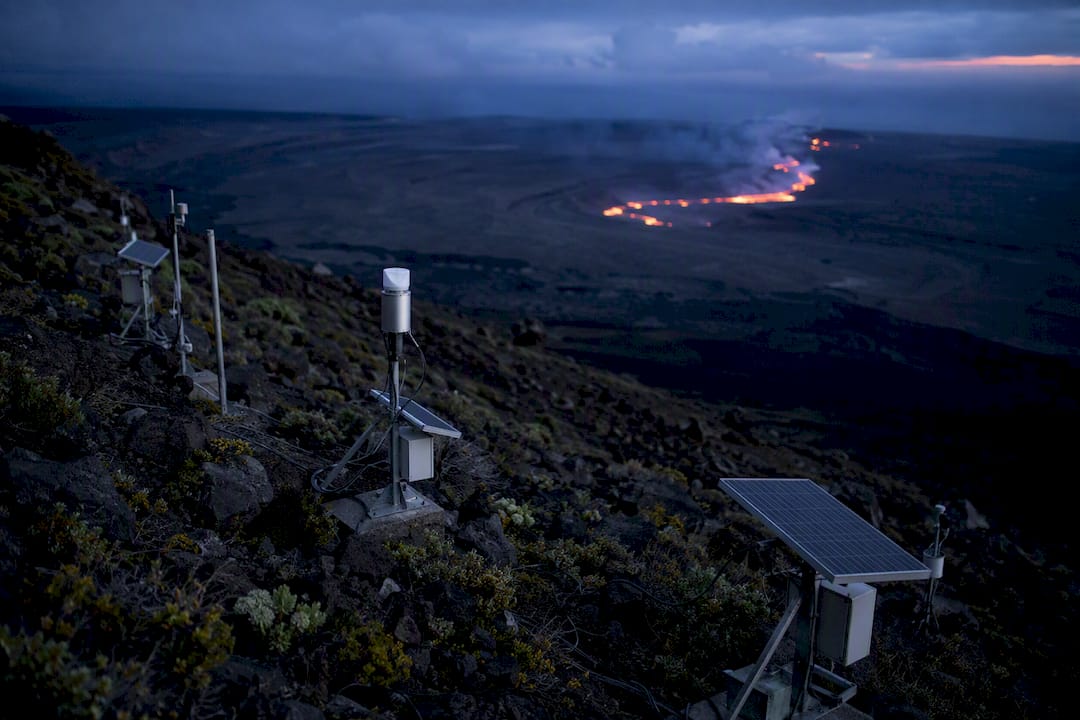
Hazard micro-card template: Choose a named volcanic event and record its location, date and tectonic setting from checked sources. Add documented impacts and a named response. Evaluate evidence of effectiveness and limitations. Do not assume every volcano is at a subduction zone or invent a casualty reduction.
Urban micro-card template: Name the city and time period. Use evidence to identify relevant population-growth drivers, housing or service pressures, and a specific response. Assess documented outcomes rather than assuming all megacities have the same migration causes or upgrading results.
Tourism micro-card template: Select a named mountain destination. Record a dated visitor indicator, a documented environmental pressure, a livelihood effect and an actual management measure. Check enforcement evidence before judging success. These three cards are research templates, not complete sourced case studies.
Deploying These Cards Across Paper 1, Paper 2, and Paper 3
Each paper rewards a slightly different slice of your micro-card:
- Paper 1: Apply the relevant optional-theme knowledge to the command term. The paper includes structured questions and extended responses, so do not treat it as short answers only.
- Paper 2 (essays): Deploy your contrasting pair. Structure each paragraph as claim, then evidence from the impact field, then evaluation. This is exactly where preparing cases in pairs pays off.
- Paper 3: Select cases relevant to the HL extension question and develop analysis or synthesis as required. Geography IA: Explain the primary fieldwork methods and analyse the evidence from your own investigation; a recycled method sentence cannot replace this.
Connecting Case Study Theory to Real Places
Case studies only earn marks when you can move fluidly between the textbook concept and the specific place. If you can define “push and pull factors” but can’t name which specific factors drove migration into the megacity in your urban case, the examiner sees a memorized definition, not applied understanding.
Practise connecting concepts to evidence in both directions. For example, ask whether a named city’s land-value pattern is consistent with distance decay, then use actual mapped data and consider transport routes, topography or planning. Do not claim that a particular city confirms a model without evidence.
Design-based research into case-study teaching backs this up. Cases work best when they’re grounded in specific actors and contexts rather than treated as abstract illustrations, according to research on case-study methodology in geography education. That means naming the city government, the specific NGO, or the named policy involved in your response field, not just “the government responded.” Vague actors produce vague evaluations, and vague evaluations don’t score well no matter how solid your data is.
Common Selection Mistakes and How to Avoid Them
The most common mistake is picking cases because they’re famous, not because they’re usable. Everest gets mentioned constantly, but if you can’t produce two impacts and a management response from memory, it’s not doing you any favors on exam day.
A second mistake is choosing cases that only answer one type of question. A case study that only illustrates causes and has no clear management response will fail you the moment a question asks you to evaluate a policy. Test every case against causes, impacts, and responses before committing it to your revision set.
Third, students often collect facts without ever writing the evaluation line, then discover in the exam hall that they don’t actually have an opinion on whether the response worked. Build the evaluation first, as mentioned earlier, and the rest of the card gets easier to complete.
Do not judge revision efficiency only by how many examples fit one answer. A broader portfolio may be needed for syllabus coverage. Select relevant cases for each question instead of inserting every case you know.
Date evidence accurately. Historical events can be appropriate case studies; older data are not automatically invalid. Check whether a figure describes the event being discussed or is being misrepresented as a current condition.
Keeping Case Studies Current Without Starting Over
You don’t need to rebuild your micro-cards every year. You need a five-minute annual refresh routine instead. Pick one recent news event, policy update, or data release per theme and add it as a single new line to your existing card rather than replacing the whole thing.
For hazard themes, check whether a recent eruption, flood, or earthquake has produced updated response data you can cite instead of an older event. For urban and tourism themes, a single updated statistic, a new migration figure, a revised visitor count, keeps your case from sounding dated without requiring new research. Freshwater and resource themes shift more slowly, but policy changes (new water-sharing agreements, updated extraction quotas) are worth a quick annual check.
The goal isn’t a completely new case study. It’s one updated detail that shows the examiner you’re engaging with a live geographic issue, not reciting a fossilized textbook example.
What Actually Separates a Strong Case Study From a Weak One
Useful case-study practice combines accurate knowledge with relevant application. Marija Maletz’s examiner experience is in IB ESS; this article does not claim that she has marked Geography examinations or IAs.
Try recalling a card, applying it to a new prompt and checking whether the evidence really supports the claim. Use timed practice when appropriate, but do not treat a drill as a guaranteed way to change a grade.
Targeted feedback matters most at two moments: when your IA draft’s method section still reads like a procedure list instead of a reasoned choice, and when your case-card evaluations all sound identical because you’re reusing the same phrase instead of thinking through each case on its own terms. That’s usually where a second set of trained eyes catches what self-review misses.
— Marija
Discuss Suitable Geography Support
Marija Maletz offers individual ESS tutoring. For Geography, explain your topic and needs before booking so the scope of support can be agreed. Esstutor is an independent service, not a marketplace assigning a team of Geography examiners.
A FREE 20-minute trial lesson can help establish your needs and whether support is suitable. It does not promise a complete case-study or IA review.
Sources
- Case Studies – IB DP GEOGRAPHY
- International Baccalaureate Organization (IBO)
- IB Geographie Obergurgl
- SwissEduc – Geographie – Tourismus (Everest case study)
No Comments