


04 Oct Raise IB ESS Paper 1 Marks: Three Examiner Backed Annotation Changes
Paper 1 is a one-hour, case-study-based short-answer paper that tests how well you read and use data. The most important thing you can do is treat the Resource Booklet as your main source of evidence: open it first, annotate it fast, and reference specific figures in every answer. Students who do this consistently score higher than those who rely on memorized facts.
TL;DR:
- Practice citing specific figures from the resource booklet to ensure clarity and maximize marks, especially on questions worth two or more points.
- Consistently link evidence to the command term by explicitly connecting data points to the question’s requirement, such as explaining causes or implications.
- Use the first few minutes to thoroughly annotate the booklet, identifying key figures and stakeholders to improve answer focus and reduce mistakes during the exam.
- Work exclusively with official past and specimen papers under timed conditions to familiarize yourself with the style, difficulty, and markscheme expectations.
- Avoid answering without citing data, misreading axes or units, or drifting from the command term, as these are common errors that cost marks.
Table of Contents
- At-a-glance: Paper 1 format, timing, marks and weighting
- What you will be asked: question types and mark expectations
- Assessment objectives and examiner expectations
- High-impact study and in-exam techniques (examiner-led and tutor-proven)
- Using past papers, specimen papers and mocks effectively
- Common mistakes and examiner red flags to avoid
- Tutor-as-examiner perspective: three quick practice changes that raise marks
- How Esstutor helps: trial lessons, paper practice, IA feedback
- FAQ
- Sources
At-a-glance: Paper 1 format, timing, marks and weighting
Paper 1 sits alongside Paper 2 as one of the two external exams in ESS, and it is the one built entirely around a single unseen case study. The IB’s own update on Environmental Systems and Societies describes it as a resource booklet paired with a question paper, where the questions ask you to analyze and evaluate the data inside that booklet.
For SL students, Paper 1 runs for one hour, carries 35 marks, and makes up 25% of your final grade, according to the exam breakdown on ThinkIB. Inside the booklet, you’ll typically find:
- Graphs, tables, and diagrams tied to a real-world environmental issue.
- Maps or photographs with captions that questions will ask you to interpret.
- Short background text that sets up the case study’s context.
With 60 minutes and 35 marks, aim to spend roughly one minute and forty seconds per mark, leaving a few minutes at the start for annotation and a few at the end to check your answers.
What you will be asked: question types and mark expectations
Paper 1 questions are short-answer and almost always ask you to use something specific from the booklet, whether that’s a number from a table or a trend on a graph. Writing for marks means matching your answer length to the command term and the mark allocation, not padding for the sake of it.
- Watch the command term. “State” wants a fact, “describe” wants detail without reasons, and “explain” wants a cause-and-effect link.
- Match depth to marks. A 2-mark question usually needs two distinct points; a 4-mark question needs a developed chain of reasoning.
- Build complete answers. The strongest responses combine a piece of evidence, a brief explanation, and a connection back to the case study.
- Cite the figure directly. Phrases like “as shown in Figure 3” or “according to Table 2” anchor your answer to real data and make it easy for an examiner to award marks.
The subject brief and sample questions published by the IB show this pattern clearly: questions reference specific figures, and marks go to answers that engage with that exact data rather than general subject knowledge.
Assessment objectives and examiner expectations
Paper 1 is built to test specific skills, not just recall. The ESS subject guide sets out assessment objectives that ask you to demonstrate knowledge, apply that knowledge to unfamiliar data, and evaluate evidence critically.
- Show knowledge by naming the correct process, term, or concept the question is pointing at.
- Show application by connecting that concept to the specific figures in front of you.
- Show evaluation by weighing the strengths, limitations, or implications of the data provided.
Markschemes award marks point by point, and examiners are trained to follow them closely, according to ThinkIB’s assessment overview. That means vague, general statements rarely score, while answers that use the booklet’s own numbers and wording tend to tick the right boxes.
High-impact study and in-exam techniques (examiner-led and tutor-proven)
Good Paper 1 results come from habits, not luck. Here’s a routine that works whether you have ten weeks left or ten days.
- Drill with unseen resource booklets weekly. Practice reading unfamiliar data under time pressure so nothing in the real exam feels new.
- Practice evidence-linking separately. Take any graph or table and write one sentence connecting a data point to a conclusion, repeating this until it becomes automatic.
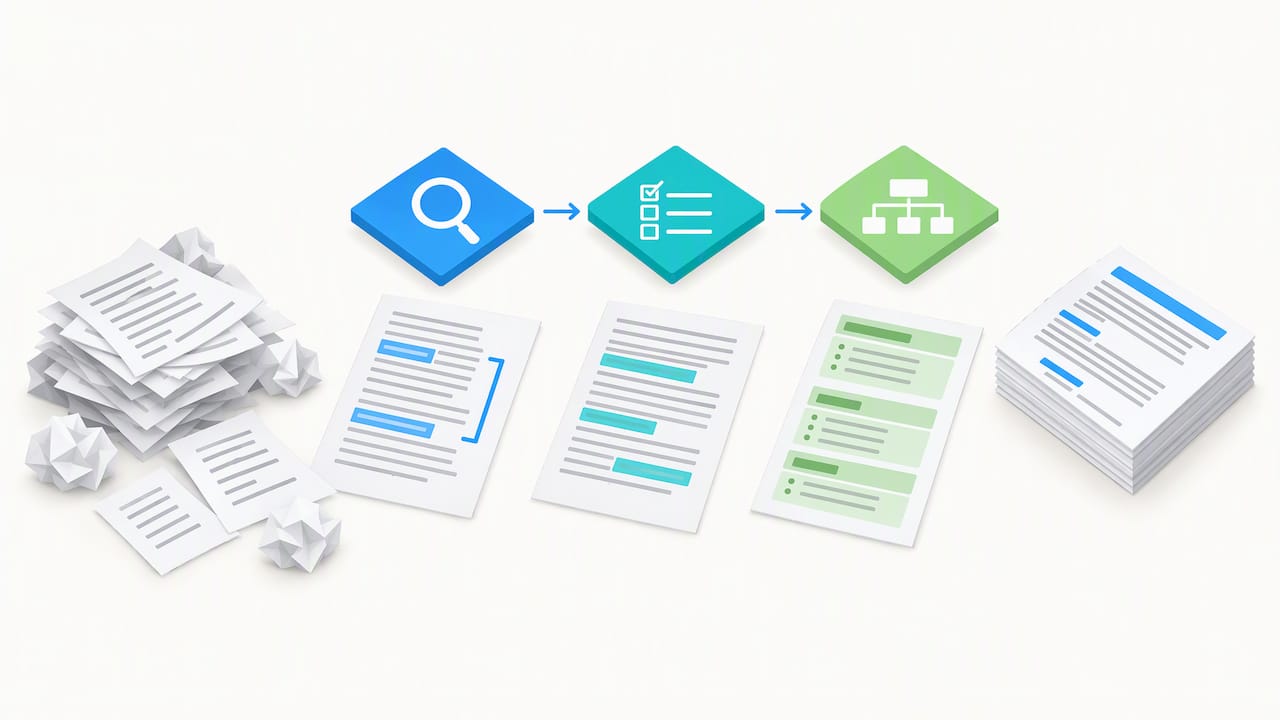
- Use the first five minutes to map the booklet. Identify the stakeholders, the system boundaries, and any figures that look central to the case study before you read a single question.
- Structure every short answer the same way. State your claim, cite the evidence by figure number, explain what it means, then note the implication.
- Check for leftover time at the end. Reread your shortest answers first, since those are the easiest to improve quickly.
Pro Tip: Write the figure number in your answer before you write anything else. It forces you to check the data again and keeps your response anchored to the case study.
This approach echoes advice shared across our exam tips for higher ESS scores, where small structural habits consistently outperform last-minute cramming.
Using past papers, specimen papers and mocks effectively
Not all practice materials are equal, and the source matters. The IB’s own guidance points to official specimen and past papers as the most reliable way to practice resource-booklet questions, since these match the real exam’s style and difficulty.
- Start with individual question drills before attempting a full timed paper.
- Work through at least a few past papers under real time conditions once you’re comfortable with the format.
- Mark your own answers against the official markscheme first, then seek a second opinion from a teacher or tutor if a mark feels unclear.
- Avoid unofficial question banks that don’t match the booklet style or mark scheme language.
Our guide on how to use past papers for ESS exam success walks through a step-by-step plan for building this into your weekly schedule.
Common mistakes and examiner red flags to avoid
Most lost marks come from a handful of repeatable errors. Fix these and your score usually moves up without needing more content knowledge.
- Writing memorized facts that don’t connect to the booklet’s actual data.
- Forgetting to cite figure numbers, which makes it harder for an examiner to credit your evidence.
- Misreading axes or units on a graph before writing an answer.
- Answering the wrong command term, like explaining when the question only asked you to describe.
- Spending too long on early questions and rushing the final ones.
Before moving to the next question, check: did I cite the figure, did I answer the actual command term, and does my evidence come straight from the booklet?
Tutor-as-examiner perspective: three quick practice changes that raise marks
Annotation discipline is the single habit I see separate strong scripts from average ones. Students who mark up stakeholders, boundaries, and key figures in the first few minutes write calmer, more evidence-based answers for the rest of the hour. Two small changes add marks reliably: naming the figure explicitly, and adding one sentence linking that evidence to the question’s command term. If you want guided practice on this, a short trial session can show you exactly where your annotation habits are costing marks.
— Marija
How Esstutor helps: trial lessons, paper practice, IA feedback
Reading about annotation technique only gets you so far. Practicing it with feedback from someone who has marked these exact papers is what moves your score. Tutoring is offered with a focus on real exam habits: timed mock papers marked similarly to examiner marking, feedback indicating where marks were lost, and support that can extend into Internal Assessment if needed.
The tutoring is conducted by an experienced IB examiner and teacher with extensive experience in ESS and Geography, so the feedback reflects application of real markschemes rather than generic study advice.
- A Trial Plan session for 34 € lets you test the approach on a short, focused lesson.
- The Basic Plan runs 120 € for a full 60-minute session if you’re ready to commit to regular practice.
- IA and EE feedback is available through our Internal Assessment tutoring page if you need support beyond Paper 1.
Check current availability and book a session on our pricing page.
FAQ
What is in ESS Paper 1?
Paper 1 contains a Resource Booklet with graphs, tables, maps, and short text tied to one unseen case study, alongside a separate question paper. Questions ask you to analyze and evaluate that data using short-answer responses rather than long essays.
Is the IB ESS exam hard?
ESS is considered approachable compared to some other IB sciences because it draws on everyday environmental issues, but Paper 1 still demands careful data reading under time pressure. Students who practice with resource booklets regularly tend to find the format far less intimidating by exam day.
Is it hard to get a 7 in ESS?
Reaching the top band requires consistent evidence-based answers that reference the booklet’s specific figures rather than general knowledge. It’s achievable with structured practice, since the markscheme rewards precise, data-linked responses over broad statements.
How to prepare for ESS Paper 1?
Practice with official specimen and past papers under timed conditions, and build a habit of annotating the resource booklet within the first few minutes of every practice attempt. Pair this with regular self-marking against the official markscheme, or get feedback from a tutor who can point out exactly where marks are being lost.
Sources
- Environmental systems and societies updates
- Environmental systems and societies guide (subject guide / assessment outline)
- How is ESS assessed? (ThinkIB)
No Comments