

11 Oct Nitrogen Cycle: Five Transformations IB Students Must Name Correctly
The nitrogen cycle describes how nitrogen moves between its atmospheric form (N2) and biologically usable forms (NH4+, NO2-, NO3-, and organic nitrogen) through fixation, nitrification, ammonification, denitrification, and anammox. Human activity, especially industrial Haber-Bosch fixation, has reshaped this cycle at a global scale. We’ve built this guide to match IB ESS and Biology syllabus language, with examiner-style tips woven in along the way.
TL;DR:
- Biological fixation converts atmospheric nitrogen into ammonium; nitrogenase uses about 16 ATP per nitrogen molecule because the atmospheric nitrogen triple bond is exceptionally strong.
- Nitrification oxidizes ammonium to nitrite, then nitrate, in oxygenated conditions; denitrification and anammox return nitrogen gas without oxygen through different pathways.
- Industrial ammonia production adds fixed nitrogen on a scale rivaling natural fixation, while fertilizer runoff fuels eutrophication and nitrous oxide emissions contribute to climate change.
- Exam answers should distinguish ammonification, which releases ammonium from organic nitrogen, from nitrification, which oxidizes ammonium into nitrate through nitrite.
Table of Contents
- Where Nitrogen Lives: Atmospheric, Soil, Aquatic, and Organic Stores
- The Five Core Transformations, Step by Step
- Why Nitrogen Fixation Costs So Much Energy
- How Human Activity Has Reshaped the Nitrogen Cycle
- Exam Revision Checklist: Terms and Common Mistakes
- Why the Nitrogen Cycle Deserves Careful Revision Time
- Get Personalized Help Mastering the Nitrogen Cycle
- FAQ
- Sources
Where Nitrogen Lives: Atmospheric, Soil, Aquatic, and Organic Stores
Before you can describe a transformation, you need to know where nitrogen actually sits. The atmosphere holds the largest store by far: nitrogen gas (N2) makes up most of the air we breathe, and it stays chemically unreactive because of its triple bond between the two nitrogen atoms. That bond is so strong that most organisms cannot use atmospheric nitrogen directly, which is exactly why fixation matters so much.
In soil and water, nitrogen shows up in three main inorganic forms: ammonium (NH4+), nitrite (NO2-), and nitrate (NO3-). Plants absorb NH4+ and NO3- through their roots, while organic nitrogen sits locked inside proteins, DNA, and decomposing tissue in biomass and detritus.
Fluxes connect these stores constantly. Fixation pulls nitrogen out of the air and into soil; decomposition releases it from dead organisms back into the soil pool; and denitrification sends it back to the atmosphere. For revision, keep this list close:
- N2: atmospheric, inert, roughly 78 to 80% of air by volume
- NH4+ (ammonium): soil and water, used directly by plants
- NO2- (nitrite): a short-lived intermediate in nitrification
- NO3- (nitrate): the main form plants take up from soil
- Organic N: locked in amino acids, proteins, and detritus
Sketching a labeled diagram with arrows for each flux, and noting which processes are microbial, is one of the fastest ways to lock this map into memory before an exam.
The Five Core Transformations, Step by Step
Each transformation changes nitrogen’s chemical form, and IB markers specifically reward answers that name the correct oxidation-state direction. Here’s the sequence in the order most syllabus diagrams present it:
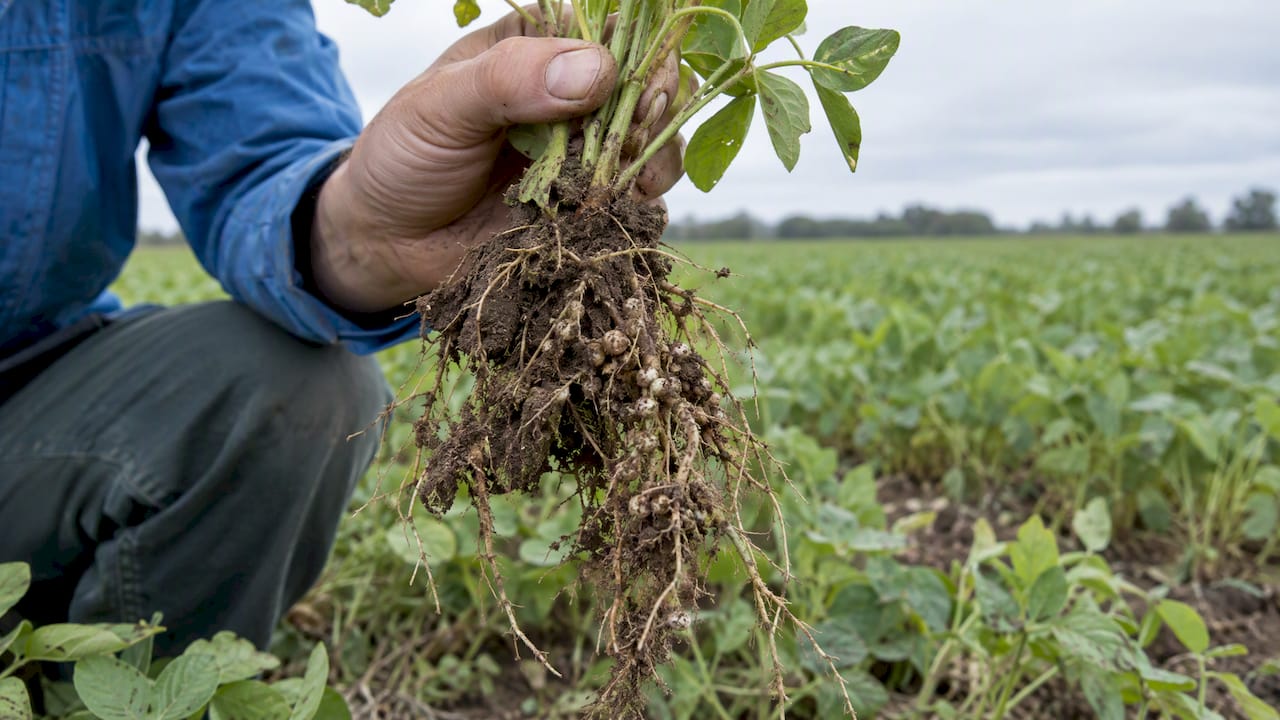
- Nitrogen fixation (N2 to NH4+): Certain bacteria, including free-living species and those in legume root nodules, use the enzyme nitrogenase to reduce atmospheric N2 into ammonium. This is a reduction reaction and it costs a substantial amount of cellular energy, which we cover in the next section. A smaller share of fixation happens abiotically, through lightning and industrial processes.
- Ammonification (organic N to NH4+): When organisms die or excrete waste, decomposers break down organic nitrogen compounds and release ammonium back into the soil. This step runs under both aerobic and anaerobic conditions, since decomposer communities vary widely.
- Nitrification (NH4+ to NO2- to NO3-): This is an aerobic, two-step oxidation. Ammonia-oxidizing bacteria convert NH4+ to NO2-, and nitrite-oxidizing bacteria then convert NO2- to NO3-. At HL, it’s worth mentioning comammox bacteria such as Nitrospira, which complete both oxidation steps inside a single organism rather than needing two separate microbial groups, as described in soil nitrogen cycling research.
- Anammox (NO2- + NH4+ to N2): Anaerobic ammonium oxidation lets specialized bacteria combine nitrite and ammonium directly into nitrogen gas, bypassing nitrate entirely. It occurs in oxygen-poor environments like marine sediments and wastewater treatment systems, and it accounts for a meaningful share of N2 production in some marine zones, according to research on nitrogen cycle processes.
- Denitrification (NO3- to N2): Under anaerobic conditions, typically in waterlogged soils or oxygen-depleted sediments, bacteria reduce nitrate stepwise back to nitrogen gas, passing through intermediates like nitric oxide and nitrous oxide along the way.
Notice the pattern: fixation and nitrification both oxidize or reduce nitrogen while consuming energy, while denitrification releases nitrogen back to the atmosphere and closes the loop.
Why Nitrogen Fixation Costs So Much Energy
The reason nitrogen fixation is biologically expensive comes down to chemistry. The triple bond holding the two nitrogen atoms together has a bond dissociation energy of around 945 kilojoules per mole, among the strongest bonds found in nature, which is why N2 resists breaking apart under normal biological conditions, as outlined in research on nitrogenase energetics.
To overcome that barrier, nitrogenase, the enzyme responsible for biological fixation, uses a complex iron-molybdenum cofactor and consumes roughly 16 molecules of ATP for every molecule of N2 reduced to ammonia. At HL, examiners sometimes expect reference to the Lowe-Thorneley kinetic model, which describes how the enzyme accumulates hydride intermediates in stages before finally releasing hydrogen gas and reducing N2.
- The N≡N bond is one of the strongest in biochemistry, explaining nitrogen’s atmospheric stability
- Nitrogenase requires about 16 ATP per N2 molecule fixed
- Comammox bacteria show that microbial nitrogen metabolism is more flexible than older textbook models suggested
Pro Tip: When an exam question asks why fixation is “costly,” name the ATP figure and the bond strength together. Markers look for both the energetic cause and its chemical explanation.
How Human Activity Has Reshaped the Nitrogen Cycle
Industrial ammonia production through the Haber-Bosch process now adds a substantial amount of fixed nitrogen to the biosphere, on a scale that rivals natural biological fixation, according to research from the University of Vienna. That extra nitrogen doesn’t stay put: fertilizer runoff carries excess NO3- and NH4+ into rivers, lakes, and coastal waters.
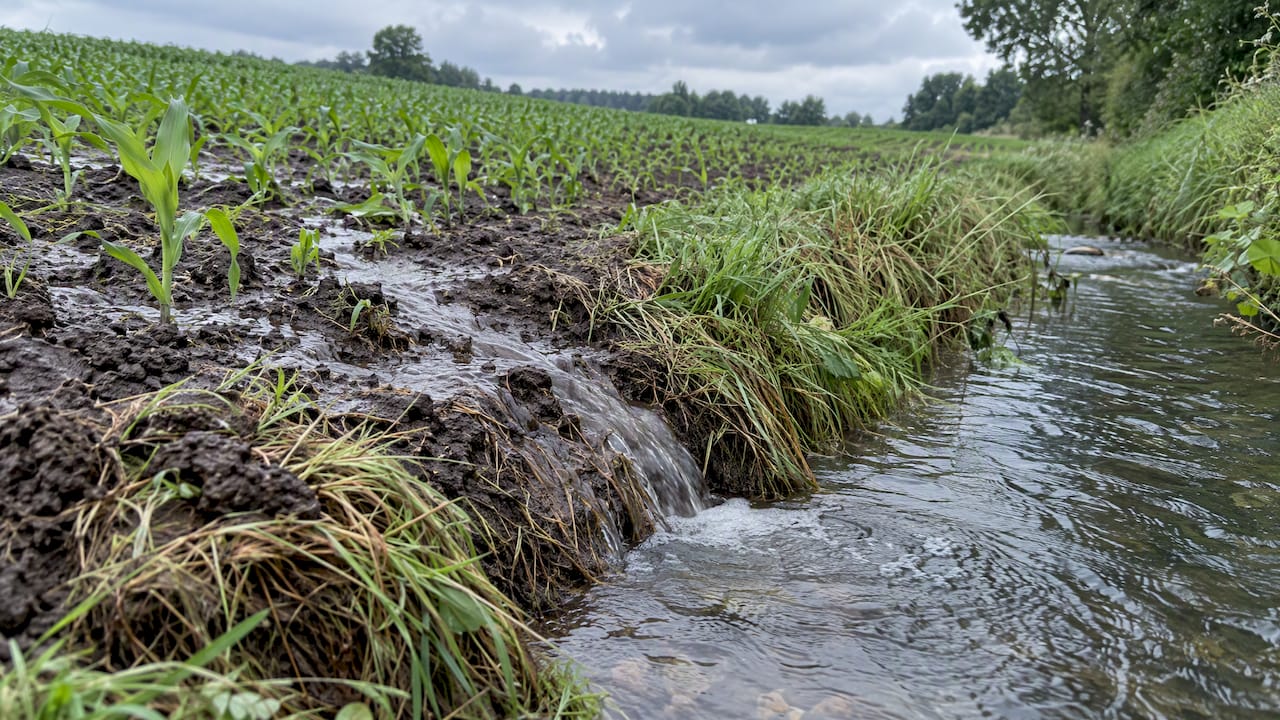
Nitrous oxide (N2O), a byproduct of nitrification and denitrification, is a greenhouse gas far more potent than carbon dioxide, which makes it a frequent reference point in climate-focused exam answers, per the University of Vienna’s overview.
A model example worth adapting in essays: fertilizer applied to farmland washes into a nearby lake, triggers an algal bloom, and the bloom’s decomposition consumes dissolved oxygen, leading to fish kills downstream. You can read more about these interconnected pollution pathways in our piece on ecosystems and pollution.
- Haber-Bosch fixation has pushed global fixed nitrogen well above natural background levels
- Fertilizer runoff is a leading driver of eutrophication in freshwater and coastal systems
- N2O emissions tie the nitrogen cycle directly to climate change discussions
Electronics waste and industrial byproducts add their own pollution burden alongside agricultural runoff, and responsible disposal practices, like those described in this overview of e-pollution, play a role in limiting broader environmental damage.
Exam Revision Checklist: Terms and Common Mistakes
Markers reward precise vocabulary. Before an exam, make sure you can define and spell correctly: nitrogen fixation, nitrification, ammonification, denitrification, anammox, and nitrogenase. Know which processes are aerobic (nitrification) and which are anaerobic (denitrification, anammox), and be ready to state oxidation-state direction where a question asks for it.
A frequent mistake we see is students writing that denitrification happens under aerobic conditions. It doesn’t: denitrifying bacteria need low-oxygen environments to use nitrate as an alternative electron acceptor. Another common slip is confusing ammonification (organic N to NH4+) with nitrification (NH4+ to NO3-), two different steps that often get merged into one vague sentence.
- Always state aerobic or anaerobic conditions explicitly when describing a transformation
- Name the chemical forms (N2, NH4+, NO2-, NO3-) rather than saying “nitrogen compounds”
- Keep ammonification and nitrification clearly separate in your answer
Pro Tip: A strong model sentence looks like this: “Denitrifying bacteria reduce NO3- to N2 under anaerobic conditions, completing the cycle by returning nitrogen to the atmosphere.” That single sentence hits terminology, direction, and condition all at once.
Why the Nitrogen Cycle Deserves Careful Revision Time
Drawing on more than 13 years marking and teaching IB ESS and Biology, I can tell you the nitrogen cycle is one of the topics where small vocabulary slips cost the most marks. Students often understand the concept but lose points for vague phrasing or missing a condition. Practice past-paper questions that ask you to label a diagram or explain a single transformation in full sentences, and bring that same precision into IA sections that touch on soil or water nitrogen levels.
— Marija
Get Personalized Help Mastering the Nitrogen Cycle
Working through fixation, nitrification, and denitrification with a tutor who marks IB papers for a living makes the difference between a vague answer and a full-credit one. We offer one-on-one sessions built around your syllabus content, whether that’s exam technique, IA data interpretation involving soil or water nitrogen, or a straightforward walkthrough of the cycle itself.

- A 20-minute trial session lets you test how we teach before committing further
- We offer a basic plan per 60-minute session, focused entirely on your syllabus needs
- We also support IA and EE feedback specific to environmental systems topics
Check our pricing and plans to book a session, or explore our IA tutoring page if your coursework touches on nitrogen cycling.
FAQ
What are the 5 stages of the nitrogen cycle?
The five main stages are nitrogen fixation, ammonification, nitrification, anammox, and denitrification. Each stage changes nitrogen’s chemical form, moving it between atmospheric N2, soil ammonium and nitrate, and organic nitrogen in living tissue.
What are the 7 steps of the nitrogen cycle in order?
Some textbooks split the cycle into seven steps by separating nitrification into two distinct stages (NH4+ to NO2-, then NO2- to NO3-) and adding uptake and assimilation by plants as separate steps. The core chemistry stays the same as the five-stage version: fixation, ammonification, the two nitrification steps, assimilation, denitrification, and anammox.
What is the nitrogen cycle?
The nitrogen cycle is the continuous movement of nitrogen between the atmosphere, soil, water, and living organisms through microbial and chemical transformations. It converts inert atmospheric N2 into usable forms like ammonium and nitrate, then eventually returns nitrogen to the atmosphere through denitrification.
What is the nitrogen cycle in GCSE?
At GCSE level, the nitrogen cycle is usually taught with four main processes: nitrogen fixation, nitrification, denitrification, and decomposition (similar to ammonification). IB courses expect more detail, including anammox, oxidation states, and microbial mechanisms like nitrogenase.
Sources
- Microorganisms and the global nitrogen cycle — University of Vienna (Rudolphina)
- PubMed article summarizing nitrogenase energetics and fixation costs
- 17.2B: Nitrogen Cycle – Biology LibreTexts
- SL471/SS684: An Overview of Key Soil Nitrogen Cycling Transformations (IFAS)
No Comments