

22 Aug IB ESS Syllabus 2026: Topics, SL and HL Explained
Environmental Systems and Societies is an interdisciplinary IB Diploma Programme subject offered at SL and HL. This guide focuses on the course first assessed in 2026. Start with the official IB ESS subject brief and your school’s course materials.
Your next three moves:
- Read the current subject brief and compare its eight numbered topics with your school’s course plan.
- Decide SL or HL based on the extra content load (HL adds three analytical lenses, covered below).
- Use the FREE 20-minute trial to discuss your main ESS needs and a suitable starting point. A complete personalised syllabus map is not promised in the introduction.
Pro Tip: Do this before you touch a single revision guide. Knowing the shape of the course saves weeks of unfocused studying later.
Key Takeaways
The ESS syllabus rewards systems thinking and interdisciplinary analysis over memorization, and targeted tutoring works best when it’s mapped directly to specific IA, EE, and exam-technique gaps.
| Point | Details |
|---|---|
| Start with the subject brief | Read the official IBO subject brief before any revision guide to understand full syllabus scope. |
| Know SL vs HL differences | HL adds three lenses: environmental law, ecological economics, and environmental ethics. |
| Plan the IA early | Use your school’s IA deadlines and allow suitable time for permissions, data access, analysis and the permitted feedback process. |
| First assessment is May 2026 | Current cohorts should treat updated sample papers and marking guidance as the most reliable prep material. |
| Match tutoring to gaps | Tutoring can help with concepts, planning and exam practice. Your school remains responsible for assessed-work supervision and authentication. |
Where to Read More
- IBO’s ESS subject brief for the full official syllabus.
- EE subject-specific guidance for ESS-focused essay advice.
- IA examples from Esstutor for real project inspiration.
Table of Contents
- What Does the ESS Syllabus Actually Cover?
- How Is ESS Graded, and What Deadlines Matter Most?
- Where Does Personalized Tutoring Actually Move the Needle?
- Building a Study Plan That Actually Fits Your Calendar
- What Should You Look For in an ESS Tutor?
- Discuss Individual ESS Support
- Frequently Asked Questions
- Sources
What Does the ESS Syllabus Actually Cover?
ESS runs on three unifying concepts that show up in nearly every exam question you’ll face: perspectives (how different groups value the environment differently), systems (how inputs, outputs, and feedback loops connect everything from a rainforest to a city), and sustainability (whether a practice can continue without depleting the resources it depends on). You’ll see these three words again and again, because the IBO built the entire course around them.
The current subject brief lists eight numbered topics:
- Foundation: perspectives, systems and sustainability.
- Ecology.
- Biodiversity and conservation.
- Water.
- Land.
- Atmosphere and climate change.
- Natural resources.
- Human populations and urban systems.
Check the official subject brief for the topic outline and teaching hours.
HL includes three extensions: environmental law, environmental and ecological economics, and environmental ethics. They add depth and perspectives to the shared course. SL students can also encounter legal, economic and ethical issues; these topics are not prohibited at SL.
Beyond content, the syllabus expects you to build practical skills: designing experiments, interpreting messy real-world data sets, drawing and reading systems diagrams, and applying the “approaches to learning” framework that runs through every IB subject. If you’re weak on any of these, that’s often where key ESS concepts need direct reinforcement rather than more reading.
How Is ESS Graded, and What Deadlines Matter Most?
ESS combines written exams with an internal assessment, and for many students, the Extended Essay becomes a natural extension of whatever environmental issue grabbed their interest. Standard Level and Higher Level students sit exams that test the same core topics, but HL papers demand more synthesis across the additional lenses. Expect command terms like “evaluate” and “discuss” to carry more weight at HL, since those questions require weighing perspectives rather than just recalling facts.
The course was first taught from August 2024 and first assessed in May 2026. Choose resources for that syllabus and the correct SL or HL level. Older questions may support an overlapping skill, but their format and timing may differ.
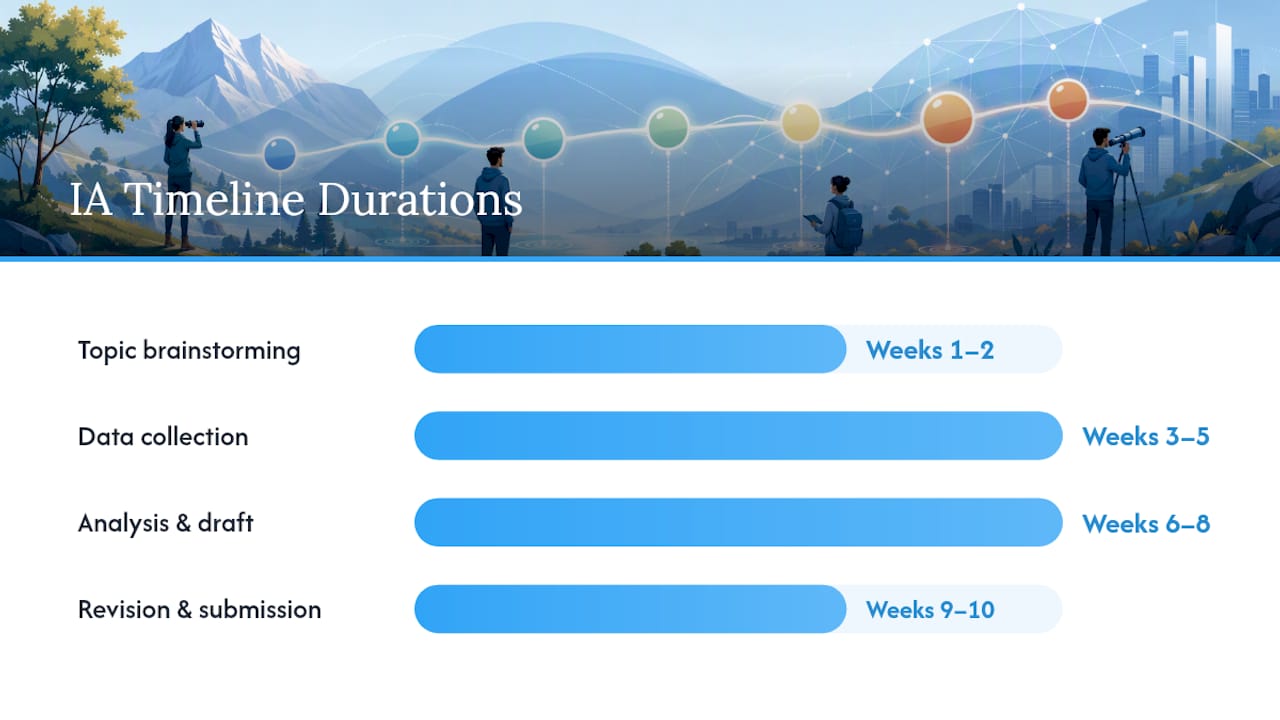
A realistic IA timeline looks like this:
- Weeks 1 to 2: Topic brainstorming and research question refinement.
- Weeks 3 to 5: Data collection, whether through fieldwork, surveys, or secondary sources.
- Weeks 6 to 8: Analysis and first draft.
- Weeks 9 to 10: Revision and final submission checkpoints with your supervisor.
Pro Tip: Get ethics approval and supervisor sign-off on your data-collection method before you start gathering anything. Reworking a flawed methodology halfway through costs far more time than getting it right on paper first.
Where Does Personalized Tutoring Actually Move the Needle?
Most students don’t need someone to re-teach the whole syllabus. They need help in specific spots: mapping which topics matter most for their exam session, strengthening systems thinking so answers connect ideas instead of listing facts, and getting real feedback on data analysis before it costs them marks.
Here’s where a focused tutor earns their fee:
- Syllabus mapping against your school’s actual teaching schedule.
- Concept reinforcement on topics where class time moved too fast.
- Systems-thinking coaching so exam answers show connections, not just recall.
- IA planning guidance within the permitted scope. School teachers retain responsibility for approval, supervision, authentication and feedback arrangements.
- EE topic refinement for students building an interdisciplinary essay around ESS.
- Timed past-paper practice with examiner-style feedback.
Check whether your IA question is measurable, the evidence is accessible and the method is feasible and safe. Discuss equipment, permissions and limitations before collecting data. Tutoring provides guidance; your investigation and assessed writing remain your own.
A tutor’s job is to structure the thinking and teach the skill, not to write the paragraph for the student. IB academic honesty rules mean the ideas and the words have to be the student’s own; the value a tutor adds is in showing them how to get there faster and with fewer wrong turns.
Building a Study Plan That Actually Fits Your Calendar
Trying to cram syllabus review, IA work, and exam prep into the same few weeks is how most ESS students burn out. Spacing these out with clear milestones works better.
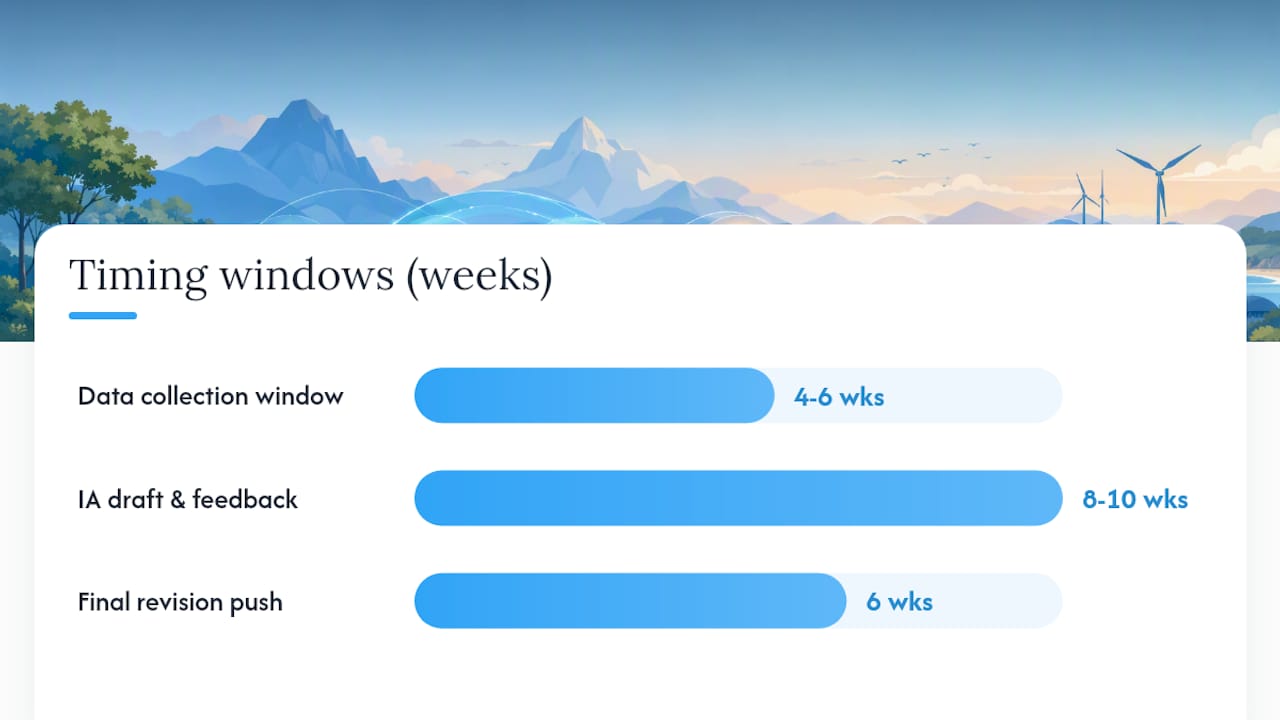
| Milestone | Timing |
|---|---|
| Syllabus audit and topic gap check | Start of the school year |
| IA proposal and supervisor approval | Follow the school’s deadline and allow suitable lead time for the chosen method |
| Data collection window | 4 to 6 weeks after proposal |
| IA draft and feedback round | 8 to 10 weeks before deadline |
| Mock exams | Term before final exams |
| Final revision push | Final 6 weeks before exams |
Weekly, aim for a manageable split rather than marathon sessions:
- Two to three hours of independent topic review, spread across two or three sittings.
- One tutoring session focused on either skills (data handling, command terms) or IA/EE progress.
- One timed past-paper question, marked and reviewed within the same week.
Pair self-study with structured past-paper practice rather than passive rereading; interpreting data sets under time pressure is a skill that only improves with repetition.
Lesson arrangements: Esstutor’s regular paid lessons last 60 minutes. The FREE trial lasts 20 minutes and is an introduction to discuss needs. Choose paid support using the current pricing page; this article does not offer separate 30-, 45- or 90-minute products.
What Should You Look For in an ESS Tutor?
Before booking anyone, ask these questions:
- Have you taught the 2026 ESS syllabus specifically, including the HL lenses?
- Do you have IB examiner experience, and have you marked ESS papers?
- Can you show examples of IA projects you’ve supervised through to submission?
- What does a first lesson actually look like?
- Do you have testimonials or references from past students?
Prioritize tutors with genuine examiner experience over generic science tutors. Understanding how markers actually award points for systems-based answers is a different skill from knowing the content itself.
Before booking, ask what can realistically be covered and how fees and lesson duration work. The free 20-minute trial discusses needs and suitability; a full syllabus map, diagnostic paper and IA brainstorm are not all promised within that introduction.
An Examiner’s View on the New ESS Syllabus
The biggest shift with this syllabus is how much more it rewards connecting ideas across the HL lenses rather than memorizing isolated facts. My advice to every student: practice explaining one environmental issue through at least two different perspectives before exam season starts.
Discuss Individual ESS Support
Use the syllabus to identify what you need to learn, then use a specific practice task to see where understanding breaks down. An examiner background can inform guidance but does not guarantee a mark or replace the student’s work.
Esstutor builds every lesson around where a student actually stands against the ESS syllabus, not a generic curriculum. Sessions cover:
- Syllabus mapping against your specific exam session.
- Guidance on understanding IA and EE planning, while the school supervises the assessed work and the student makes their own research and writing decisions.
- Exam-focused revision targeting weak command terms and data-analysis gaps.
- Full mock exams with detailed, examiner-style feedback.
- Past-paper marking with specific, actionable corrections.
Marija offers individual ESS SL and HL lessons, with 13+ years of teaching experience and experience as an IB ESS examiner. Request a FREE 20-minute trial lesson to discuss a topic, exam practice or your own IA planning.
Frequently Asked Questions
ESS is interdisciplinary and can satisfy the individuals and societies requirement, the sciences requirement, or both. When it counts for both, a student still completes six subjects and can select an additional subject under DP rules. Confirm the combination and university prerequisites with your coordinator.
Can I switch between SL and HL after starting the course?
This depends on your school’s policy and how far into the course you are. Talk to your ESS teacher early since the HL lenses require dedicated teaching time that’s hard to backfill later.
How is the IB ESS syllabus different from IB biology?
They’re entirely separate subjects. ESS blends ecology, economics, ethics, and law into one interdisciplinary course, while biology stays within the natural sciences group and follows its own distinct syllabus and assessment structure.
Start from your school’s IA timetable and the investigation’s practical needs. Seasonal fieldwork, permissions or dataset access can affect lead time; a six- to nine-month schedule is an example, not an IB requirement.
Does a tutor write parts of the IA for me?
No, and any tutor who offers this is putting your academic honesty at risk. A legitimate tutor helps you design the investigation, interpret your data, and structure your write-up, but the analysis and writing remain your own work.
Sources
- Environmental systems and societies – International Baccalaureate®
- How to Revise for IB Environmental Systems & Societies: Tactics That Work
No Comments