


04 Oct IB ESS Paper 1: Resource Booklet and Annotation Tips
ESS Paper 1 uses case-study resources and ESS knowledge. Check the question, locate relevant evidence and use figures when they support the task. Follow invigilator instructions about permitted annotation and writing. Use the official duration for your SL or HL paper.
TL;DR:
- Practice citing relevant figures from the resource booklet to make your evidence clear, especially on questions worth two or more points.
- Consistently link evidence to the command term by explicitly connecting data points to the question’s requirement, such as explaining causes or implications.
- Use the first few minutes to thoroughly annotate the booklet, identifying key figures and stakeholders to improve answer focus and reduce mistakes during the exam.
- Prioritize official past and specimen papers under timed conditions to familiarize yourself with the style, difficulty, and markscheme expectations.
- Avoid answering without citing data, misreading axes or units, or drifting from the command term, as these are common errors that cost marks.
Table of Contents
- At-a-glance: Paper 1 format, timing, marks and weighting
- What you will be asked: question types and mark expectations
- Assessment objectives and examiner expectations
- Practical study and exam techniques
- Using past papers, specimen papers and mocks effectively
- Common mistakes and examiner red flags to avoid
- Three practical habits for ESS Paper 1
- How Esstutor helps: trial lessons, paper practice, IA feedback
- FAQ
- Sources
At-a-glance: Paper 1 format, timing, marks and weighting
Paper 1 sits alongside Paper 2 as one of the two external exams in ESS, and it is the one built entirely around a single unseen case study. The IB’s own update on Environmental Systems and Societies describes it as a resource booklet paired with a question paper, where the questions ask you to analyze and evaluate the data inside that booklet.
For the course first assessed in 2026, Paper 1 is 1 hour, 35 marks and 25% at SL, or 2 hours, 70 marks and 30% at HL. Use the official ESS guide and a paper for the correct syllabus and level. Resources can include:
- Graphs, tables, and diagrams tied to a real-world environmental issue.
- Maps or photographs with captions that questions will ask you to interpret.
- Short background text that sets up the case study’s context.
The total time averages about 1 minute 43 seconds per mark at both levels. Subtract reading and checking time before setting a personal writing-time target, and adjust it during timed practice.
What you will be asked: question types and mark expectations
Paper 1 questions are short-answer and almost always ask you to use something specific from the booklet, whether that’s a number from a table or a trend on a graph. Writing for marks means matching your answer length to the command term and the mark allocation, not padding for the sake of it.
- Watch the command term. “State” wants a fact, “describe” wants detail without reasons, and “explain” wants a cause-and-effect link.
- Match depth to the task. Marks may reward separate facts, a calculation and working, or linked reasoning. There is no fixed two-point or four-mark answer template that fits every question.
- Build complete answers. The strongest responses combine a piece of evidence, a brief explanation, and a connection back to the case study.
- Cite the figure directly. Phrases like “as shown in Figure 3” or “according to Table 2” anchor your answer to real data and make it easy for an examiner to award marks.
The subject brief and sample questions published by the IB show this pattern clearly: questions reference specific figures, and marks go to answers that engage with that exact data rather than general subject knowledge.
Assessment objectives and examiner expectations
Paper 1 is built to test specific skills, not just recall. The ESS subject guide sets out assessment objectives that ask you to demonstrate knowledge, apply that knowledge to unfamiliar data, and evaluate evidence critically.
- Show knowledge by naming the correct process, term, or concept the question is pointing at.
- Show application by connecting that concept to the specific figures in front of you.
- Show evaluation by weighing the strengths, limitations, or implications of the data provided.
Use the question-specific markscheme to review practice. Relevant facts, calculations or explanations earn credit according to that task; quoting booklet wording or a figure number alone does not guarantee marks.
Practical study and exam techniques
Good Paper 1 results come from habits, not luck. Here’s a routine that works whether you have ten weeks left or ten days.
- Drill with unseen resource booklets weekly. Practice reading unfamiliar data under time pressure so nothing in the real exam feels new.
- Practice evidence-linking separately. Take any graph or table and write one sentence connecting a data point to a conclusion, repeating this until it becomes automatic.
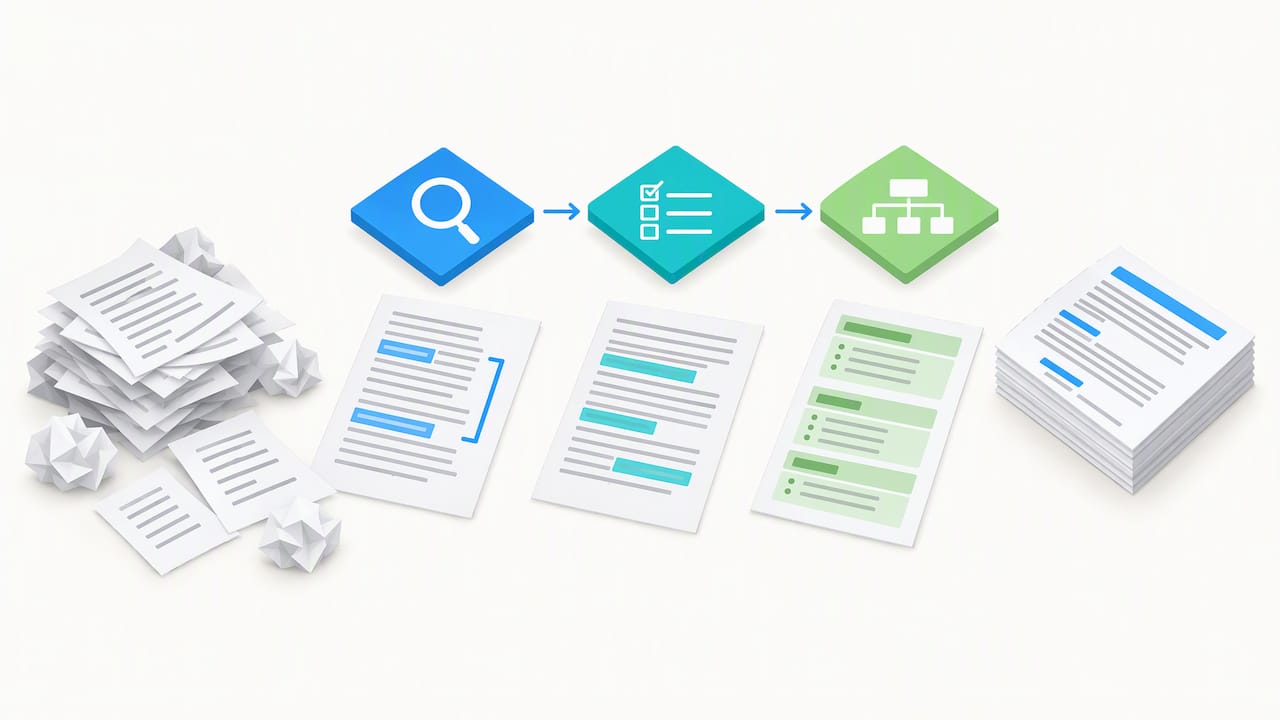
- During timed practice, test a brief initial scan of the booklet and questions. Identify the stakeholders, the system boundaries, and any figures that look central to the case study alongside the questions.
- Adapt each answer to its command term and mark allocation. State your claim, cite the evidence by figure number, explain what it means, then note the implication.
- Check for leftover time at the end. Reread your shortest answers first, since those are the easiest to improve quickly.
Pro Tip: Write the figure number in your answer before you write anything else. It forces you to check the data again and keeps your response anchored to the case study.
This approach echoes advice shared across our exam tips for higher ESS scores, where small structural habits consistently outperform last-minute cramming.
Using past papers, specimen papers and mocks effectively
Not all practice materials are equal, and the source matters. The IB’s own guidance points to official specimen and past papers as the most reliable way to practice resource-booklet questions, since these match the real exam’s style and difficulty.
- Start with individual question drills before attempting a full timed paper.
- Work through at least a few past papers under real time conditions once you’re comfortable with the format.
- Mark your own answers against the official markscheme first, then seek a second opinion from a teacher or tutor if a mark feels unclear.
- Avoid unofficial question banks that don’t match the booklet style or mark scheme language.
Our guide on how to use past papers for ESS exam success walks through a step-by-step plan for building this into your weekly schedule.
Common mistakes and examiner red flags to avoid
Most lost marks come from a handful of repeatable errors. Fix these and your score usually moves up without needing more content knowledge.
- Writing memorized facts that don’t connect to the booklet’s actual data.
- Forgetting to cite figure numbers, which makes it harder for an examiner to credit your evidence.
- Misreading axes or units on a graph before writing an answer.
- Answering the wrong command term, like explaining when the question only asked you to describe.
- Spending too long on early questions and rushing the final ones.
Before moving to the next question, check: did I cite the figure, did I answer the actual command term, and does my evidence come straight from the booklet?
Three practical habits for ESS Paper 1
Annotation discipline is the single habit I see separate strong scripts from average ones. Students who mark up stakeholders, boundaries, and key figures in the first few minutes write calmer, more evidence-based answers for the rest of the hour. Two useful practice habits are identifying relevant evidence and explaining how it answers the command term; neither guarantees marks on its own. If you want guided practice on this, a short trial session can show you exactly where your annotation habits are costing marks.
— Marija
How Esstutor helps: trial lessons, paper practice, IA feedback
Reading about annotation technique only gets you so far. Practicing it with feedback from an experienced ESS teacher and examiner is what moves your score. Tutoring is offered with a focus on real exam habits: timed mock papers marked similarly to examiner marking, feedback indicating where marks were lost, and support that can extend into Internal Assessment if needed.
The tutoring is conducted by an experienced IB examiner and teacher with extensive experience in ESS and Geography, so the feedback reflects application of real markschemes rather than generic study advice.
- A free 20-minute trial lesson lets you discuss your ESS questions and study goals.
- See the pricing page for current regular lesson options and prices.
- IA and EE feedback is available through our Internal Assessment tutoring page if you need support beyond Paper 1.
FAQ
What is in ESS Paper 1?
Paper 1 contains a Resource Booklet with graphs, tables, maps, and short text tied to one unseen case study, alongside a separate question paper. Questions ask you to analyze and evaluate that data using short-answer responses rather than long essays.
Is the IB ESS exam hard?
ESS is considered approachable compared to some other IB sciences because it draws on everyday environmental issues, but Paper 1 still demands careful data reading under time pressure. Students who practice with resource booklets regularly tend to find the format far less intimidating by exam day.
Is it hard to get a 7 in ESS?
Reaching the top band requires consistent evidence-based answers that reference the booklet’s specific figures rather than general knowledge. It’s achievable with structured practice, since the markscheme rewards precise, data-linked responses over broad statements.
How to prepare for ESS Paper 1?
Practice with official specimen and past papers under timed conditions, and build a habit of annotating the resource booklet within the first few minutes of every practice attempt. Pair this with regular self-marking against the official markscheme, or get feedback from a tutor who can point out exactly where marks are being lost.
Sources
- Environmental systems and societies updates
- Environmental systems and societies guide (subject guide / assessment outline)
- How is ESS assessed? (ThinkIB)
Recommended
- IB ESS Prüfungsformat: What the 2026 Exam Actually Looks Like
- 15 Minute Plan to Score 9–10 on an IB ESS 10 Mark Question
- Understand the role of IB examiners for ESS success
- Examiner Approved IB Geography and ESS Field Sketches in Six Steps
Assessment format reference: IB ESS guide, first assessment 2026. Use the correct level and syllabus when selecting practice papers.
No Comments