

11 Oct The Nitrogen Cycle in IB ESS: Five Processes Explained
The nitrogen cycle moves nitrogen between atmospheric, soil, water and biological stores. Five useful processes to distinguish are fixation, assimilation, ammonification, nitrification and denitrification. Anammox is another real microbial pathway, discussed here as enrichment rather than assumed ESS examination content.
TL;DR:
- Biological fixation converts atmospheric nitrogen into ammonium; nitrogenase uses about 16 ATP per nitrogen molecule because the atmospheric nitrogen triple bond is exceptionally strong.
- Nitrification oxidizes ammonium to nitrite, then nitrate, in oxygenated conditions; denitrification and anammox return nitrogen gas without oxygen through different pathways.
- Industrial ammonia production adds fixed nitrogen on a scale rivaling natural fixation, while fertilizer runoff fuels eutrophication and nitrous oxide emissions contribute to climate change.
- Exam answers should distinguish ammonification, which releases ammonium from organic nitrogen, from nitrification, which oxidizes ammonium into nitrate through nitrite.
Table of Contents
- Where Nitrogen Lives: Atmospheric, Soil, Aquatic, and Organic Stores
- The Five Core Transformations, Step by Step
- Why Nitrogen Fixation Costs So Much Energy
- How Human Activity Has Reshaped the Nitrogen Cycle
- Exam Revision Checklist: Terms and Common Mistakes
- Why the Nitrogen Cycle Deserves Careful Revision Time
- Get Personalized Help Mastering the Nitrogen Cycle
- FAQ
- Sources
Where Nitrogen Lives: Atmospheric, Soil, Aquatic, and Organic Stores
In a simplified ecosystem nitrogen-cycle diagram, the atmosphere is a major store: nitrogen gas makes up about 78% of dry air by volume. Most organisms cannot use N2 directly. Fixation converts it into forms that can enter biological processes. This is not a comparison with all geological nitrogen stores.
In soil and water, nitrogen shows up in three main inorganic forms: ammonium (NH4+), nitrite (NO2-), and nitrate (NO3-). Plants absorb NH4+ and NO3- through their roots, while organic nitrogen sits locked inside proteins, DNA, and decomposing tissue in biomass and detritus.
Fluxes connect these stores constantly. Fixation pulls nitrogen out of the air and into soil; decomposition releases it from dead organisms back into the soil pool; and denitrification sends it back to the atmosphere. For revision, keep this list close:
- N2: atmospheric, inert, roughly 78 to 80% of air by volume
- NH4+ (ammonium): soil and water, used directly by plants
- NO2- (nitrite): a short-lived intermediate in nitrification
- NO3- (nitrate): the main form plants take up from soil
- Organic N: locked in amino acids, proteins, and detritus
Sketching a labeled diagram with arrows for each flux, and noting which processes are microbial, is one of the fastest ways to lock this map into memory before an exam.
The Five Core Transformations, Step by Step
Distinguish the starting substance, the product and the relevant organisms or conditions. The cycle is a network of processes, not a fixed sequence that every nitrogen atom must follow.
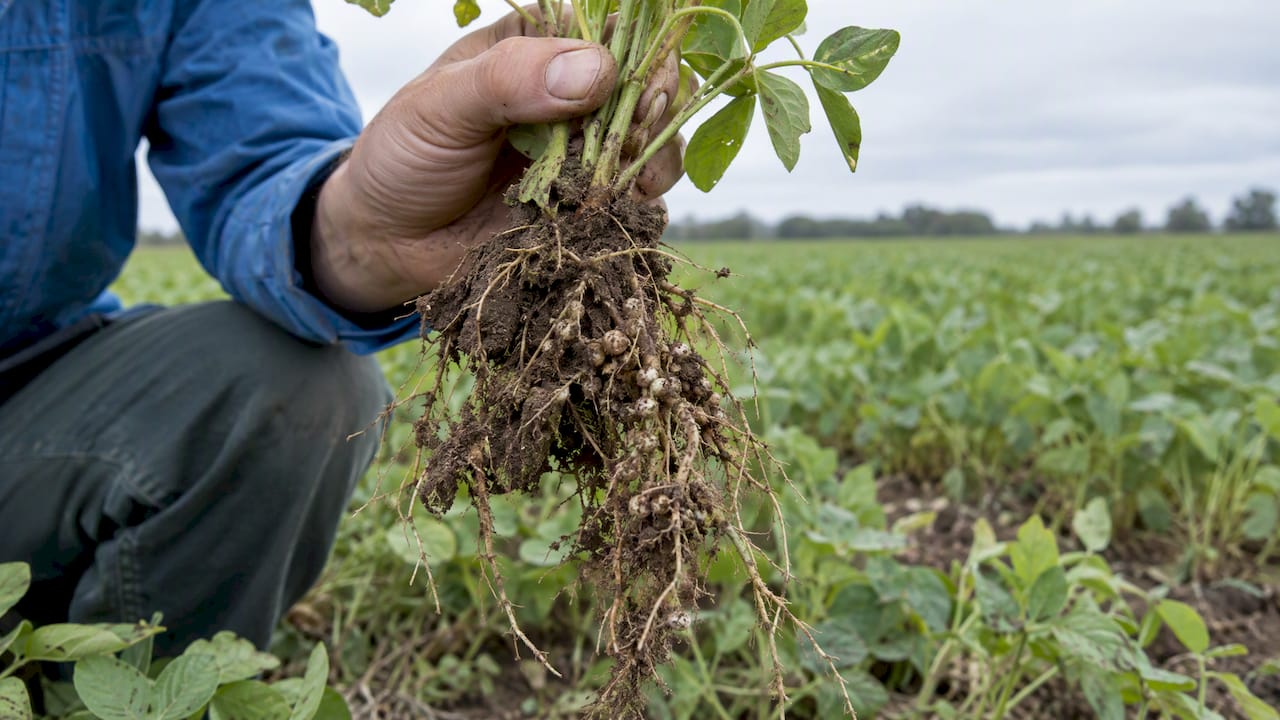
- Nitrogen fixation (N2 to NH4+): Certain bacteria, including free-living species and those in legume root nodules, use the enzyme nitrogenase to reduce atmospheric N2 into ammonium. This is a reduction reaction and it costs a substantial amount of cellular energy, which we cover in the next section. A smaller share of fixation happens abiotically, through lightning and industrial processes.
- Ammonification (organic N to NH4+): When organisms die or excrete waste, decomposers break down organic nitrogen compounds and release ammonium back into the soil. This step runs under both aerobic and anaerobic conditions, since decomposer communities vary widely.
- Nitrification (NH4+ to NO2- to NO3-): an aerobic oxidation process carried out by microorganisms. Some bacteria, including certain Nitrospira, can perform both steps; this comammox detail is enrichment rather than an assumed ESS HL requirement.
- Assimilation (inorganic nitrogen to organic nitrogen): plants take up nitrate or ammonium and incorporate nitrogen into molecules such as amino acids and proteins. Nitrogen passes through food webs when organisms feed.
- Denitrification (NO3- to N2): Under anaerobic conditions, typically in waterlogged soils or oxygen-depleted sediments, bacteria reduce nitrate stepwise back to nitrogen gas, passing through intermediates like nitric oxide and nitrous oxide along the way.
Fixation reduces N2 and requires energy. Nitrification oxidises ammonium through nitrite to nitrate; nitrifying microorganisms can obtain energy from these oxidation reactions. Denitrification returns nitrogen to the atmosphere. Anammox is an additional anaerobic pathway in which ammonium and nitrite are converted to N2.
Why Nitrogen Fixation Costs So Much Energy
The reason nitrogen fixation is biologically expensive comes down to chemistry. The triple bond holding the two nitrogen atoms together has a bond dissociation energy of around 945 kilojoules per mole, among the strongest bonds found in nature, which is why N2 resists breaking apart under normal biological conditions, as outlined in research on nitrogenase energetics.
Detailed nitrogenase mechanisms are enrichment here. Do not assume that the Lowe–Thorneley kinetic model is an ESS SL or HL examination requirement. Prioritise the processes and skills specified in your current ESS guide.
- The N≡N bond is one of the strongest in biochemistry, explaining nitrogen’s atmospheric stability
- Nitrogenase requires about 16 ATP per N2 molecule fixed
- Comammox bacteria show that microbial nitrogen metabolism is more flexible than older textbook models suggested
Study tip: Explain biological fixation at the depth requested. Detailed ATP accounting and bond energies are enrichment here, not a universal ESS markscheme checklist.
How Human Activity Has Reshaped the Nitrogen Cycle
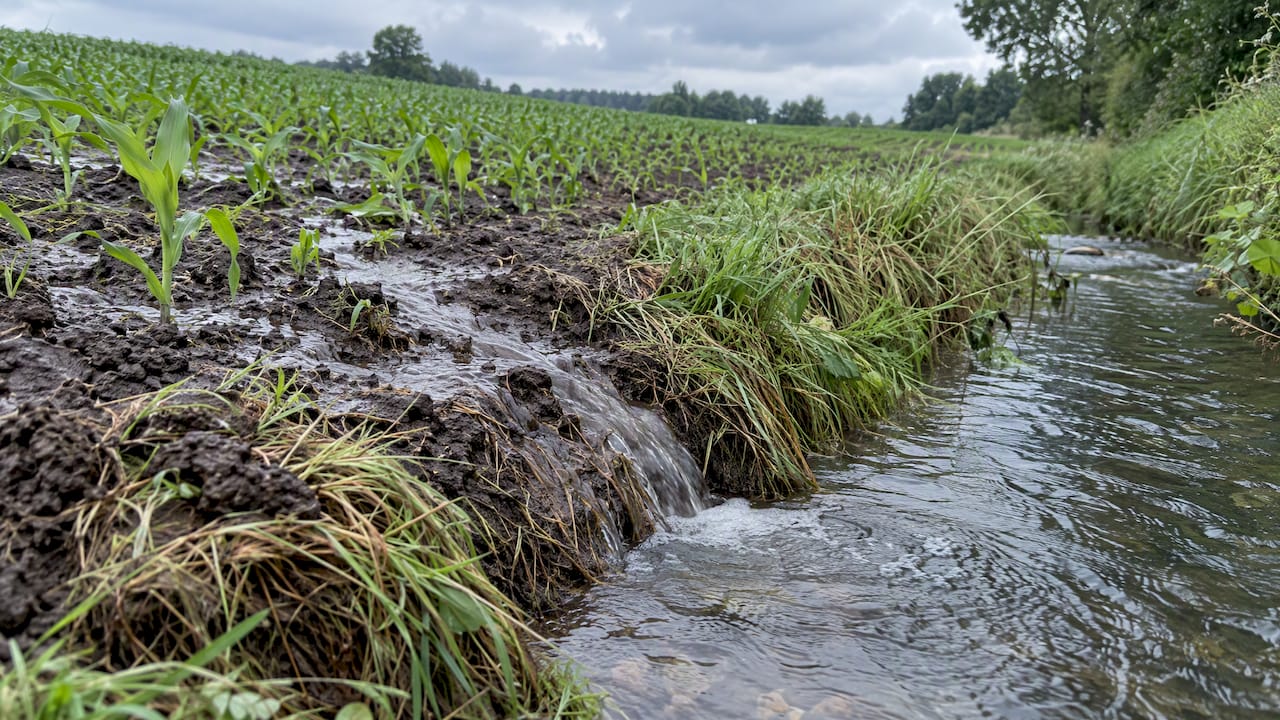
Industrial ammonia production through the Haber-Bosch process now adds a substantial amount of fixed nitrogen to the biosphere, on a scale that rivals natural biological fixation, according to research from the University of Vienna. That extra nitrogen doesn’t stay put: fertilizer runoff carries excess NO3- and NH4+ into rivers, lakes, and coastal waters.
Nitrous oxide (N2O), a byproduct of nitrification and denitrification, is a greenhouse gas far more potent than carbon dioxide, which makes it a frequent reference point in climate-focused exam answers, per the University of Vienna’s overview.
A model example worth adapting in essays: fertilizer applied to farmland washes into a nearby lake, triggers an algal bloom, and the bloom’s decomposition consumes dissolved oxygen, leading to fish kills downstream. You can read more about these interconnected pollution pathways in our piece on ecosystems and pollution.
- Haber-Bosch fixation has pushed global fixed nitrogen well above natural background levels
- Fertilizer runoff is a leading driver of eutrophication in freshwater and coastal systems
- N2O emissions tie the nitrogen cycle directly to climate change discussions
Electronics waste and industrial byproducts add their own pollution burden alongside agricultural runoff, and responsible disposal practices, like those described in this overview of e-pollution, play a role in limiting broader environmental damage.
Exam Revision Checklist: Terms and Common Mistakes
Practise fixation, assimilation, ammonification, nitrification and denitrification. Identify the substances involved and relevant conditions. Treat anammox, comammox and detailed enzyme mechanisms as additional reading unless your teacher identifies them as relevant to your course.
A frequent mistake we see is students writing that denitrification happens under aerobic conditions. It doesn’t: denitrifying bacteria need low-oxygen environments to use nitrate as an alternative electron acceptor. Another common slip is confusing ammonification (organic N to NH4+) with nitrification (NH4+ to NO3-), two different steps that often get merged into one vague sentence.
- Always state aerobic or anaerobic conditions explicitly when describing a transformation
- Name the chemical forms (N2, NH4+, NO2-, NO3-) rather than saying “nitrogen compounds”
- Keep ammonification and nitrification clearly separate in your answer
Pro Tip: A strong model sentence looks like this: “Denitrifying bacteria reduce NO3- to N2 under anaerobic conditions, completing the cycle by returning nitrogen to the atmosphere.” That single sentence hits terminology, direction, and condition all at once.
Why the Nitrogen Cycle Deserves Careful Revision Time
Use precise vocabulary when describing the nitrogen cycle. Practise labelling a diagram and explaining a transformation in full sentences, then check the substances, direction and conditions involved. Apply the same care when discussing nitrogen processes relevant to your own IA evidence.
— Marija
Get Personalized Help Mastering the Nitrogen Cycle
Working through fixation, nitrification, and denitrification with a tutor who marks IB papers for a living makes the difference between a vague answer and a full-credit one. We offer one-on-one sessions built around your syllabus content, whether that’s exam technique, IA data interpretation involving soil or water nitrogen, or a straightforward walkthrough of the cycle itself.

- A 20-minute trial session lets you test how we teach before committing further
- We offer a basic plan per 60-minute session, focused entirely on your syllabus needs
- We also support IA and EE feedback specific to environmental systems topics
Check our pricing and plans to book a session, or explore our IA tutoring page if your coursework touches on nitrogen cycling.
FAQ
What are the 5 stages of the nitrogen cycle?
A useful five-process revision framework is fixation, assimilation, ammonification, nitrification and denitrification. Diagrams split or combine processes differently; there is no compulsory five-stage sequence through which every nitrogen atom passes.
What are the 7 steps of the nitrogen cycle in order?
Diagrams differ in how they divide the nitrogen cycle. Nitrification can be shown as two steps; uptake, assimilation, feeding and decomposition may have separate arrows. Explain each arrow accurately rather than memorising a universal seven-step order.
What is the nitrogen cycle?
The nitrogen cycle is the continuous movement of nitrogen between the atmosphere, soil, water, and living organisms through microbial and chemical transformations. It converts inert atmospheric N2 into usable forms like ammonium and nitrate, then eventually returns nitrogen to the atmosphere through denitrification.
What is the nitrogen cycle in GCSE?
Qualifications specify different levels of detail. For IB ESS, use your current guide to identify required processes and applications; anammox and advanced nitrogenase mechanisms should not be presented as universal IB requirements.
Sources
- Microorganisms and the global nitrogen cycle — University of Vienna (Rudolphina)
- PubMed article summarizing nitrogenase energetics and fixation costs
- 17.2B: Nitrogen Cycle – Biology LibreTexts
- SL471/SS684: An Overview of Key Soil Nitrogen Cycling Transformations (IFAS)
Request a FREE 20-minute trial lesson
Share your IB year, SL or HL level, main question, availability and time zone. Parents are welcome to enquire about their child’s ESS needs.
No Comments