


09 Sep Parents: 5 Signals That Reveal a Serious Tutor, Not Just Credentials
The fastest way parents can practice seriösen nachhilfelehrer erkennen, or recognizing a truly serious tutor, is to check five signals at once: real subject competence, a diagnostic-first approach instead of jumping straight to teaching, a trial lesson offered without pressure, verifiable safeguarding proof and transparent pricing paired with real progress tracking. You can check all five from a first message, a profile, or one short trial lesson.
TL;DR:
- A serious tutor should offer a diagnostic assessment and an individualized plan before teaching, to ensure the tutor understands the student’s specific needs.
- Message at least three tutors with a detailed, similar plan to compare their diagnostic and safeguarding practices before booking a trial lesson.
- During the trial lesson, look for diagnostic questions, multiple explanation methods, clear next steps, and timely follow-up notes.
- Verify background checks and safeguarding measures through verifiable proof rather than verbal assurances, considering jurisdiction-specific standards.
- Avoid tutors demanding large deposits, avoiding questions about their methods, or guaranteeing fixed results without trial or progress tracking.
Table of Contents
- What Belongs on Your Tutor Screening Checklist
- How Do You Vet a Tutor Through Messages Alone?
- What Should You Watch for During the Trial Lesson?
- How Do You Verify Safeguarding and Keep Remote Lessons Safe?
- Which Behaviors Mean You Should Walk Away?
- An Experienced Tutor’s Take on What Actually Predicts a Good Fit
- Another Option Worth Knowing About for IB ESS Students
- Where to Verify These Checks Yourself
- Sources
What Belongs on Your Tutor Screening Checklist
Before you book anything, run every candidate through this list. It takes ten minutes and saves you months of wasted lessons.
- Credentials matched to the level. A primary-school tutor needs patience and clear communication more than a formal degree, but exam-prep tutoring (Matura, IB, university entrance) calls for someone who knows the exact syllabus and exam board. Ask what they’ve taught in the last twelve months, not just what they studied years ago.
- A diagnostic step before any teaching plan. Trustworthy tutors and reputable institutes list an initial learning-needs diagnosis and individualized plan as standard practice, not an optional extra.
- A trial lesson with simple cancellation terms. No lock-in packages, no pressure to commit for months upfront.
- Transparent pricing, stated plainly. If you have to ask twice what a session costs, that’s your answer.
- References and documentation you can actually check, not just a promise that “parents love me.”
- Fast, clear communication. How quickly they reply to your first message often predicts how they’ll communicate once lessons start.
Institutes that take this seriously tend to name an actual contact person and document lesson plans rather than hiding behind a generic inbox, according to guidance from ABACUS Nachhilfe on spotting serious tutoring providers.
How Do You Vet a Tutor Through Messages Alone?
Your first message does most of the screening work if you write it right. Send this instead of “Are you available for tutoring?”:
- Name the exact subject, current grade, and one recent assignment or test paper.
- Ask what topics the student seems to struggle with most.
- Ask how the tutor would structure the first session.
- Ask for one example of how they’ve helped a similar student improve (without needing names or private details).
A strong reply proposes a short plan, asks a diagnostic question back, and references the specific syllabus or exam board your child is working with. A weak reply jumps straight to price and availability with nothing about the student’s actual needs.
Pro Tip: Message at least three tutors with the identical text, then compare replies side by side on diagnostic depth, proposed structure, and how they handle the safeguarding question. The differences show up fast.
Ask to see a CV, any relevant certificates, and a sample worksheet or lesson outline. If a tutor works through a platform like Esstutor, recent subject-specific teaching experience should be easy to verify against their profile.
What Should You Watch for During the Trial Lesson?
The trial lesson tells you more than any CV. Watch for these markers:
- The tutor opens with questions about what the student already knows, rather than launching into a lecture.
- They offer more than one way to explain a tricky concept and ask the student to explain it back.
- The session ends with a clear, specific next step, not a vague “keep practicing.”
- There’s genuine rapport, but the tutor keeps appropriate boundaries with a minor.
- Within a day or two, you get a short note summarizing what was covered and what to practice next week.
A tutor who skips the diagnostic questions and goes straight into teaching mode is optimizing for looking competent in the moment, not for actually helping your child. That’s a pattern worth noticing on session one, before you’ve paid for ten.
How Do You Verify Safeguarding and Keep Remote Lessons Safe?
Ask directly what background checks apply where the tutor is based, and request redacted proof or platform verification rather than taking a verbal assurance. Student welfare guidance consistently flags reluctance to show any verification as a serious warning sign, not a minor inconvenience.
Because background-check requirements vary by jurisdiction, confirm what’s actually applicable rather than assuming one standard everywhere. For online sessions, set clear expectations: whether lessons are recorded, whether a parent or guardian should be reachable nearby, and what hours are appropriate for contact outside scheduled lessons. If a tutor resists any of this or gets vague, escalate the concern to the school or a student-welfare contact rather than letting it slide.
Which Behaviors Mean You Should Walk Away?
Some patterns aren’t yellow flags. They’re reasons to stop the conversation entirely.
- Demanding a large deposit or a long locked-in package before ever offering a trial.
- Vague or dodging answers about background checks, references, or how they actually teach.
- Promising a specific grade jump or guaranteeing results on a fixed timeline.
- Missed appointments, slow replies, or refusing to send any written progress notes.
Reputable tutors offer a trial lesson and short cancellation terms precisely because they’re confident the work will speak for itself. Anyone unwilling to let you test the fit before committing your money is telling you something.
An Experienced Tutor’s Take on What Actually Predicts a Good Fit
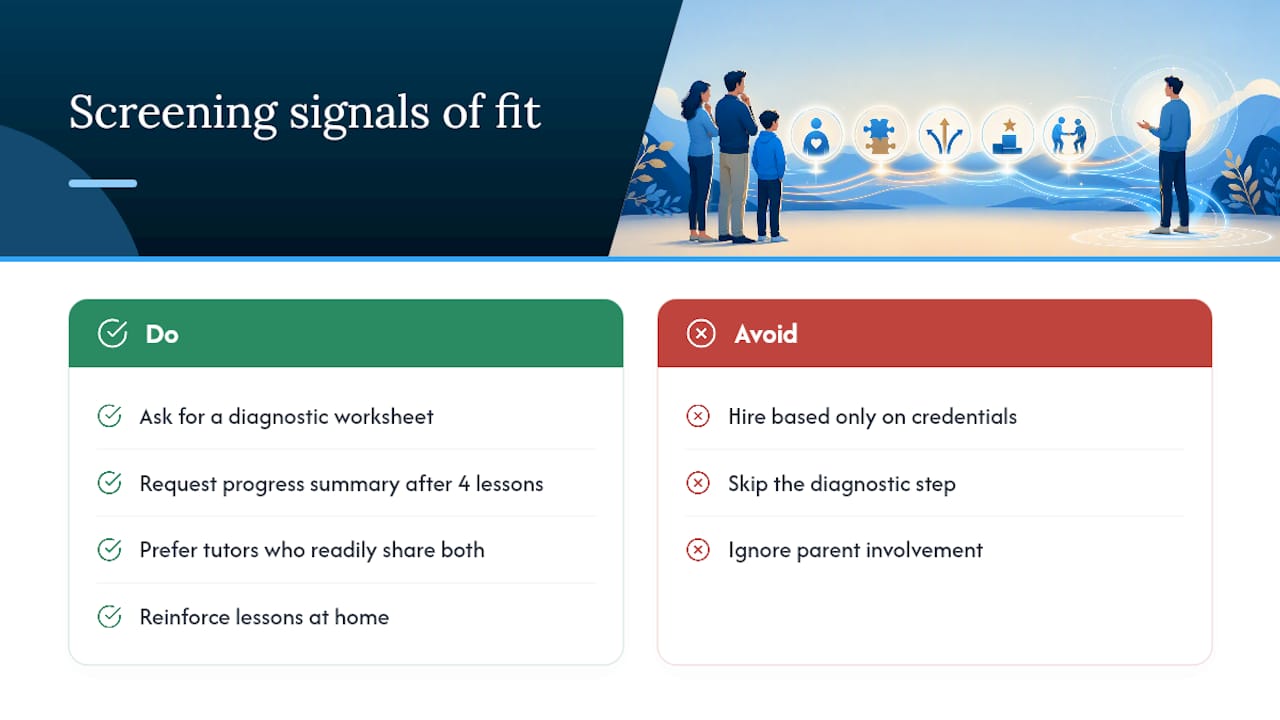
After years of matching students to lessons, I’ve noticed the diagnostic step is the single strongest predictor of whether a tutoring relationship works. It’s not the credential on someone’s profile. It’s whether they ask the right questions before they start explaining anything.
If you’re screening candidates, ask for a short diagnostic worksheet before the first paid session, and request a brief progress summary after four lessons. Any tutor confident in their approach will hand both over without hesitation. You can see how trial lessons typically run in this breakdown of the trial process, and reinforcing what happens in lessons at home makes a bigger difference than most parents expect, as this overview of parent involvement lays out well.
— Marija
Another Option Worth Knowing About for IB ESS Students
If your child is specifically taking IB Environmental Systems and Societies, general tutoring marketplaces won’t get you very far. Esstutor is built around exactly this subject, run by an experienced tutor knowledgeable about the IB examination process, which means the diagnostic step you just read about isn’t theoretical here. It’s built into how sessions start.
Every new student starts with a trial lesson, so you can watch the diagnostic-first approach in action before committing to a package. Esstutor also shares testimonials and outlines its background directly on the site, so you’re not taking pricing or experience claims on faith. If your child needs help with IA and extended essay work or exam paper technique specifically, start by checking what the IB ESS course actually involves and book a trial lesson to see whether the fit is right for your child.
Where to Verify These Checks Yourself
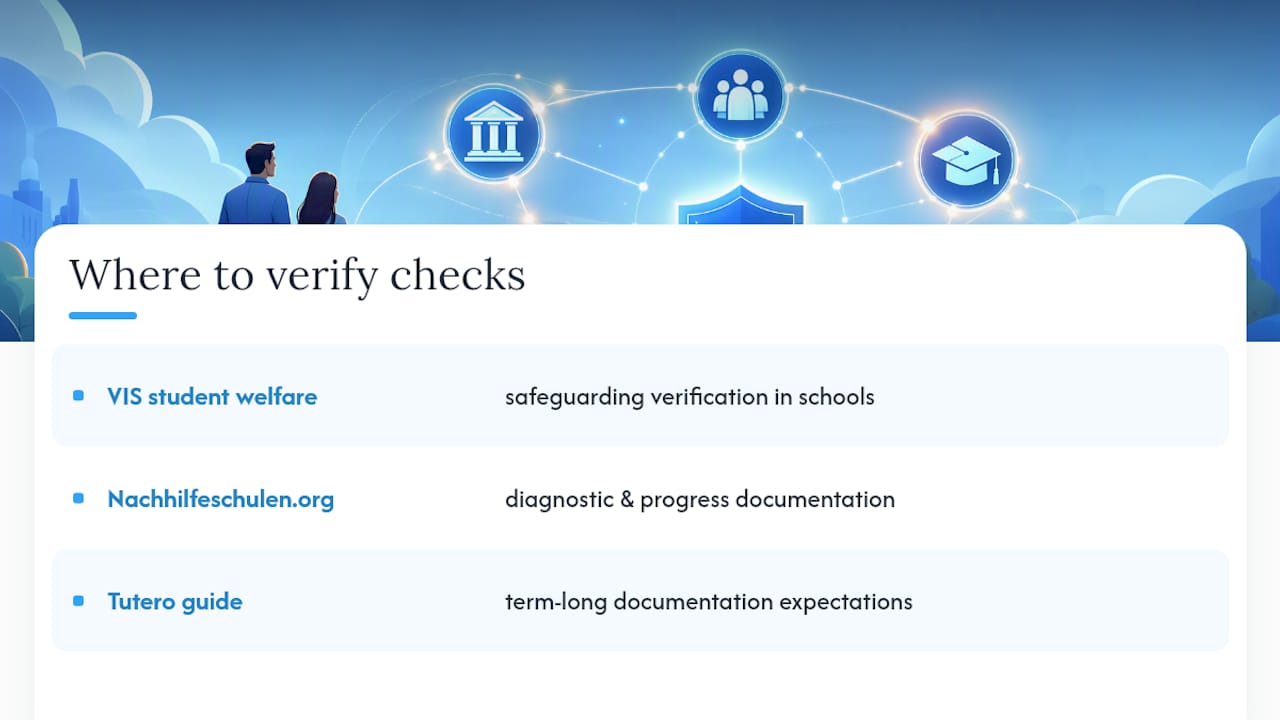
For safeguarding standards specific to schools, the VIS student welfare page explains what verification should look like in practice. For diagnostic and progress-tracking expectations, Nachhilfeschulen.org and Tutero’s guide to tutor quality signals both walk through what documentation should look like across a full term.
Sources
- Nachhilfeschulen
- Tutorperch — How to choose a tutor: trials & red flags
- VIS — Student welfare guidance (safeguarding emphasis)
- Tutero — 8 Signs of a Good Tutor
No Comments