


28 May Types of Ecosystems IB ESS: Your 2026 Study Guide
TL;DR:
- Ecosystems are classified into terrestrial and aquatic types, primarily distinguished by climate and salinity, respectively. Understanding specific limiting factors, such as rainfall or salinity, is essential for accurate identification and application in IB ESS exam questions. Mastering ecosystem types and their key drivers enhances justification, application, and overall exam performance in environmental studies.
Understanding the types of ecosystems in IB ESS is one of those topics that looks straightforward on the surface but trips up a lot of students in exams. The challenge is not just memorizing names. It is knowing how to classify them, describe their key drivers, and apply that knowledge to case studies, essays, and data response questions. This guide breaks down every major ecosystem category covered in the IB ESS syllabus, from tropical rainforests to coral reefs, with the kind of detail and clarity that helps you answer exam questions with confidence.
Table of Contents
- Key takeaways
- 1. How ecosystems are classified in IB ESS
- 2. Tropical rainforests
- 3. Savannas
- 4. Subtropical and hot deserts
- 5. Chaparral (Mediterranean shrublands)
- 6. Temperate grasslands
- 7. Temperate forests
- 8. Boreal forests (taiga)
- 9. Arctic tundra
- 10. Freshwater ecosystems
- 11. Marine ecosystems
- 12. Ecological pyramids and energy flow in IB ESS
- 13. Choosing the right ecosystem for your IB ESS exam answer
- My take on mastering ecosystem types for IB ESS
- Ready to go deeper on IB ESS ecosystems?
- FAQ
Key takeaways
| Point | Details |
|---|---|
| Ecosystems vs. biomes | Biomes are collections of ecosystems; treating them as the same in exams costs you marks. |
| Eight terrestrial biomes | IB ESS covers eight major terrestrial types, each defined by distinct climate and vegetation patterns. |
| Salinity classifies aquatic systems | Freshwater and marine ecosystems are distinguished primarily by salt concentration. |
| Pyramids are measured models | Ecological pyramids vary in shape depending on what they measure, so never assume a fixed form. |
| Match ecosystems to exam questions | Choosing the right ecosystem type based on limiting environmental drivers strengthens your answers. |
1. How ecosystems are classified in IB ESS
Before you can describe any ecosystem confidently, you need to understand what separates one type from another. In the IB ESS context, classification starts with two main categories: terrestrial and aquatic. Within those, the primary drivers are climatic factors, especially temperature and precipitation, along with physical factors like salinity, light availability, and soil type.
Biomes are large-scale collections of ecosystems sharing similar climate conditions, and IB ESS links biome distribution primarily to temperature and precipitation. That distinction matters because a biome is not a single ecosystem. It is a region where many ecosystems share the same broad climate profile. The Amazon basin contains thousands of individual ecosystems, all belonging to the tropical rainforest biome.
For aquatic systems, salinity is the defining physical factor. Whether a body of water is freshwater or marine determines which organisms can survive there and how the system functions. Light penetration also shapes the vertical structure of lakes and oceans, creating distinct zones with different ecological communities.
Pro Tip: In exams, when a question asks you to identify or describe an ecosystem type, always mention the specific limiting factor that defines it. Saying “the tropical rainforest is defined by high year-round rainfall and temperatures above 25°C” scores better than just naming the biome.
When students confuse ecosystem types with biome categories, their ESS exam answers tend to be shallow. Keeping this distinction clear will set your responses apart.
2. Tropical rainforests
Tropical rainforests sit near the equator and receive well over 2,000 mm of rainfall annually, with consistently high temperatures averaging 25 to 30°C. The vegetation is layered into distinct strata: the emergent layer, canopy, understory, and forest floor. This stratification supports extraordinary species diversity, making tropical rainforests among the most productive terrestrial ecosystems on Earth.
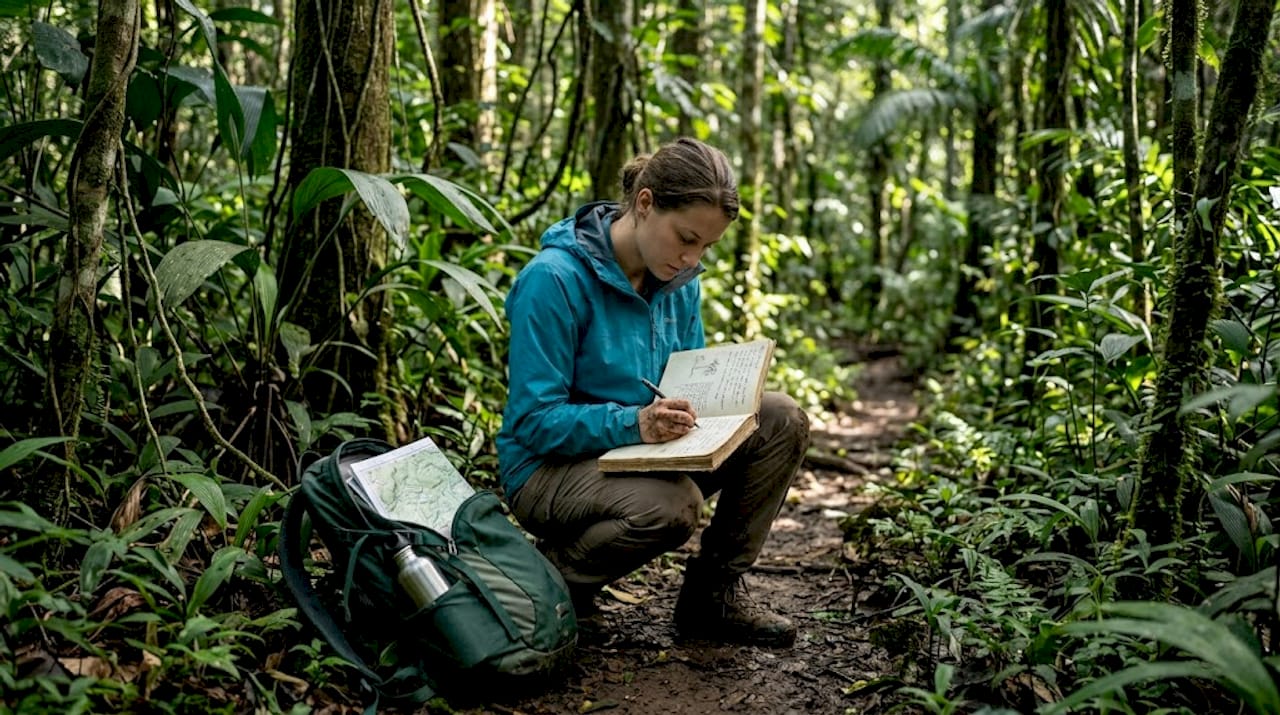
Human impacts here are severe. Deforestation for agriculture, logging, and urban development reduces biodiversity and disrupts carbon cycling. This ecosystem is a go-to example in IB ESS for questions on sustainability, ecosystem services, and biodiversity loss.
3. Savannas
Savannas are tropical and subtropical grasslands with scattered trees. They experience a distinct wet and dry season, with annual rainfall typically between 500 and 1,500 mm. The dry season is the defining limiting factor here: it shapes the vegetation, favors fire-adapted grasses, and drives the migration patterns of large mammal species like wildebeest across the Serengeti.
For IB ESS, savannas are excellent case study ecosystems for discussing seasonal variation, primary productivity, and human impacts such as overgrazing and land conversion.
4. Subtropical and hot deserts
Deserts receive less than 250 mm of rainfall per year, and moisture is the dominant limiting factor. Temperatures can be extreme, both hot in subtropical deserts like the Sahara and cold in others like the Gobi. Vegetation is sparse and highly adapted: cacti store water in their stems, while many animals are nocturnal to avoid daytime heat.
Deserts cover a substantial portion of Earth’s land surface and connect directly to IB ESS discussions on water scarcity, land degradation, and desertification driven by human activity and climate change.
5. Chaparral (Mediterranean shrublands)
The chaparral biome occupies coastal areas around 30 to 40 degrees latitude and experiences hot, dry summers with mild, wet winters. Shrubby, fire-adapted vegetation dominates. This is a biome many students overlook, but it appears in IB ESS material relating to fire ecology and conservation of Mediterranean biodiversity hotspots like California, the Cape Floristic Region, and parts of Australia.
Human pressures include urban sprawl, invasive species, and altered fire regimes that threaten the native plant communities.
6. Temperate grasslands
Temperate grasslands, including the North American prairies and Eurasian steppes, experience moderate rainfall (250 to 750 mm annually) and wide seasonal temperature swings. The absence of trees is maintained by low rainfall and periodic fire. Soils here are among the richest on Earth, which is precisely why most temperate grasslands have been converted to agricultural land.
This ecosystem is particularly useful for IB ESS case studies on agricultural expansion, soil degradation, and the loss of native species.
7. Temperate forests
Temperate forests experience distinct seasons with defined growing periods, and precipitation is fairly constant year-round, supporting diverse flora adapted to temperature fluctuations. Deciduous trees like oaks and maples shed their leaves in autumn, reducing water loss during cold months. Productivity peaks in spring and summer.
These forests cover much of Europe, eastern North America, and parts of East Asia. IB ESS students often use them to discuss carbon sequestration, sustainable forestry, and habitat fragmentation.
8. Boreal forests (taiga)
Boreal forests stretch across Canada, Russia, and Scandinavia and are defined by long, cold winters and short, cool summers. Coniferous trees like spruce and fir dominate because they retain needles year-round, allowing photosynthesis to resume quickly when temperatures rise. Species diversity is lower than in temperate forests, but biomass can be very high.
The boreal forest stores enormous quantities of carbon, both in trees and in the waterlogged peat soils beneath them, making it a central ecosystem in discussions of climate change and carbon cycling in IB ESS.
9. Arctic tundra
The Arctic tundra is defined by permafrost, a permanently frozen layer of soil beneath the surface, and an extremely short growing season of just 6 to 10 weeks. Vegetation is limited to mosses, lichens, sedges, and low-growing shrubs. Animal life includes caribou, arctic foxes, and migratory birds.
For IB ESS, the tundra is especially relevant to topics on permafrost thaw, methane release, and the cascading effects of climate change on fragile, low-productivity ecosystems.
Pro Tip: When studying terrestrial biomes for IB ESS, organize them by temperature first, then precipitation. This mirrors how the syllabus structures classification and makes it much easier to recall key features under exam conditions.
Eight major terrestrial biomes are recognized with distinct temperature and precipitation patterns influencing vegetation and animal life.
10. Freshwater ecosystems
Aquatic biomes cover about 75% of Earth’s surface, and freshwater systems are distinguished by their low salt concentration, generally below 1 part per thousand. The main freshwater ecosystem types relevant to IB ESS are:
- Lakes and ponds: Standing water bodies with vertical stratification into littoral, limnetic, and profundal zones. Light and temperature determine which organisms occupy each zone.
- Rivers and streams: Flowing water with high oxygen content. Productivity varies with nutrient input and canopy cover.
- Wetlands: Wetlands act as critical interfaces between aquatic and terrestrial ecosystems, supporting unique plant and animal communities including marshes, swamps, and bogs. They host hydrophytes and important migratory species.
Ecosystem services from freshwater systems include water filtration, flood regulation, and habitat provision. IB ESS students frequently use wetlands as a case study for ecosystem services and conservation policy. For more on how marine and freshwater biomes differ based on salinity, the Esstutor guide on environmental literacy is a helpful reference.
11. Marine ecosystems
Marine biomes cover the largest area of any ecosystem category and are defined by high salinity, averaging about 35 parts per thousand. Key marine ecosystem types for IB ESS include:
- Open ocean (pelagic zone): Low nutrient levels but enormous volume. Phytoplankton drive primary productivity and support food webs across vast distances.
- Coral reefs: Marine biomes include highly biodiverse coral reefs, which face severe threats from climate change including bleaching and ocean acidification. Despite covering less than 1% of the ocean floor, they support around 25% of all marine species.
- Estuaries: Where freshwater rivers meet the sea. Salinity fluctuates constantly, creating a challenging but nutrient-rich environment. Estuaries are nurseries for many commercially important fish species.
| Ecosystem | Salinity | Key species | Main threats |
|---|---|---|---|
| Lakes | Very low | Perch, algae, amphibians | Eutrophication, invasive species |
| Wetlands | Very low to brackish | Herons, hydrophytes, insects | Drainage, pollution |
| Open ocean | High (~35 ppt) | Tuna, phytoplankton, whales | Overfishing, plastic pollution |
| Coral reefs | High | Clownfish, corals, sea turtles | Bleaching, acidification |
| Estuaries | Variable | Mangroves, crabs, juvenile fish | Development, sedimentation |
12. Ecological pyramids and energy flow in IB ESS
Understanding how energy moves through an ecosystem is just as important as knowing the ecosystem types themselves. Ecological pyramids are the key modeling tool here. Ecological pyramids are quantitative models representing the distribution of numbers, biomass, and energy across trophic levels in ecosystems.
There are three types you need to know for IB ESS:
- Pyramid of numbers: Shows the count of organisms at each trophic level. Can be inverted, for example when one oak tree supports thousands of insects.
- Pyramid of biomass: Shows the dry mass of organisms at each trophic level. Excludes water mass. Can also be inverted in aquatic systems where phytoplankton reproduce rapidly.
- Pyramid of energy or productivity: Shows the rate of energy flow through each trophic level. This pyramid is always upright because energy is always lost between levels, never gained.
Ecological pyramids vary and should not be assumed to have a uniform shape. Their design depends on whether they measure number, biomass, or energy productivity over time and area. Understanding this distinction prevents one of the most common mistakes students make in paper two answers.
Pro Tip: The pyramid of energy is the only type that is always upright. If an exam question gives you an inverted pyramid and asks you to identify the type, the answer is either numbers or biomass. Ecological pyramid types are explained in depth in Esstutor’s key concepts guide.
13. Choosing the right ecosystem for your IB ESS exam answer
Selecting the right ecosystem type for a case study or essay question is a skill that separates average answers from high-scoring ones. The best approach is to anchor your selection on limiting environmental drivers such as moisture and temperature for terrestrial systems, or salinity and light for aquatic ones.
Here is a quick reference to help you match ecosystem types to common IB ESS themes:
| Ecosystem type | Key climate driver | Best used for ESS themes |
|---|---|---|
| Tropical rainforest | High rainfall, high temperature | Biodiversity, deforestation, carbon cycles |
| Desert | Very low rainfall | Water scarcity, desertification |
| Boreal forest | Cold temperature, low rainfall | Carbon storage, climate change |
| Wetlands | Variable moisture | Ecosystem services, conservation |
| Coral reefs | Warm, clear marine water | Biodiversity, ocean acidification |
| Temperate forest | Moderate temp and rainfall | Sustainable forestry, fragmentation |
Approaching ecosystem identification through the lens of limiting environmental factors improves exam performance by focusing your answer on relevant ecological drivers rather than vague descriptions.
My take on mastering ecosystem types for IB ESS
I have worked with IB ESS students for over 13 years, and I can tell you that the ecosystem topic is where many students waste marks they have earned through studying. They know the content. But in the exam, they describe ecosystems too generally or pick one that does not match the question’s context.
What I have found is that the students who score highest are not necessarily the ones who can name the most facts. They are the ones who can justify their ecosystem choice. Why this biome and not another? What limiting factor makes it relevant? That precision is what gets marks.
I also think students underestimate how interconnected the ecosystem topic is with the rest of the syllabus. Understanding energy flow through an ecosystem connects directly to topics like food webs, species diversity, and human impacts on productivity. When you study ecosystems for IB ESS, you are not learning an isolated chapter. You are building the foundation for almost every other topic in the course.
My advice: build a one-page summary table of all eight terrestrial biomes and the key aquatic types. Include the limiting factor, two representative species, one human impact, and one ESS theme it connects to. That single study tool will serve you across papers, essays, and your internal assessment.
— Marija
Ready to go deeper on IB ESS ecosystems?
If you are preparing for IB ESS exams and want to make sure your understanding of ecosystem types is exam-ready, Esstutor is here to help. As an IB examiner with over 13 years of experience, I work with students one-on-one to strengthen exactly the kind of knowledge and application skills this article covers.
Whether you are working on your Extended Essay in ESS or preparing for paper one and paper two, personalized sessions with Esstutor are built around your syllabus, your weak points, and your exam timeline. You can also explore the IB ESS course overview to see how ecosystem topics fit into the broader course structure. Book a trial lesson and see the difference that targeted, experienced support makes.
FAQ
What are the main types of ecosystems in IB ESS?
IB ESS covers eight major terrestrial ecosystems including tropical rainforests, savannas, deserts, chaparral, temperate grasslands, temperate forests, boreal forests, and Arctic tundra, along with key aquatic types including freshwater lakes, rivers, wetlands, and marine systems like oceans, coral reefs, and estuaries.
How are biomes different from ecosystems in IB ESS?
A biome is a large-scale collection of ecosystems that share similar climate conditions. In IB ESS, biomes are defined primarily by temperature and precipitation, while individual ecosystems within a biome can vary in species composition and physical structure.
Which ecological pyramid is always upright?
The pyramid of energy or productivity is always upright because energy is always lost between trophic levels and never gained. Pyramids of numbers and biomass can be inverted depending on the ecosystem.
How do I choose the right ecosystem type for an IB ESS exam answer?
Identify the primary limiting environmental driver relevant to the question, such as temperature or moisture for terrestrial ecosystems, or salinity and light for aquatic ones. Matching your ecosystem choice to that driver makes your answer more precise and more likely to score full marks.
What is the role of ecosystems in IB ESS coursework?
Ecosystems are central to IB ESS because they connect topics including biodiversity, energy flow, human impacts, conservation, and sustainability. Understanding different ecosystem types gives you the case study examples and conceptual grounding needed for every major section of the course.
No Comments