


29 May The Role of Data in ESS: a 2026 Student Guide
TL;DR:
- Data in ESS is essential for developing critical environmental insights and linking evidence to meaningful conclusions. However, many educators face barriers to integrating reliable, FAIR-compliant datasets, limiting students’ opportunities for real-world data analysis. Strengthening data fluency enables ESS students to evaluate environmental issues confidently and supports scientific literacy beyond the classroom.
Data is not just numbers on a spreadsheet. In Environmental Systems and Societies (ESS), the role of data in ESS is what separates informed environmental thinking from guesswork. Whether you are analyzing species diversity trends, tracking carbon emissions, or designing an internal assessment, data shapes every meaningful conclusion you draw. Yet many students treat data as a box to check rather than a tool for real understanding. This guide breaks down why data fluency matters, what challenges educators face, and how you can use data more confidently in your ESS studies right now.
Table of Contents
- Key Takeaways
- The role of data in ESS education today
- Challenges educators face with data integration
- FAIR data principles and why they matter for ESS
- Practical strategies for data-driven learning in ESS
- My honest take on data in ESS classrooms
- Ready to get stronger with data in your ESS studies?
- FAQ
Key Takeaways
| Point | Details |
|---|---|
| Data drives ESS learning | Understanding data fluency helps students think critically and engage with real environmental evidence. |
| Educators face real barriers | Over half of Earth science teachers report difficulty accessing classroom-ready datasets. |
| FAIR principles matter | Data that is Findable, Accessible, Interoperable, and Reusable supports better learning and decision-making. |
| Alignment is everything | Matching datasets to lesson goals is one of the most overlooked steps in data-driven ESS teaching. |
| Support changes outcomes | Structured tutoring and quality resources help students and educators move from confusion to confident data use. |
The role of data in ESS education today
When we talk about the role of data in ESS, we are talking about more than collecting field measurements or reading graphs. Data fluency in ESS means understanding how evidence is gathered, evaluated, and applied to real environmental questions. It is what allows you to look at a graph of ocean pH levels and draw a meaningful conclusion about ocean acidification, not just describe a line going down.
Data fluency supports scientific literacy, civic participation, and future career readiness within ESS education. National organizations now call for integrating data skills across K-12 and diploma-level curricula precisely because the world’s most pressing environmental challenges demand people who can read, question, and use evidence well.
Here is what strong data fluency actually looks like in an ESS classroom:
- Analyzing long-term temperature datasets to identify climate trends rather than weather fluctuations
- Comparing biodiversity indices across ecosystems to draw conclusions about habitat health
- Using secondary data from environmental agencies to support or challenge a hypothesis in an IA
- Evaluating the reliability of a data source before citing it in an essay or investigation
- Connecting local environmental data to global systems thinking
Pro Tip: When you use data in your ESS IA, always explain why you chose that specific dataset and what its limitations are. Examiners reward critical engagement with data, not just its presence.
Building these skills takes practice. The good news is that environmental literacy concepts in the IB ESS curriculum are designed to help you develop them step by step, as long as you approach each topic with genuine curiosity about the evidence behind it.
Challenges educators face with data integration
You might assume that using data in ESS teaching is straightforward. In reality, many teachers face significant barriers that limit how much data-driven learning actually happens in the classroom. Understanding these challenges helps you, as a student, recognize why some lessons feel disconnected from real-world data, and how to seek out deeper engagement on your own.
Only 39% of U.S. teachers use pre-existing datasets in Earth science education. That statistic is striking. It tells us that the majority of science educators are not yet drawing on the wealth of publicly available environmental data that could make lessons far more relevant and rigorous.
The specific barriers educators report include:
- 53% difficulty accessing datasets that are organized and ready for classroom use
- 42% cite time constraints as a reason they cannot incorporate data effectively
- 47% struggle to integrate data into existing lesson structures and curriculum standards
- Dynamic data visualization tools are used by only 45% of ESS educators, which limits equitable data exploration for students
Beyond access and time, there is a deeper issue. 18% of educators do not actively foster student data agency, meaning they do not consistently give students opportunities to question data, select their own datasets, or interpret findings independently. That gap matters because data agency is exactly the skill that prepares you for your IA and for scientific thinking beyond school.
These are systemic challenges, not personal failures on any teacher’s part. Systemic support is critical for transforming how data is used in classrooms. That means professional development, better resources, and curricular alignment all need to improve together.
FAIR data principles and why they matter for ESS
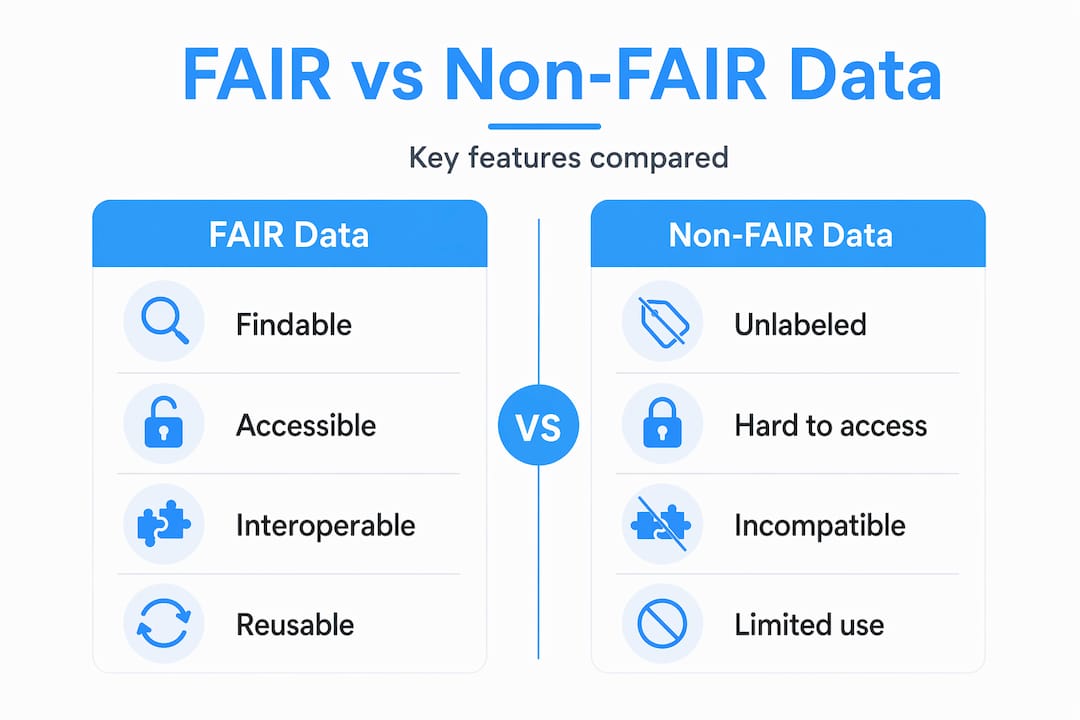
If you have used NASA Earthdata, the ESS Data Portal, or similar platforms for research, you have already benefited from FAIR data principles, even if you did not know it. FAIR stands for Findable, Accessible, Interoperable, and Reusable. These four principles are the foundation of trustworthy, well-managed environmental data.
Here is a quick comparison of what FAIR looks like in practice versus what non-FAIR data often looks like:
| FAIR data | Non-FAIR data |
|---|---|
| Clearly labeled with metadata describing its source and methods | No context for how or when data was collected |
| Publicly accessible through a stable URL or portal | Locked behind paywalls or unavailable without contact |
| Compatible with multiple tools and formats | Only readable in one proprietary software |
| Can be reused and built upon by other researchers | Single-use, with no documentation for replication |
NASA’s O’FAIR Guide recommends FAIR principles for Earth science data specifically to support diverse users, from professional researchers to general public learners. The guide provides steps to improve data findability, accessibility, interoperability, and reusability across NASA-funded missions. That matters for ESS students because it means more reliable, well-documented datasets are available to you for free.
FAIR compliance is a whole-lifecycle standard. It is not just about posting data online. It includes clear metadata, interoperability across platforms, and documentation that allows others to understand and reuse the data meaningfully. Teaching yourself to look for these qualities in your own IA data sources will genuinely improve the quality of your work.
Pro Tip: When evaluating a dataset for your ESS IA, check for a DOI (digital object identifier), clear methodology notes, and a stated collection date. If those three elements are missing, treat the source with caution.
Platforms like surveys and secondary databases offer curated resources that follow many of these principles, making them far more useful starting points than a general web search.
Practical strategies for data-driven learning in ESS
So how do you actually put data to work in your ESS studies? Whether you are preparing for exams, completing your IA, or just trying to deepen your understanding of a topic, these strategies will help you engage with data more effectively.

Start with lesson or topic alignment. Do not grab the first dataset you find. Dataset-to-lesson alignment is one of the most common failure points in data-driven ESS learning. Ask yourself: does this data directly address the environmental question I am investigating? Does it match the scale, time period, and variables relevant to my topic?
Here are practical steps you can follow:
- Identify the environmental system you are studying, such as freshwater, atmosphere, or soil.
- Define the specific question or hypothesis your data needs to address.
- Search FAIR-compliant platforms like NASA Earthdata or the European Social Survey data portal.
- Check that your dataset includes metadata: who collected it, when, and how.
- Test the data in a visualization tool before committing to it for your IA or project.
- Note any limitations or biases in the data and plan to address them in your analysis.
Beyond data selection, the tools you use to explore and present data matter too. Environmental data tools like GLOBE Observer, iNaturalist, and Google Earth Engine allow you to collect, map, and analyze real environmental data at scales that were previously inaccessible to school-level students. Using these tools builds the kind of data experience that examiners look for in strong IA submissions.
Community-based and local knowledge is another underused resource. Pairing global datasets with local observations, such as comparing national deforestation statistics with your own land-use survey, gives your ESS work a specificity and depth that generic data cannot provide. It also demonstrates genuine data agency, a skill your examiner will notice.
Here are a few platforms worth bookmarking:
- NASA Earthdata: Climate, atmosphere, and land use data with solid FAIR documentation
- GBIF (Global Biodiversity Information Facility): Species occurrence records from around the world
- World Bank Open Data: Socioeconomic and environmental indicators by country
- ESS Data Portal: Social and environmental survey data from across Europe
My honest take on data in ESS classrooms
I have worked with IB ESS students for over 13 years, and I want to share something that I see repeatedly. Students who struggle with data in ESS are almost never struggling because they are bad at math or science. They are struggling because no one has shown them how to connect a dataset to a real question they actually care about.
The biggest missed opportunity I see is treating data as decoration. A student will include a graph in their IA, describe it in one sentence, and move on. That is not data analysis. That is data presence. The difference between a level 4 and a level 6 in your IA often comes down to whether you interrogate the data: what does it show, what does it not show, and what would you need to know to be more certain?
I also think the importance of data in ESS extends beyond academic performance. When you learn to read environmental data critically, you become a more informed person. You can evaluate news claims about climate change, biodiversity loss, and pollution with your own skills rather than relying on someone else’s interpretation. That matters well beyond your IB exams.
What I have found works best is pairing data practice with topics students genuinely find interesting. If you care about coral reefs, find bleaching datasets. If urban heat islands fascinate you, pull temperature records from your own city. The data skills transfer across all ESS topics once you have built confidence with something that motivates you.
One more thing. Educators cannot do this alone. Systemic improvement in professional learning and resource access is not optional. It is necessary. But while that infrastructure catches up, students who seek out additional support and quality resources do not have to wait.
— Marija
Ready to get stronger with data in your ESS studies?
If the barriers described in this article sound familiar, you are not alone. Many IB ESS students feel uncertain about how to use data in their assessments or how to draw strong conclusions from evidence. That is exactly where Esstutor can help.
Working with an experienced IB examiner gives you targeted feedback on your data analysis, whether you are preparing for Paper 2 or working through your IB ESS internal assessment. Esstutor’s sessions are tailored to your specific needs, so you are not sitting through generic lessons. You are getting direct, practical support on the exact skills you need to improve. Students consistently report moving from confusion to clarity in just a few sessions. If you want to understand how data shapes your ESS work and score higher because of it, a trial lesson is a great place to start.
FAQ
What is the role of data in ESS?
Data in ESS provides the evidence base for understanding environmental systems and evaluating human impacts. It supports everything from internal assessments to global policy analysis within the IB curriculum.
Why is data fluency important for ESS students?
Data fluency supports scientific literacy, civic engagement, and career readiness. It allows students to evaluate environmental claims critically rather than accepting information at face value.
What are FAIR data principles in ESS?
FAIR stands for Findable, Accessible, Interoperable, and Reusable. FAIR principles help students and researchers identify trustworthy, well-documented datasets suitable for analysis and reuse.
How can ESS students find good datasets for their IA?
Start with FAIR-compliant platforms like NASA Earthdata, GBIF, or the ESS Data Portal. Always check for metadata, a collection date, and a clear methodology before using any dataset in your assessment.
Why do so few teachers use real data in ESS lessons?
Over half of Earth science educators report barriers including difficulty accessing classroom-ready datasets, time constraints, and challenges aligning data with curriculum standards. Systemic support and better resources are needed to close that gap.
No Comments