


03 Jun How to Research for ESS IA: A Student’s Guide
TL;DR:
- Research for your ESS IA involves formulating a precise, testable question and using reliable academic sources and fieldwork to gather evidence aligned with IB criteria. Selecting a focused question based on the SMART framework and connecting it to IB syllabus topics ensures efficient research and meaningful analysis. Organizing data from the start and linking findings to ESS concepts enhances clarity and examiner scoring.
Researching for your ESS IA means selecting a precise, testable question, then using academic databases like EBSCO Academic Search Complete and JSTOR alongside primary fieldwork to build evidence that meets IB assessment criteria. The Internal Assessment, formally known as the Individual Investigation in IB Environmental Systems and Societies, rewards students who plan their research systematically rather than collecting data at random. This guide walks you through every step: forming your question, finding reliable sources, gathering data, and analyzing it in a way that examiners reward. Whether you are just starting or refining your approach, these ESS IA research tips will help you work smarter.
How to research for ESS IA: start with a focused question
A strong ESS IA research question is the single most important decision you will make in this process. Library guidance for IB ESS confirms that narrowing your question before conducting broad literature searches directly improves the efficiency and quality of sources you find. That means your question shapes everything: which databases you search, what data you collect, and how you structure your analysis.
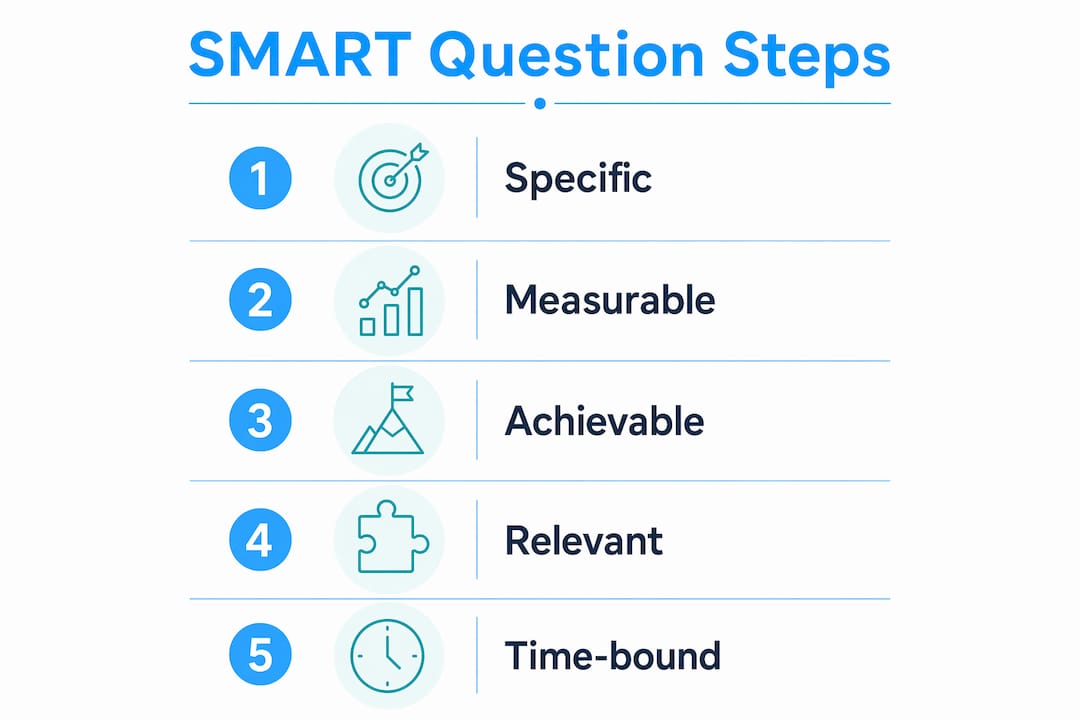
A useful framework is the SMART criteria. Your question should be Specific, Measurable, Achievable, Relevant to ESS concepts, and Time-bound where possible. Compare these two examples:
- Weak: “How does pollution affect biodiversity?”
- Strong: “How does proximity to a highway (0 m, 50 m, 100 m) affect lichen species diversity in an urban park?”
The second version tells you exactly what to measure, where, and how to compare results. Local environmental issues make particularly effective ESS IA topics because they allow for primary data collection and manageable fieldwork, which increases data reliability. A question about your school’s stormwater runoff, a nearby wetland, or local air quality gives you direct access to a real system you can investigate.
Your question also needs to connect clearly to at least one ESS topic from the IB syllabus, such as ecosystems, climate change, or pollution. Examiners look for this alignment when scoring your Personal Engagement and Exploration criteria. Check the ESS IA assessment criteria early so your question is built to score from the start.
Pro Tip: Write three candidate questions before committing to one. Test each against the SMART criteria and ask your teacher which is most feasible given your available time and equipment.
What are the best sources and databases for ESS IA research?
Once your question is set, you need sources that are peer-reviewed, current, and relevant to environmental science. The table below compares the most useful databases and resources for ESS IA research.

| Source | Type | Best for |
|---|---|---|
| EBSCO Academic Search Complete | Subscription database | Broad scientific and environmental journal articles |
| JSTOR | Subscription database | Ecology, conservation, and environmental policy studies |
| DOAJ (Directory of Open Access Journals) | Free, open access | Peer-reviewed articles without a paywall |
| Internet Archive Scholar | Free, open access | Archived scientific papers and older studies |
| NASA Global Climate Change | Government data portal | Climate data, temperature records, CO2 trends |
| NOAA (National Oceanic and Atmospheric Administration) | Government data portal | Ocean, atmosphere, and weather datasets |
EBSCO and JSTOR are the two databases most recommended for IB ESS secondary research, offering comprehensive and reliable data when searched with well-chosen keywords. If your school does not provide access, DOAJ and Internet Archive Scholar offer free, permanent access to peer-reviewed environmental research. These open-access options are genuinely useful, not just a fallback.
For data-heavy investigations, NASA Global Climate Change and NOAA provide downloadable datasets on temperature anomalies, sea level rise, and atmospheric composition. These are especially useful if your research question connects to global climate patterns or ocean systems.
Pro Tip: Use Boolean operators in database searches. Searching “lichen AND species diversity AND urban” in EBSCO returns far more targeted results than a general search for “lichen pollution.”
The principle of starting with a narrow question and then using topic centers and keywords in specialized databases is fundamental to efficient ESS IA research. Treat your research question as your search engine. Every keyword you enter should come directly from the variables and concepts in your question.
What methods can you use to gather primary and secondary data?
Combining quantitative and qualitative data provides a more complete understanding of environmental issues in the ESS IA, and it aligns directly with IB assessment expectations for Analysis and Evaluation. This means you should plan for both types from the beginning, not add one as an afterthought.
For primary data collection, the most common ESS IA investigation methods include:
- Field measurements: Quadrat sampling for plant species diversity, transect surveys along a pollution gradient, water quality testing using pH meters and dissolved oxygen probes.
- Surveys and interviews: Structured questionnaires measuring community awareness of local environmental issues, useful for topics in human systems or resource management.
- Controlled experiments: Comparing seed germination rates under different soil contamination levels, or measuring decomposition rates at varying temperatures.
- Environmental sensors: Automated sensors can record temperature, humidity, and air quality continuously, saving time and increasing data precision compared to manual recording.
For secondary data, your job is to evaluate credibility before using a source. Ask three questions: Is the author affiliated with a recognized institution? Was the study peer-reviewed? Is the data recent enough to be relevant to your question? Sources that fail two of these three checks should not anchor your analysis.
Document everything as you go. Create a data table in Google Sheets or Microsoft Excel from day one, with columns for date, location, measurement type, value, and any notes on conditions. Students who organize data during collection spend far less time reconstructing records later, and their Analysis sections are noticeably cleaner.
Regular feedback from your teacher at this stage helps confirm that your methodology is sound and your data volume is sufficient for the analysis IB criteria require. One consultation after your first round of data collection can prevent a major revision later.
How to organize and analyze your ESS IA data effectively
Structured data analysis and relevant graphs are what allow you to link your findings back to your research question and ESS concepts, which is critical for scoring well on the Analysis criterion. Raw data sitting in a table earns nothing. Interpreted data presented clearly earns marks.
Start by organizing your raw data into a clean summary table. Then apply the appropriate statistical technique for your data type.
| Data type | Recommended analysis | Visualization |
|---|---|---|
| Species counts across sites | Mean, standard deviation, bar chart | Grouped bar chart |
| Continuous measurements (e.g., temperature) | Mean, range, line graph | Line graph with error bars |
| Survey responses | Frequency, percentage | Pie chart or stacked bar |
| Correlation between two variables | Pearson or Spearman correlation | Scatter plot with trend line |
Every graph you include must have a title, labeled axes with units, and a caption explaining what the graph shows. This sounds basic, but a significant number of students lose marks here because their visuals are incomplete.
The most common pitfall in ESS IA data interpretation is confusing correlation with causation. If your data shows that lichen diversity decreases closer to the highway, you can state that the two variables are associated. You cannot conclude that traffic emissions directly caused the decline unless your methodology controlled for other variables. Acknowledge limitations honestly. Examiners reward intellectual honesty far more than overconfident conclusions.
Link every finding back to your original research question and to at least one ESS concept from the syllabus. If your question was about lichen diversity near a highway, your analysis should reference ecosystem services, pollution indicators, or biodiversity indices. You can find top ESS IA topic ideas that already have this conceptual grounding built in, which makes the analysis step much more straightforward.
Key takeaways
Effective ESS IA research requires a focused question, credible sources, mixed data collection methods, and honest analysis tied directly to IB assessment criteria.
| Point | Details |
|---|---|
| Start with a SMART question | A specific, measurable question guides every database search and data collection decision. |
| Use academic databases first | EBSCO, JSTOR, DOAJ, and Internet Archive Scholar provide peer-reviewed sources that examiners expect. |
| Mix primary and secondary data | Combining fieldwork with published studies strengthens your analysis and meets IB expectations. |
| Organize data from day one | Clean records in Excel or Google Sheets make your Analysis section faster and more accurate to write. |
| Link findings to ESS concepts | Every conclusion must connect to your research question and a named concept from the IB syllabus. |
What I have learned from guiding students through ESS IA research
After working with IB ESS students for over 13 years, the pattern I see most often is this: students who struggle with their IA almost always have the same root problem. They started collecting data before they had a clear, testable question. They gathered information broadly, hoping the analysis would sort itself out. It never does.
The students who score 7s do the opposite. They spend more time on their question than on anything else. They test it against the IB rubric before they touch a database or a field site. Once the question is tight, the research almost organizes itself.
One thing I tell every student: do not treat secondary research as a formality you complete before the “real” fieldwork. The literature you find in JSTOR or DOAJ should actively shape your methodology. If three published studies on urban lichen diversity used transect sampling at 10-meter intervals, that is a signal. Use the same interval so your results are comparable to existing research. That comparison is where your Discussion section gets genuinely interesting.
I also want to push back on a common misconception: that a simple topic means a weak IA. Some of the strongest investigations I have seen were built around a single local stream, a school garden, or a patch of urban green space. Depth beats breadth every time in this assessment. A focused study of one system, analyzed rigorously and connected clearly to ESS theory, will outscore a sprawling investigation with vague conclusions.
Start early, stay focused, and treat your research question as the foundation everything else is built on. The skills you build here, reading critically, organizing evidence, and drawing honest conclusions, will serve you well beyond the IB.
— Marija
Get expert support for your ESS IA research
Knowing the steps is one thing. Applying them under deadline pressure, while managing five other IB subjects, is another challenge entirely. Esstutor offers personalized, one-on-one tutoring with an IB examiner who has over 13 years of experience supporting students through every stage of the ESS IA process.
From refining your research question to reviewing your data analysis before submission, Esstutor’s sessions are built around your specific investigation. Students who work with an ESS IA tutor get direct feedback on their methodology, source selection, and analysis, exactly the areas where marks are most often lost. You can also access ESS IA score-boosting resources to strengthen your preparation with up-to-date 2026 guidance. Book a trial lesson and start your IA on the right foundation.
FAQ
What is the first step in ESS IA research?
The first step is forming a focused, SMART research question. Library guidance for IB ESS confirms that narrowing your question before searching databases directly improves the quality of sources you find.
Which databases are best for ESS IA secondary research?
EBSCO Academic Search Complete and JSTOR are the top recommended databases for IB ESS, with DOAJ and Internet Archive Scholar as free alternatives. All four provide peer-reviewed articles suitable for supporting your investigation.
How much primary data do I need for my ESS IA?
You need enough data to identify a clear pattern and apply at least one statistical technique. Most successful investigations include a minimum of 30 data points across at least three comparable sites or conditions, though your teacher can confirm what is sufficient for your specific question.
Can I use government websites like NASA or NOAA as sources?
Yes. NASA Global Climate Change and NOAA are credible, data-rich sources appropriate for ESS IA secondary research, particularly for investigations involving climate, atmosphere, or ocean systems.
What is the most common mistake in ESS IA data analysis?
The most common mistake is confusing correlation with causation. Structured analysis requires you to describe associations accurately and acknowledge limitations rather than overstate what your data proves.
No Comments