


23 Jun Why Manage Waste Sustainably: A Guide for Students
TL;DR:
- Sustainable waste management reduces pollution, conserves resources, and cuts greenhouse gases globally.
- Individuals and communities can contribute through reducing, reusing, recycling, and supporting systemic change.
Sustainable waste management is the practice of handling waste in ways that protect the environment, conserve natural resources, and minimize pollution and climate impact. When you understand why manage waste sustainably matters, you gain a clearer picture of how everyday choices connect to global issues like climate change, biodiversity loss, and public health. This guide breaks down the environmental, economic, and social benefits of sustainable waste practices, explains the core frameworks that guide them, and gives you practical steps to take action. Whether you are a student, educator, or simply someone who cares about the planet, this topic belongs at the center of your environmental literacy.
Why manage waste sustainably: the environmental and health case
Sustainable waste management directly reduces pollution in air, soil, and water. Poor disposal methods cause leachate contamination that can persist in groundwater for decades. That means communities living near poorly managed landfills face long-term risks to their drinking water and soil quality.
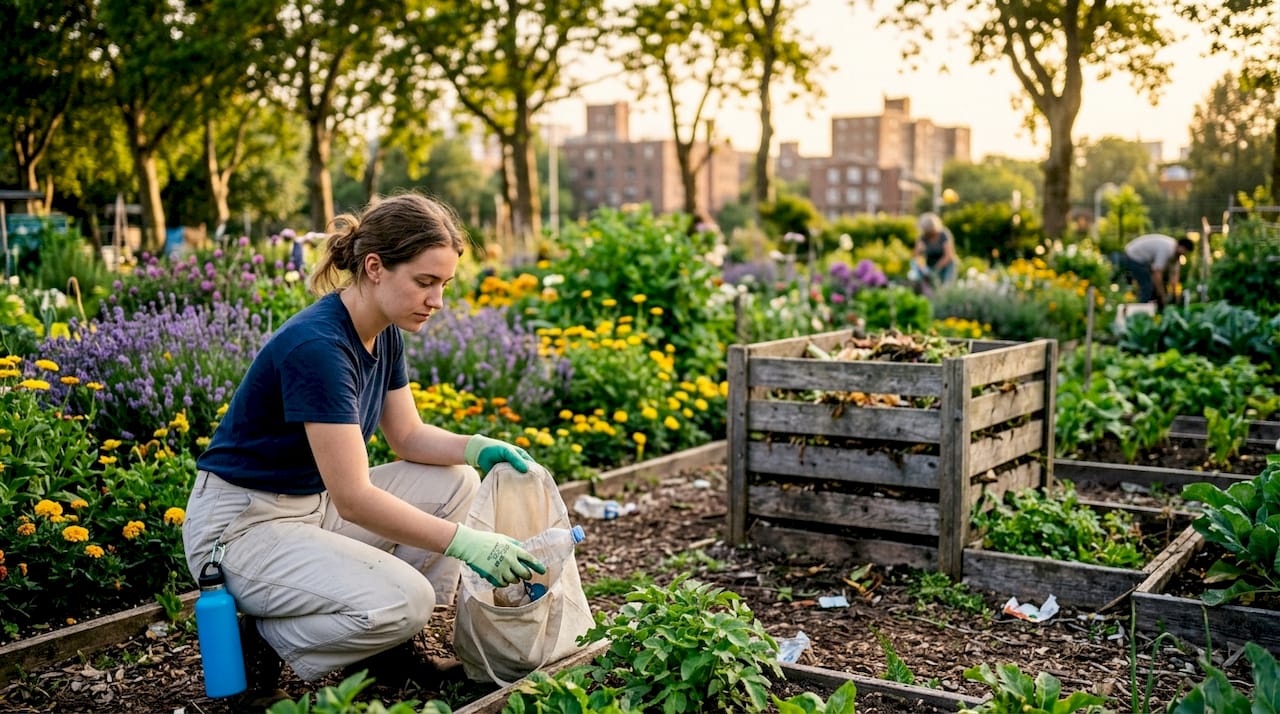
Open burning of waste is one of the most damaging practices still used worldwide. It releases dioxins and toxins into the air that linger in ecosystems and human tissue for years. Mismanaged plastic breaks down into microplastics, which enter the food chain and pose risks to both wildlife and human health.
Greenhouse gas emissions are another major concern. Landfills generate methane, a potent greenhouse gas, when organic waste decomposes without oxygen. Segregating organic waste and composting it instead of landfilling it is one of the most direct ways to cut those emissions. The US EPA confirms that separating organic waste is a key step toward making circular economy goals realistic.
The scale of the problem is significant. Extracting virgin materials accounts for half of global carbon emissions. Keeping materials in use through reuse and recycling directly reduces the need for that extraction. That single fact reframes waste management from a cleanup task into a climate strategy.
Key environmental and health benefits of sustainable waste management include:
- Reduced methane emissions from landfills through organic waste separation
- Prevention of groundwater and soil contamination from leachate
- Elimination of toxic air pollutants from open burning
- Reduced demand for virgin material extraction, cutting carbon emissions
- Lower microplastic pollution in ecosystems and food supplies
How does sustainable waste management benefit the economy and society?
Sustainable waste management saves money at every level, from households to national governments. The economic case is stronger than most people realize, and the costs of inaction are largely hidden.
Waste management systems cost at least $40–45 per tonne in low-income countries and over $200 per tonne in high-income countries. When governments underinvest in proper systems, those costs do not disappear. They shift to public health budgets, environmental cleanup, and lost productivity. The true cost of poor waste management is far greater than the direct operational cost.
Food waste is a striking example of economic loss. The UN reports that shifting to zero-waste food systems could halve food waste by 2030 and prevent up to $1 trillion in economic losses each year. That is not a marginal saving. It represents a structural shift in how societies value and use resources.
The circular economy creates jobs and new industries. Repair, remanufacturing, composting, and material recovery all require skilled workers. These are green jobs that cannot be outsourced to automated systems in the same way that extraction-based industries can be.
“The global waste crisis is a failure of financing and governance, requiring a shift from take-make-waste to circular economy models that value finite materials.” — UN Secretary-General, International Day of Zero Waste 2026
The social benefits extend beyond economics. Communities with well-managed waste systems have lower rates of disease linked to contaminated water and air. Children in those communities show better health outcomes. Educators and students who understand these connections are better equipped to advocate for policy change.
- Reduced operational costs through waste prevention and material efficiency
- Avoided public health costs from pollution-related illness and contaminated water
- Job creation in circular economy sectors like repair, composting, and recycling
- Economic savings from food waste reduction, potentially preventing $1 trillion in annual losses
- Stronger community resilience through cleaner environments and healthier populations
What are the core principles and frameworks of sustainable waste management?
The waste hierarchy is the foundational framework for sustainable waste management. It ranks waste management strategies from most to least preferred: refuse, reduce, reuse, recycle, recover, and dispose. Prevention always comes before recycling. That order matters because focusing only on recycling is insufficient to achieve genuine sustainability.
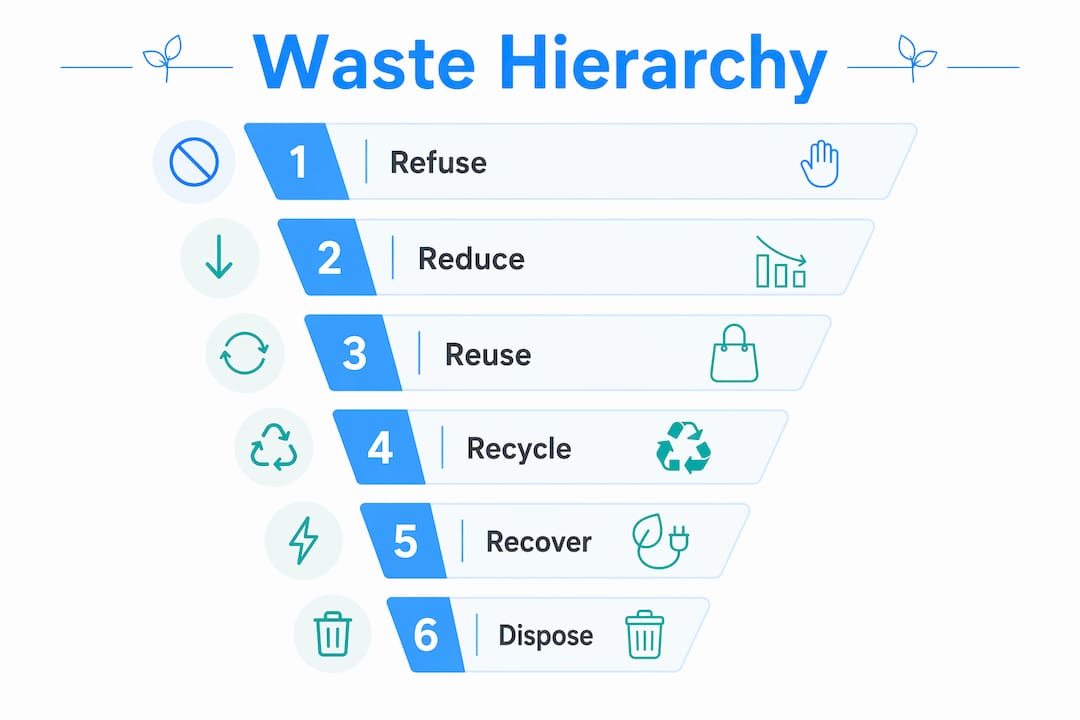
Most people default to recycling as their primary waste action. Recycling is valuable, but it still requires energy and produces emissions. Refusing unnecessary products and reducing consumption prevents waste from being created in the first place. That is always the better outcome.
The circular economy builds on the waste hierarchy by redesigning systems so that materials stay in use as long as possible. Instead of a linear take-make-waste model, the circular economy framework keeps products and materials cycling through the economy. This approach reduces the need for virgin resource extraction and cuts emissions across entire supply chains.
The zero waste philosophy takes this further by aiming to eliminate waste generation entirely through better product design, business models, and consumer behavior. Zero waste initiatives are now active in cities like San Francisco, Ljubljana, and Kamikatsu in Japan, each demonstrating that near-zero landfill rates are achievable with the right systems.
Pro Tip: When studying the waste hierarchy for IB ESS, remember the order using the phrase “Refuse, Reduce, Reuse, Recycle, Recover, Dispose.” Prevention always scores higher marks than disposal in exam answers.
| Approach | Sustainability outcome | Position in waste hierarchy |
|---|---|---|
| Refuse unnecessary products | Prevents waste creation entirely | Highest priority |
| Reduce consumption | Lowers total material use and emissions | Second priority |
| Reuse and repair | Extends product life, avoids new production | Third priority |
| Recycle materials | Recovers materials but uses energy | Fourth priority |
| Energy recovery | Extracts value from residual waste | Fifth priority |
| Landfill disposal | Last resort, highest environmental impact | Lowest priority |
Organic waste separation deserves special attention. When food and garden waste go to landfill, they decompose anaerobically and produce methane. Composting or anaerobic digestion with energy capture turns that waste into a resource. Reducing food waste alone could cut methane emissions by up to 7%, which is a meaningful contribution to climate targets.
How can individuals, students, and educators contribute?
Every person generates waste, which means every person has a role in managing it better. The good news is that small, consistent actions add up to significant collective impact.
At home and at school, the most effective starting point is reducing what you buy and use. Maintaining your belongings so they last longer is a direct waste reduction strategy. The US EPA notes that simple individual actions like keeping school supplies in good condition and maintaining clean car air filters can improve fuel consumption by up to 10% and reduce waste generation. These are not dramatic lifestyle changes. They are habits that compound over time.
Practical steps for individuals and students:
- Buy only what you need and choose products with minimal packaging
- Repair items before replacing them
- Compost food scraps instead of sending them to landfill
- Separate recyclables correctly so materials are actually recovered
- Refuse single-use plastics when reusable alternatives are available
- Support or join local zero waste initiatives and community composting programs
Educators have a unique opportunity to build sustainability education into curricula across subjects. A science class can analyze local waste data. A math class can calculate the carbon footprint of food waste. A social studies class can examine waste governance policies in different countries. These cross-curricular connections make sustainability real and relevant for students.
Pro Tip: For IB ESS internal assessments, waste management topics offer rich data collection opportunities. You can measure household waste composition, track recycling rates, or analyze the impact of a local composting program. These make strong, original investigations.
Community and policy engagement amplifies individual action. Writing to local representatives about waste infrastructure, participating in community clean-up events, and supporting businesses that practice environmental stewardship all contribute to systemic change. Individual behavior matters, but the systems that shape behavior matter more.
Key Takeaways
Sustainable waste management is the most direct way to reduce pollution, conserve resources, and cut greenhouse gas emissions across every sector of society.
| Point | Details |
|---|---|
| Prevention beats recycling | The waste hierarchy prioritizes refusing and reducing over recycling, which still uses energy and resources. |
| Economic costs of inaction are hidden | Poor waste management shifts costs to public health and environment, far exceeding direct operational savings. |
| Food waste is a climate issue | Reducing food waste could cut methane emissions by up to 7% and prevent $1 trillion in annual economic losses. |
| Circular economy keeps materials in use | Replacing linear take-make-waste models with circular systems reduces virgin material extraction and carbon emissions. |
| Education drives systemic change | Students and educators who understand waste frameworks are better equipped to advocate for effective policy and behavior change. |
Why waste education is the most underrated sustainability skill
I have been teaching IB Environmental Systems and Societies for over 13 years, and I can tell you that waste management is consistently one of the most underestimated topics in the curriculum. Students often treat it as a simple recycling checklist. The reality is far more complex and far more interesting.
What I find most striking is how the economic argument for sustainable waste management is almost never taught alongside the environmental one. Students learn about methane and microplastics, which is important. But they rarely learn that waste sector improvements could reduce greenhouse gas emissions by 53% from 2021 levels in Europe, or that the global food waste problem represents a trillion-dollar annual loss. Those numbers change the conversation entirely.
I also think we underestimate how much governance and financing shape waste outcomes. A student in a high-income country with curbside composting has a very different set of options than a student in a low-income country where waste collection barely exists. Understanding that gap is part of environmental literacy. It builds empathy and critical thinking alongside practical knowledge.
My honest advice: do not wait for a perfect system to act within. Learn the waste hierarchy, apply it in your own life, and use your education to push for better systems around you. That combination of personal action and systemic thinking is exactly what the world needs right now.
— Marija
Esstutor can help you master sustainability for IB ESS
Sustainable waste management is a core topic in IB Environmental Systems and Societies, and understanding it deeply can make a real difference in your exam scores and internal assessment quality.

At Esstutor, I work with IB ESS students worldwide to build genuine understanding of topics like the waste hierarchy, circular economy, and environmental impact assessment. If you are preparing for exams or working on your IB ESS internal assessment, personalized tutoring can help you connect these concepts clearly and apply them with confidence. With over 13 years of experience as an IB examiner and educator, I know exactly what examiners look for. Book a trial lesson and see how targeted support can lift your understanding and your grade.
FAQ
What is sustainable waste management?
Sustainable waste management is the practice of handling, reducing, and disposing of waste in ways that protect the environment, conserve resources, and minimize greenhouse gas emissions. It follows the waste hierarchy, prioritizing prevention and reuse over recycling and disposal.
Why is the waste hierarchy important?
The waste hierarchy ranks waste strategies from most to least sustainable, placing prevention at the top and disposal at the bottom. Focusing only on recycling is insufficient because prevention and reuse avoid the energy and emissions that recycling still requires.
How does waste management connect to climate change?
Landfills produce methane when organic waste decomposes, and extracting virgin materials accounts for half of global carbon emissions. Sustainable waste practices like composting, reuse, and circular economy models directly reduce both sources of greenhouse gas emissions.
What can students do to manage waste sustainably?
Students can reduce consumption, repair items before replacing them, compost food scraps, and separate recyclables correctly. Simple habits like maintaining school supplies and avoiding single-use plastics collectively reduce waste generation and its environmental impact.
How does poor waste management affect public health?
Poor waste management causes groundwater contamination from leachate, toxic air pollution from open burning, and microplastic contamination in food and water supplies. These effects can persist for decades and disproportionately affect communities near poorly managed waste sites.
No Comments