


13 Jun Types of Environmental Pollution: A Student’s Guide
TL;DR:
- Environmental pollution includes various categories such as air, water, soil, noise, light, thermal, radioactive, and plastic pollution, each affecting different environmental media. Understanding their sources, effects, and interactions is essential for IB ESS students, with emphasis on classification and the interconnectedness of pollution types. Recognizing spatial variability and overlaps in pollution impacts enhances analysis and exam performance.
Environmental pollution is defined as the introduction of harmful substances or energy into the environment at rates that exceed the capacity of natural systems to absorb or neutralize them. Britannica classifies pollution into major media types including air, water, and land, while also recognizing additional categories like noise, light, thermal, radioactive, and plastic pollution. Understanding the full range of types of environmental pollution matters because each category carries distinct causes, measurable effects on ecosystems, and documented risks to human health. For IB ESS students and educators, mastering these categories is not optional. It is the foundation of every pollution-related exam question, internal assessment, and case study you will encounter.
1. What are the main types of environmental pollution?
The types of environmental pollution are most clearly organized by the medium they affect: air, water, and soil. These three form the core framework recognized by agencies like the WHO and the U.S. EPA. Beyond these, pollution also includes noise, light, thermal, radioactive, and plastic categories, each affecting different parts of the biosphere. Treating these as separate but connected categories gives you a much stronger analytical framework than memorizing a flat list.
2. Air pollution: sources, pollutants, and health risks
Air pollution is the contamination of the atmosphere by chemical, physical, or biological agents that alter its natural composition. Major sources include motor vehicles, coal-fired power plants, agricultural burning, and industrial facilities. Common pollutants are particulate matter (PM2.5), nitrogen oxides (NOx), ground-level ozone, sulfur dioxide, and carbon monoxide.
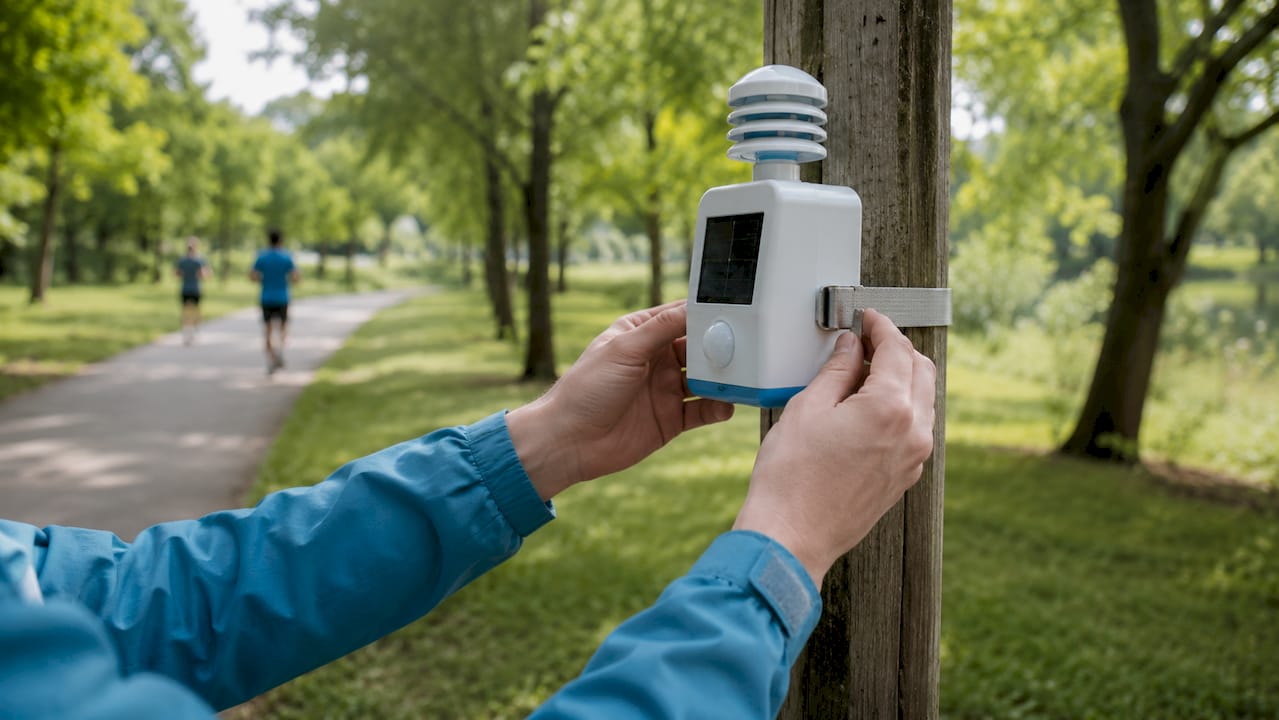
The health risks are well documented. PM2.5 penetrates deep into lung tissue and enters the bloodstream, contributing to cardiovascular and respiratory disease. Health-based AQIs combine multiple pollutants using epidemiological data to communicate risk more accurately than single-pollutant indexes. This means the Air Quality Index (AQI) you see on a weather app is actually a composite score, not a reading of one gas.
One specific and often overlooked source is aviation. Lead emissions in air come primarily from small piston-engine aircraft using leaded gasoline, creating localized hotspots near general aviation airports. This is a strong example for an IB ESS case study because it shows how exposure is not uniform across a region.
Pro Tip: When writing about air pollution in your IB ESS internal assessment, always specify which pollutant you are measuring and which AQI standard you are using. Examiners reward precision.
3. Water pollution: contaminants, effects, and ecosystem damage
Water pollution occurs when harmful substances enter rivers, lakes, oceans, or groundwater at concentrations that disrupt biological or chemical balance. Sources include agricultural runoff carrying nitrates and phosphates, industrial discharge of heavy metals, untreated sewage, and oil spills. Each source introduces a different type of contaminant with a different ecological effect.
The effects of water pollution on aquatic ecosystems include eutrophication, oxygen depletion, and habitat destruction. Eutrophication occurs when excess nutrients trigger algal blooms, which block sunlight and consume dissolved oxygen as they decompose. Fish kills, dead zones, and the collapse of aquatic food webs follow. The Gulf of Mexico dead zone, driven largely by agricultural runoff from the Mississippi River basin, is one of the most cited real-world examples.
For human populations, contaminated drinking water is a direct health threat. Heavy metals like mercury and lead bioaccumulate through the food chain, meaning top predators and humans who consume them receive concentrated doses. Waterborne pathogens from sewage cause cholera, typhoid, and dysentery in regions without adequate water treatment infrastructure.
4. Soil pollution: causes, persistence, and food chain risks
Soil pollution is the degradation of land through the accumulation of toxic chemicals, heavy metals, or biological agents that impair soil function and fertility. Industrial waste disposal, mining operations, excessive pesticide and fertilizer use, and illegal dumping are the primary causes. Unlike air or water pollution, soil contamination tends to persist for decades because soil has limited self-cleaning capacity.
The agricultural implications are serious. Contaminated soil produces crops that absorb pollutants, introducing toxins directly into the human food supply. Organochlorine pesticides like DDT, though banned in many countries, remain detectable in soils and organisms decades after their last application. This persistence is a key concept in IB ESS when studying bioaccumulation and biomagnification.
Soil pollution also degrades biodiversity. Earthworms, fungi, and soil bacteria that drive nutrient cycling are highly sensitive to chemical contamination. When these organisms decline, the entire soil ecosystem loses function, reducing agricultural productivity and increasing erosion risk.
5. Noise, light, thermal, and radioactive pollution
These four pollution categories are less visible than air, water, or soil contamination, but their ecological and health impacts are well established.
Noise pollution is defined as sound at levels that cause physiological or psychological harm. Urban transport and industrial sources cause stress, hearing impairment, and sleep disruption in human populations. In wildlife, noise pollution disrupts communication, mating calls, and predator-prey detection, with documented effects on bird populations near highways and airports.
Light pollution includes over-illumination, glare, and light trespass from artificial sources. Artificial night lighting disrupts migratory patterns in birds and sea turtles, interferes with insect navigation, and reduces the visibility of the night sky for astronomical observation. Cities like Las Vegas and Hong Kong produce light domes visible from hundreds of kilometers away.
Thermal pollution occurs when industries discharge heated water into rivers or coastal areas, raising water temperatures and reducing dissolved oxygen levels. Power plants and manufacturing facilities are the main sources. Warmer water holds less oxygen, stressing fish and other aquatic organisms that depend on specific temperature ranges.
Radioactive pollution originates from nuclear power plant accidents, weapons testing, uranium mining, and improper disposal of radioactive medical or industrial waste. Radioactive isotopes like cesium-137 and strontium-90 persist in the environment for decades and accumulate in living tissue. The Chernobyl and Fukushima disasters are the most studied examples of large-scale radioactive contamination.
6. Plastic pollution: a growing environmental concern
Plastic pollution is the accumulation of plastic materials in the environment at concentrations that harm wildlife, habitats, and human health. Macro and microplastic debris contaminate marine and terrestrial ecosystems through ingestion, entanglement, and chemical leaching. Single-use plastics, packaging, and synthetic textiles are the dominant sources.
Microplastics are particles smaller than 5 millimeters. They form when larger plastic items break down under UV radiation and physical abrasion, or they enter the environment directly as microbeads in personal care products. Microplastics have been detected in ocean sediments, Arctic ice, drinking water, and human blood, making this one of the most pervasive pollution problems of the current era.
The ecological effects are wide-ranging. Marine animals from zooplankton to whales ingest microplastics, which block digestive systems and transfer toxic chemical additives up the food chain. On land, soil microplastics reduce earthworm activity and alter soil structure. Regulatory responses include the EU Single-Use Plastics Directive and bans on plastic bags in over 60 countries, though enforcement and alternatives remain inconsistent.
Pro Tip: For your IB ESS IA, plastic pollution in a local waterway or beach is an excellent research topic. You can collect measurable data on plastic density, classify by type, and connect findings to global patterns.
7. How to classify and compare different pollution categories
Pollution classification as a matrix crossing environmental media with pollutant agent types gives students a cleaner analytical framework than a simple list. The two axes are: the medium affected (air, water, soil) and the nature of the pollutant (chemical, biological, physical, or energy-based). This approach makes it easier to see where pollution types overlap and compound each other.
The table below compares the main pollution categories across these dimensions:
| Pollution type | Medium affected | Pollutant agent | Key example | Primary effect |
|---|---|---|---|---|
| Air pollution | Atmosphere | Chemical, particulate | PM2.5, NOx from vehicles | Respiratory disease, climate forcing |
| Water pollution | Freshwater, ocean | Chemical, biological | Agricultural nitrates, sewage | Eutrophication, pathogen spread |
| Soil pollution | Terrestrial | Chemical | Pesticides, heavy metals | Food chain contamination |
| Noise pollution | Urban, natural | Physical energy | Road traffic, airports | Stress, wildlife disruption |
| Light pollution | Night environment | Physical energy | City lighting | Migratory disruption |
| Thermal pollution | Aquatic | Physical energy | Cooling water discharge | Oxygen depletion in water |
| Radioactive pollution | Air, water, soil | Radioactive particles | Nuclear accidents | Long-term tissue damage |
| Plastic pollution | Marine, terrestrial | Physical, chemical | Microplastics, packaging | Bioaccumulation, habitat loss |
Pollution types frequently overlap. A coal power plant simultaneously produces air pollution (SO2, PM2.5), thermal pollution (cooling water discharge), and contributes to acid rain that acidifies soils and water bodies. Recognizing these interactions is exactly what IB ESS examiners test when they ask you to evaluate the impacts of a specific industrial activity. You can explore how these pollution types connect to the biosphere in more depth through Esstutor’s dedicated ESS resources.
Key takeaways
Environmental pollution spans eight distinct categories, and understanding how each one operates across different media and pollutant types is the foundation of strong IB ESS analysis.
| Point | Details |
|---|---|
| Eight core pollution types | Air, water, soil, noise, light, thermal, radioactive, and plastic pollution each require separate analysis. |
| Media-agent matrix | Classifying pollution by medium and agent type reveals overlaps and compound impacts. |
| Local exposure variability | Lead near airports and nitrates near farms show that pollution intensity is location-specific, not uniform. |
| Plastic pollution is expanding | Microplastics now appear in human blood and Arctic ice, making this a current and exam-relevant issue. |
| AQI measures combined risk | Health-based AQIs integrate multiple pollutants using epidemiological data, not single-pollutant readings. |
Why I teach pollution as a framework, not a list
When students first come to me asking about the different pollution categories, they usually want a clean list they can memorize. I understand that instinct. Exams feel like they reward recall. But in my experience working with IB ESS students over more than a decade, the ones who score highest are the ones who understand how pollution types interact, not just what they are called.
The matrix approach, crossing the medium affected with the type of pollutant agent, is something I return to in almost every lesson on this topic. It stops students from treating air pollution and noise pollution as completely separate phenomena when both can originate from the same highway. It also helps with case study questions, where you need to evaluate multiple impacts of a single source.
One thing I see students get wrong consistently is assuming that pollution exposure is uniform. The EPA’s lead-in-air data showing hotspots near smelters and airports is a perfect teaching example. Pollution is local before it is global. Your IA will be stronger if you acknowledge that spatial variability rather than treating a region as homogeneous.
For educators, I would encourage presenting the WHO’s position on multi-pollutant AQIs early in a pollution unit. It gives students a real-world example of how science informs public communication, which connects directly to the Systems and Societies framing of the IB ESS course. Pollution is not just a chemistry problem. It is a governance, communication, and equity problem too.
— Marija
Master pollution topics with Esstutor’s IB ESS support
If you are preparing for your IB ESS exams or working on an internal assessment that covers pollution, Esstutor offers personalized tutoring sessions designed around exactly these topics. Marija brings over 13 years of experience as an IB examiner and ESS educator, which means every session is built around what examiners actually look for.

Whether you need help structuring a pollution case study, understanding how to apply the media-agent matrix in an essay, or preparing for Paper 2 questions on environmental impacts, Esstutor’s sessions are tailored to your specific needs. Students working with Esstutor on their IB ESS internal assessment consistently report stronger conceptual clarity and higher scores. Book a trial lesson and see the difference that structured, examiner-led guidance makes for your 2026 exam preparation.
FAQ
What are the main types of environmental pollution?
The main types of environmental pollution are air, water, soil, noise, light, thermal, radioactive, and plastic pollution. Each type is defined by the medium it affects and the nature of the pollutant involved.
What is air pollution and how is it measured?
Air pollution is the contamination of the atmosphere by chemical or physical agents such as PM2.5, NOx, and ozone. It is measured using the Air Quality Index (AQI), which combines multiple pollutants using epidemiological data to reflect overall health risk.
How does water pollution affect ecosystems?
Water pollution triggers eutrophication, oxygen depletion, and habitat loss in aquatic ecosystems. Contaminants like heavy metals and pathogens also enter the food chain, posing direct risks to human health through drinking water and seafood consumption.
What makes plastic pollution different from other pollution types?
Plastic pollution is unique because it persists in the environment as both macro debris and microplastics smaller than 5 millimeters. Microplastics have been detected in human blood, Arctic ice, and deep ocean sediments, making them one of the most pervasive and difficult-to-reverse pollution problems.
Why do pollution types overlap in real-world examples?
A single pollution source like a coal power plant can simultaneously produce air pollution, thermal pollution, and acid rain that affects soils and water. Recognizing these overlaps is a core IB ESS skill and is directly tested in case study and evaluation questions.
No Comments