

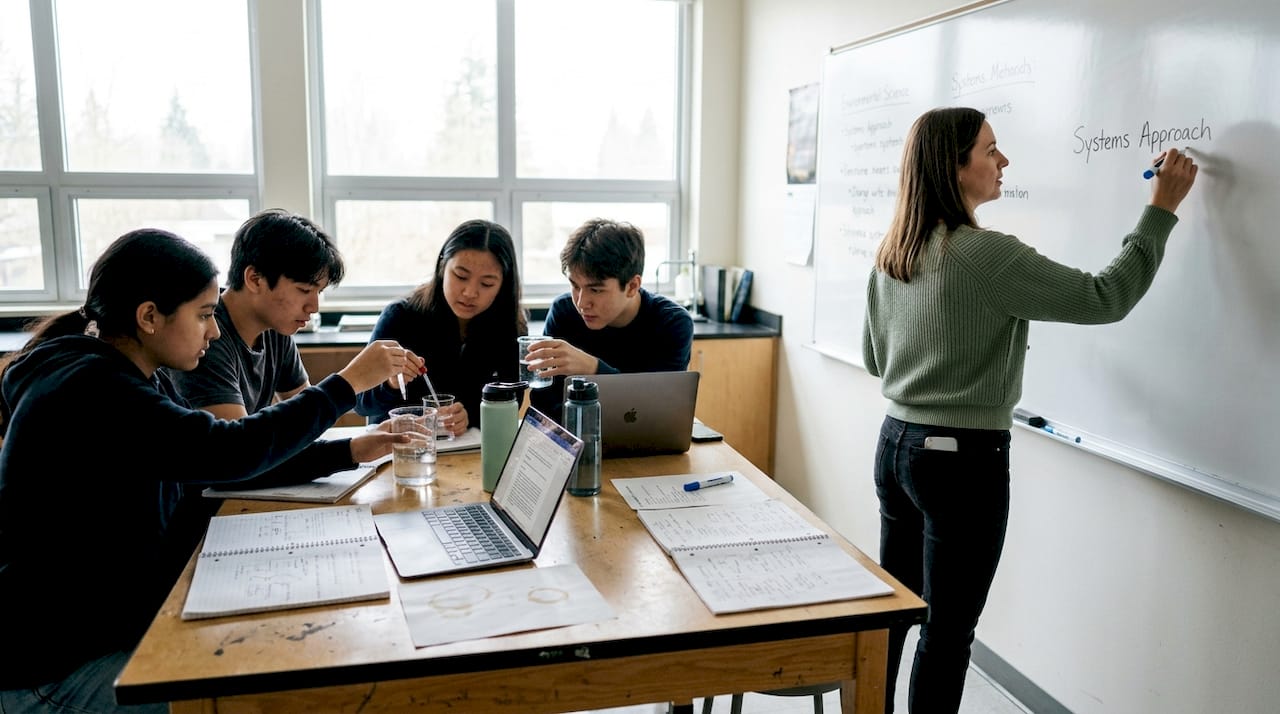
05 Apr Why study environmental systems: Benefits for IB students
TL;DR:
- IB Environmental Systems is an interdisciplinary course that combines scientific inquiry with social and ethical analysis.
- The course emphasizes hands-on learning through laboratory work, fieldwork, and systems modeling.
- Studying ESS prepares students for diverse environmental careers and fosters global citizenship skills.
IB Environmental Systems and Societies is one of the most misunderstood courses in the Diploma Programme. Many students assume it is an easy elective, a backup option for those who want to avoid “real” science. That assumption is wrong. IB ESS is an interdisciplinary course that blends scientific inquiry with social, ethical, and political thinking. It shapes how you choose your other IB subjects, how universities see your application, and how you approach global problems. If you are weighing your subject choices or wondering whether ESS is worth your time, this article will give you a clear, honest look at what it offers academically and professionally.
Table of Contents
- IB Environmental Systems: The interdisciplinary advantage
- Hands-on learning: Laboratory, fieldwork, and systems thinking
- Sustainability and global citizenship: Real-world impact
- Career pathways and employability in environmental science
- A fresh perspective: How ESS shapes IB students for real impact
- Unlock your ESS potential with expert support
- Frequently asked questions
Key Takeaways
| Point | Details |
|---|---|
| Dual subject flexibility | ESS counts as both a science and a social science for IB, letting you tailor your diploma. |
| Practical learning | Laboratory work, fieldwork, and models build real-world skills valued in environmental careers. |
| Global citizenship | ESS emphasizes ethics, sustainability, and prepares you to tackle global environmental issues. |
| Career readiness | ESS offers strong employability and practical experience for entry-level environmental jobs. |
IB Environmental Systems: The interdisciplinary advantage
One of the first things that surprises students about ESS is its dual classification. Most IB courses sit firmly in one subject group. ESS does not. It counts for both Group 3 and Group 4, meaning it can satisfy your science requirement or your individuals and societies requirement. That flexibility is genuinely rare in the IB Diploma, and it gives you more room to build a subject combination that fits your strengths and goals.
This dual status is not just a scheduling convenience. It reflects the nature of the course itself. ESS asks you to think like a scientist when analyzing data about biodiversity loss or carbon cycles, and then shift to thinking like a social scientist when evaluating policy responses or ethical trade-offs. You practice both modes of thinking regularly. That is a skill most single-discipline courses never develop.
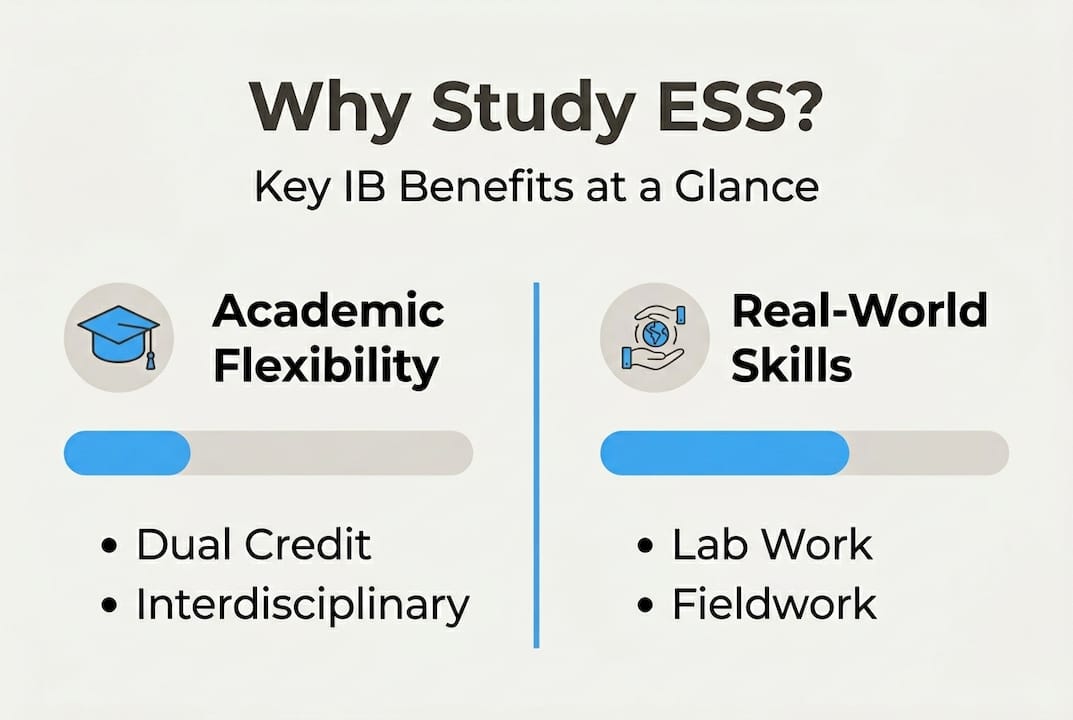
The ESS IB syllabus has also expanded with a new Higher Level option, which deepens the curriculum considerably. HL students engage with more complex systems models, additional case studies, and greater analytical demands. This makes ESS a serious academic choice, not just a comfortable one. You can explore the transdisciplinary ESS guide to understand how this works in practice.
Here is a quick comparison to put ESS in context:
| Feature | ESS | Pure science (e.g., Biology) | Pure social study (e.g., Geography) |
|---|---|---|---|
| Group flexibility | Groups 3 and 4 | Group 4 only | Group 3 only |
| Interdisciplinary focus | High | Low to medium | Medium |
| Ethical analysis | Integrated | Limited | Moderate |
| Fieldwork component | Required | Optional | Varies |
The ESS syllabus update reflects how the IB has strengthened the course to match growing global demand for environmentally literate graduates. If you want a course that challenges you across disciplines and prepares you for a complex world, ESS delivers that.
“ESS is not a compromise between science and social studies. It is a course that demands you master both.”
Hands-on learning: Laboratory, fieldwork, and systems thinking
Knowing the curriculum structure is one thing. Experiencing it is another. ESS is built around active, practical learning. The IB requires that ESS emphasizes hands-on methodologies including laboratory work, fieldwork, and applying systems models to real environmental problems. This is not optional enrichment. It is central to the course.
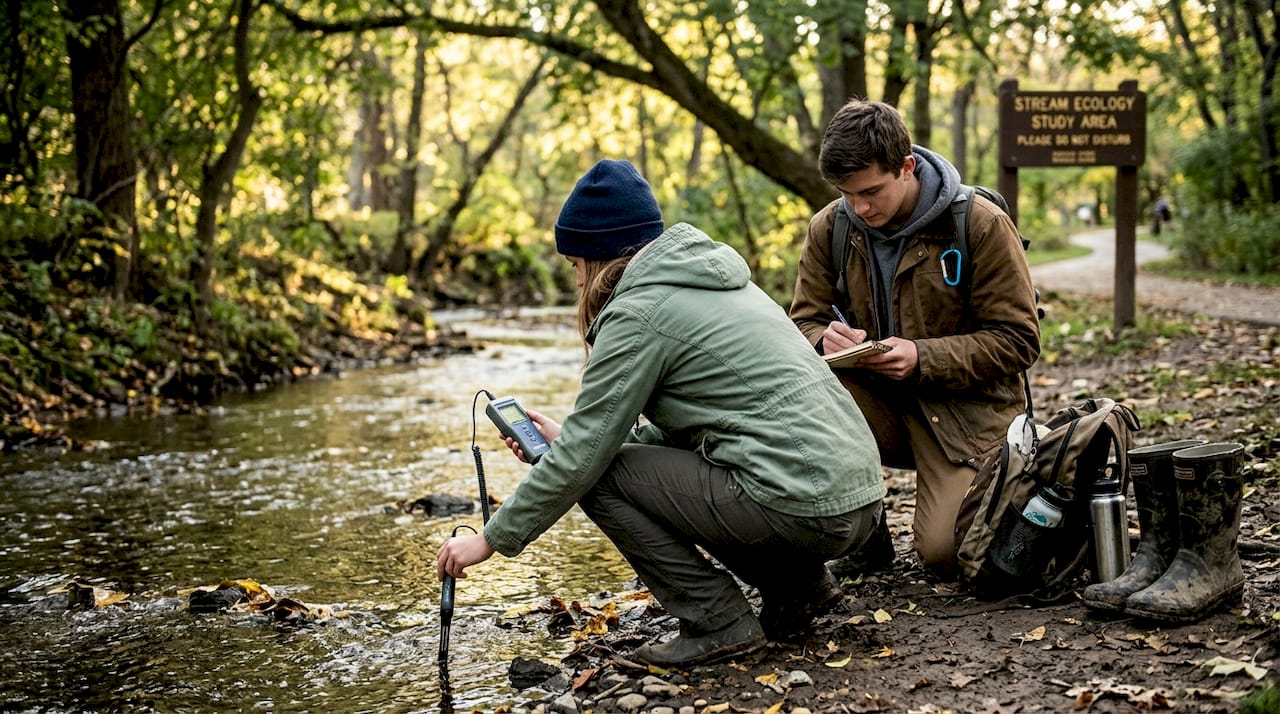
In the lab, you might measure dissolved oxygen levels in a local water source, analyze soil samples for organic content, or track population data for a species in your region. In the field, you step outside the classroom entirely. You collect primary data, observe ecosystems directly, and apply scientific methods to real environments. These experiences build skills that textbook study alone cannot.
Systems thinking is another core element. You learn to visualize how components of an ecosystem interact, using diagrams and models to map inputs, outputs, and feedback loops. This kind of thinking helps you understand why environmental problems are so difficult to solve. Everything is connected, and ESS trains you to see those connections clearly.
Here is a summary of the key practical components:
| Component | What you do | Skills developed |
|---|---|---|
| Laboratory work | Controlled experiments, data collection | Scientific method, accuracy |
| Fieldwork | On-site data gathering, ecological surveys | Observation, primary research |
| Systems modeling | Diagrams, feedback analysis | Critical thinking, visualization |
| Internal assessment | Independent investigation | Research design, analysis |
Your ESS class expectations will include all of these elements. The internal assessment in particular is a significant opportunity. It is your chance to investigate a question that genuinely interests you, using methods you have practiced throughout the course.
Pro Tip: Choose your IA topic based on a local environmental issue you can access directly. Fieldwork conducted in your own community tends to produce richer primary data and stronger scores. Check out ESS internal assessment advice for specific strategies.
Sustainability and global citizenship: Real-world impact
ESS does something that most IB courses do not do explicitly. It asks you to take a position. Not just to analyze data, but to evaluate what it means ethically, socially, and politically. The IB states that ESS fosters informed responses that integrate scientific, ethical, and socio-political aspects of environmental issues. That integration is what makes ESS feel relevant in a way that pure science courses sometimes do not.
Here are four ways ESS builds global citizenship skills:
- Ethical reasoning: You examine real dilemmas, such as whether economic development should be prioritized over ecosystem preservation, and you learn to argue both sides with evidence.
- Policy awareness: You study how international agreements, local regulations, and community responses shape environmental outcomes.
- Sustainability frameworks: Concepts like ecological footprint, carrying capacity, and biodiversity indices become tools you use to evaluate real situations.
- Cross-cultural perspective: ESS case studies come from around the world, helping you understand that environmental challenges look different depending on geography, culture, and economic context.
These skills matter beyond the IB. Employers and universities increasingly value graduates who can think across disciplines and engage with complex global issues. ESS prepares you to do exactly that.
83% of environmental science graduates report strong career outcomes within two years of completing their degree, with practical field experience cited as the most important factor.
Pro Tip: When discussing environmental issues in your essays or exams, use the IB’s own frameworks, such as the systems approach or the sustainability spectrum, to structure your arguments. This shows examiners that you are thinking like an ESS student, not just a general science student. Explore whether ESS is the right fit for you before committing to your subject choices.
The global IB school community reflects how widely the IB’s values around sustainability and global citizenship are shared across cultures and countries.
Career pathways and employability in environmental science
Let’s be direct: studying ESS opens real career doors. Environmental science fields show strong employability, with practical experience being the key factor for entry-level roles. The skills ESS builds, including fieldwork, data analysis, systems thinking, and ethical reasoning, align directly with what employers in this sector look for.
Here is how ESS compares to other science degrees in terms of career preparation:
| Factor | ESS background | Single-discipline science |
|---|---|---|
| Interdisciplinary thinking | Strong | Limited |
| Policy and ethics training | Integrated | Rarely covered |
| Fieldwork experience | Required | Varies |
| Global perspective | Built in | Depends on curriculum |
The range of careers available to ESS graduates is broader than most students expect. Consider these roles and the skills ESS directly supports:
- Environmental consultant: Uses systems thinking and policy knowledge to advise organizations on sustainability practices.
- Conservation scientist: Applies fieldwork skills and biodiversity knowledge to protect ecosystems.
- Climate policy analyst: Combines scientific data with socio-political understanding to shape environmental legislation.
- Sustainability manager: Helps businesses reduce their ecological footprint and meet regulatory requirements.
- Environmental educator: Shares knowledge with communities, schools, and organizations to promote informed environmental action.
You can learn more about the major environmental fields that ESS prepares you for, and explore the types of environmental studies to find the direction that fits your interests. The environmental science career landscape is growing, and IB ESS gives you a strong foundation to enter it with confidence.
A fresh perspective: How ESS shapes IB students for real impact
After working with IB students for over 13 years, I want to share something that does not always appear in course guides. ESS is not just a subject. It is a way of thinking. Students who approach it with genuine curiosity, who ask why ecosystems collapse or how policy actually changes behavior, leave the course with something most of their peers do not have: the ability to hold complexity without panicking.
The misconception I hear most often is that ESS is chosen by students who want an easier path. In reality, ESS challenges students with interdisciplinary demands and rewards those who are motivated by real-world issues far more than those chasing easy grades. The students who thrive are the ones who care about the problems the course addresses.
If you are wondering how ESS compares in difficulty to other IB subjects, the honest answer is that it is demanding in a different way. It asks for breadth, ethical engagement, and genuine reflection. Those are not easier skills. They are rarer ones.
Pro Tip: Approach ESS with curiosity about messy, unsolved global problems. That mindset will serve you better in this course than any memorization strategy.
Unlock your ESS potential with expert support
If you are serious about excelling in ESS, having the right support makes a measurable difference. Whether you are working on your internal assessment, preparing for exams, or trying to strengthen your understanding of systems models, targeted guidance helps you move faster and with more confidence.

I work with IB ESS students worldwide through personalized online sessions. You can connect with an ESS IA tutor for focused internal assessment support, explore curated ESS notes and textbooks to strengthen your content knowledge, or use dedicated ESS IB exam resources to sharpen your exam technique. Every session is built around your specific needs, not a generic script. If you are ready to take your ESS performance seriously, let’s work on it together.
Frequently asked questions
Is IB Environmental Systems and Societies considered a science or social study?
ESS is recognized as both, counting for Group 3 and Group 4 subjects in the IB Diploma. This dual classification is unique among IB courses and gives students rare scheduling flexibility.
What practical skills will I gain in ESS?
Students develop skills in laboratory work, fieldwork, systems modeling, and ethical analysis. The IB confirms that ESS emphasizes hands-on methodologies that prepare you for real-world environmental investigation.
How does studying ESS affect my career prospects?
A background in ESS increases employability in environmental fields and equips you for global challenges. Environmental science fields show strong employability, with practical experience being the most valued asset for entry-level roles.
Is ESS a good choice if I prefer real-world issues over pure science?
Absolutely. ESS is designed for students who want to apply knowledge to real environmental challenges. ESS rewards those motivated by global topics and interdisciplinary thinking far more than those focused purely on theoretical science.
No Comments