


22 Jul The Role of Renewable Resources in Energy and Sustainability
Renewable resources are naturally replenishing energy sources that play a central role in protecting the environment, growing economies, and improving public health. Unlike fossil fuels, which take millions of years to form, renewables like solar, wind, hydropower, geothermal, and biomass are continuously restored by natural processes. Here is a quick overview of what they contribute:
- Environmental: Emit little to no greenhouse gases, reduce air pollution, and slow climate change
- Economic: Create jobs, support local communities, and reduce dependence on imported fuels
- Social: Improve public health by cutting air pollutants, and expand energy access to underserved areas
- Energy security: Diversify supply and reduce exposure to fossil fuel price swings
Key organizations tracking these contributions include the U.S. Energy Information Administration (EIA), the United Nations (UN), the U.S. Environmental Protection Agency (EPA), and REN21. Together, their data paints a clear picture: the shift toward clean energy is already underway, and understanding why it matters is the first step to engaging with it meaningfully.
How renewable resources protect the environment
Renewable energy sources emit little to no greenhouse gases during operation, making them the most direct tool available for reducing carbon dioxide in the atmosphere. The UN confirms that switching to renewables addresses both climate change and air pollution simultaneously, with pollution reduction and health benefits potentially saving the world up to $4.2 trillion per year by 2030. That figure alone signals how much of the climate problem is also a public health and economic problem.
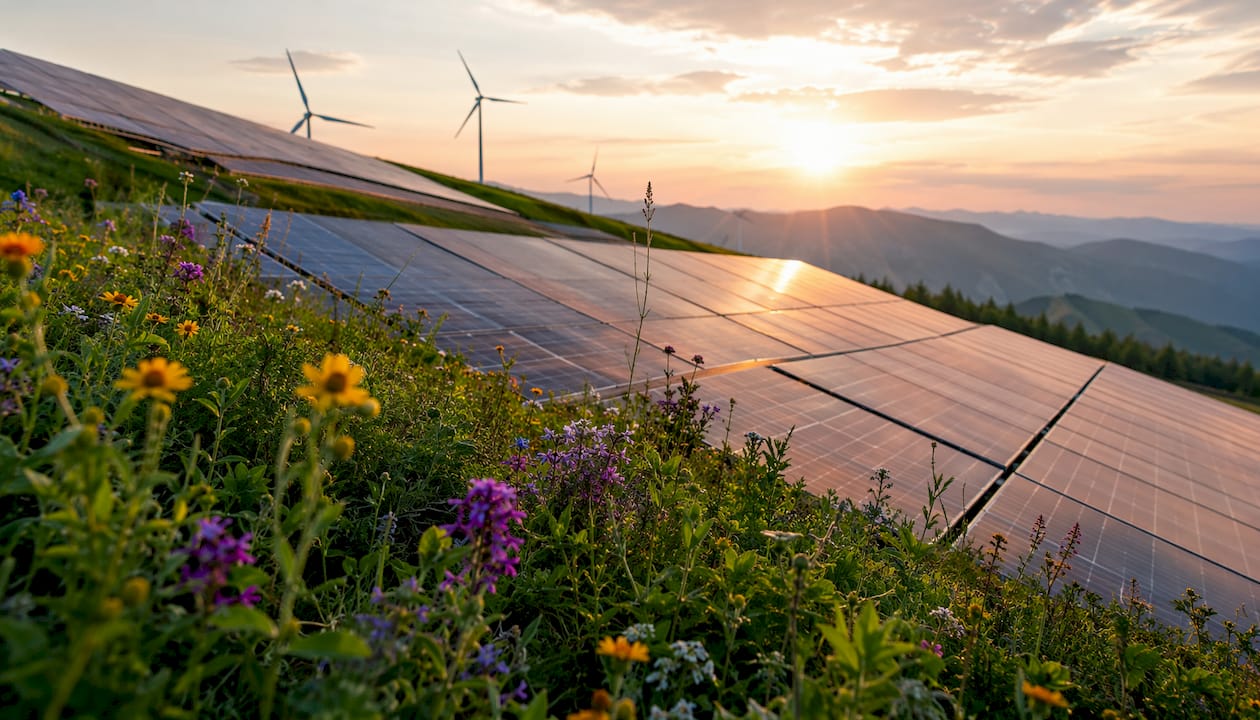
Air quality improves noticeably when communities shift away from coal and gas. Burning fossil fuels releases fine particulate matter and nitrogen dioxide, both of which cause respiratory and cardiovascular disease. Clean energy sources like wind and solar produce none of these pollutants during generation.
A peer-reviewed review confirms that renewable technologies mitigate global warming by directly substituting fossil fuels, reducing the greenhouse gas load on the atmosphere over time. The environmental case for renewables is not theoretical.
Key environmental benefits include:
- No direct greenhouse gas emissions during electricity generation
- Reduced fine particulate matter and nitrogen dioxide in local air
- Lower carbon dioxide output, slowing global temperature rise
- Decreased water pollution from coal mining and oil extraction
- Protection of ecosystems from fossil fuel infrastructure damage
Statistic callout: The UN estimates that air pollution damage from fossil fuels costs $8.1 trillion per year globally, equivalent to 6.1% of global GDP.
Understanding these environmental benefits of clean energy is foundational for anyone studying sustainability or environmental systems.
What economic roles does renewable energy play in the U.S.?
Renewable energy is a genuine economic driver, not just an environmental policy. The EPA highlights that local governments gain direct economic benefits from renewable projects, including job creation in manufacturing, installation, and maintenance. These are often stable, place-based jobs that cannot be outsourced.
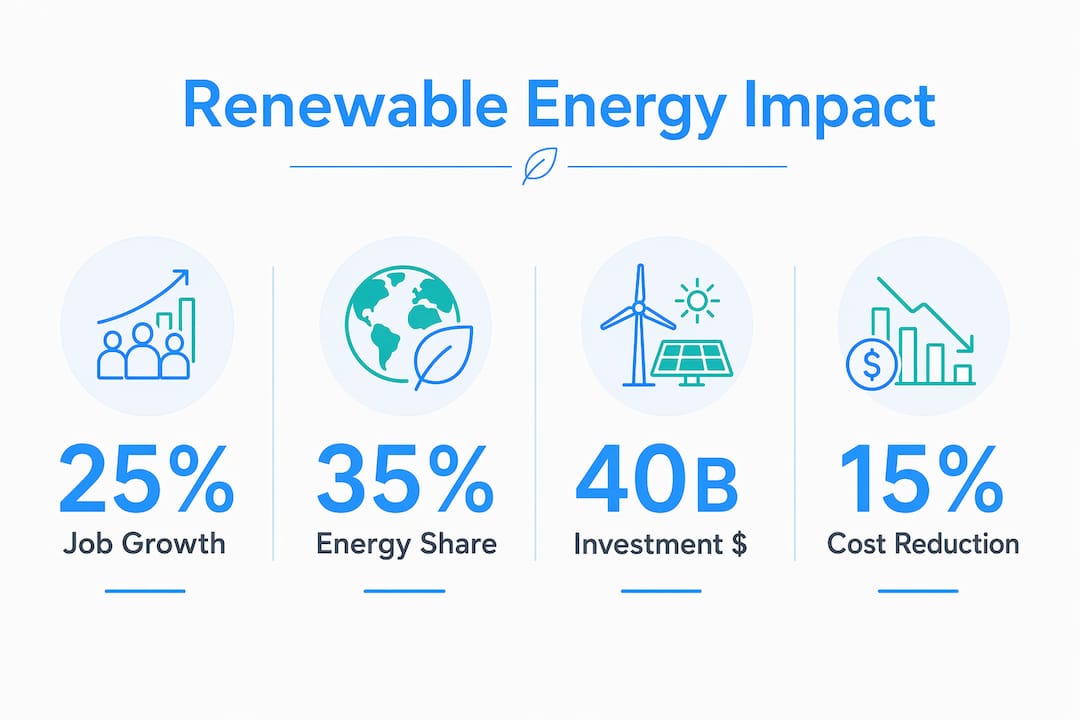
The UN reports that 16.2 million people were employed in the renewable energy sector globally in 2023, up from 13.7 million in 2022. For every dollar invested, renewable energy creates three times as many jobs as the fossil fuel industry. The International Energy Agency (IEA) projects a net gain of 9 million energy sector jobs by 2030 as the transition accelerates.
Renewables also reduce the economic risk of fossil fuel price volatility. When a country or community generates its own solar or wind power, it is no longer exposed to sudden spikes in oil or gas prices. REN21 frames this as foundational to economic stability, not just an environmental bonus.
Statistic callout: In 2024, $2 trillion went into clean energy globally, $800 billion more than fossil fuels and up nearly 70% over ten years.
Key economic roles of renewable energy in the U.S.:
- Job creation in solar installation, wind turbine manufacturing, and grid maintenance
- Local tax revenue from renewable energy projects on public or private land
- Reduced spending on imported fossil fuels, keeping money in local economies
- Lower long-term energy costs as technology prices continue to fall
- Contribution to GDP growth: clean energy sectors drove 10% of global GDP growth in 2023
How renewables strengthen U.S. energy security
Energy security means having reliable, affordable energy that is not vulnerable to foreign supply disruptions. Renewable energy directly addresses this by generating power from domestic sources, whether sunlight in Arizona, wind in Texas, or hydropower in the Pacific Northwest.
The EIA projects that U.S. renewable energy consumption will continue to grow through 2050, based on its Annual Energy Outlook 2023 Reference case. That trajectory reflects both policy support and falling technology costs. Reducing reliance on imported fuels is one of the clearest benefits of this shift.
Decentralized generation adds another layer of resilience. When power comes from many distributed sources rather than a few large plants, the grid is harder to disrupt. A storm that knocks out one wind farm does not darken an entire region the way a single large coal plant failure might.
How renewables contribute to energy security and diversification:
- Domestic generation reduces exposure to global oil and gas price shocks
- Distributed solar and wind installations reduce single-point failure risk
- Diversified energy mix means no single fuel source dominates supply
- Local microgrids powered by renewables can operate independently during outages
- Reduced fossil fuel imports improve the national trade balance
Pro Tip: If you are studying energy security for IB ESS, focus on the concept of “energy mix” and how diversification reduces systemic risk. Real-world examples from Texas wind or California solar make strong case study material.
Social and health impacts of adopting renewable energy
The health benefits of clean energy are direct and measurable. When communities replace coal plants with solar or wind, local air quality improves quickly. Fewer hospitalizations for asthma, bronchitis, and heart disease follow. These are not distant future benefits; they show up within years of a transition.
Economic inclusion is another dimension worth noting. Renewable energy projects, especially community solar programs, can extend affordable electricity access to low-income households that previously faced high utility bills. The EPA notes that local planning, stakeholder involvement, and project governance determine who actually captures these benefits. Without intentional design, the gains can bypass the communities that need them most.
Community participation in renewable projects also builds local ownership and trust. When residents have a say in where wind turbines are sited or how solar revenues are shared, projects tend to run more smoothly and deliver broader social value. You can explore how sustainable resource management connects to these community-level outcomes in more depth.
Social and health benefits of renewable energy adoption:
- Reduced respiratory illness from lower particulate matter and nitrogen dioxide
- Decreased cardiovascular disease rates in communities near former coal plants
- Expanded energy access for low-income and rural households
- Local job opportunities in installation and operations for community members
- Greater community agency through participatory governance of energy projects
Global and U.S. leadership in renewable energy adoption
The scale of renewable energy growth over the past decade is striking. Between 2015 and 2024, annual global electricity capacity from renewables increased by around 2,600 GW, a 140% increase. Fossil fuel capacity grew by only 640 GW in the same period. Wind and solar are now the fastest-growing energy sources on the planet.
In the U.S., renewable sources supplied about 21% of utility-scale electricity generation in 2023, producing 894 billion kWh. Wind led with 425 billion kWh (10.2% of total generation), followed by hydropower at 240 billion kWh (5.7%), and solar at 165 billion kWh (3.9%). These numbers reflect a grid that is genuinely changing, not just incrementally adjusting.
Statistic callout: Renewable energy provided about 9% of total U.S. energy consumption in 2023, or 8.2 quadrillion Btu. Within the electricity sector specifically, that share rises to 21%.
Leadership in renewable deployment shows up in investment, too. The International Renewable Energy Agency (IRENA) estimates that 90% of the world’s electricity can and should come from renewables by 2050. The U.S. is positioned to be a major contributor to that goal, given its resource diversity and existing infrastructure.
Key markers of global and U.S. leadership:
- U.S. wind generation reached 425 billion kWh in 2023, the largest renewable source by output
- Over 90% of new renewable projects globally are now cheaper than fossil fuel alternatives
- Solar costs have fallen 41% below fossil fuel equivalents; offshore wind is 53% cheaper
- The UN reports clean energy sector jobs now outnumber fossil fuel jobs worldwide
- Projects like SolarX Energy demonstrate how local deployment translates global targets into real infrastructure
How understanding renewables supports IB ESS education
If you are studying IB Environmental Systems and Societies, renewable energy is not just background knowledge. It sits at the heart of several core topics, including energy resources, climate change, human systems and resource use, and sustainability. Understanding the role of clean energy sources helps you connect abstract concepts to real-world systems.
For your internal assessment, renewable energy case studies offer rich data and clear cause-and-effect relationships. A local solar installation, a community wind project, or a comparison of energy mixes across countries can all serve as strong IA topics. The IB ESS internal assessment requires you to apply systems thinking, and renewable energy systems are excellent models for that.
Exam questions on Paper 2 often ask students to evaluate the sustainability of energy strategies or compare the ecological footprints of different energy sources. Knowing the specific data, like the UN’s $4.2 trillion savings figure or the EIA’s 21% electricity share for U.S. renewables, gives your answers the specificity that earns top marks.
Learning benefits and academic applications for IB ESS students:
- Renewable energy case studies support systems diagrams and feedback loop analysis
- Energy resource comparisons build skills in evaluating sustainability trade-offs
- Data from EIA, EPA, and UN provide credible sources for IA bibliographies
- Policy analysis of incentives like the Investment Tax Credit develops evaluative thinking
- Understanding what sustainability means in practice grounds theoretical ESS concepts

Esstutor specializes in helping IB ESS students build exactly this kind of applied understanding. Whether you are working on your internal assessment, preparing for Paper 2, or just trying to make sense of a complex topic like energy systems, personalized tutoring makes a real difference. Book a trial lesson and see how targeted support can sharpen your thinking and your scores.
Policy frameworks and government incentives supporting renewable energy
Government policy has been one of the biggest drivers of renewable energy growth in the U.S. The federal Investment Tax Credit (ITC) for solar and the Production Tax Credit (PTC) for wind have made projects financially viable that would otherwise struggle to compete with subsidized fossil fuels. The Inflation Reduction Act of 2022 extended and expanded these credits, committing hundreds of billions of dollars to clean energy deployment over the next decade.
State-level Renewable Portfolio Standards (RPS) require utilities to source a defined percentage of their electricity from renewables. California, for example, targets 100% clean electricity by 2045. These mandates create predictable demand, which encourages investment in new capacity.
At the local level, the EPA supports municipalities in navigating permitting, financing, and stakeholder engagement for renewable projects. Local governments that generate energy on-site or purchase green power through Renewable Energy Certificates (RECs) reduce their carbon footprint while locking in long-term energy cost stability. Policy frameworks at every level of government work together to make the transition faster and more equitable.
What challenges come with deploying renewable resources?
Renewable energy is not without real limitations. The most discussed is variability: solar panels produce nothing at night, and wind turbines stop when the air is calm. Grid operators must balance supply and demand in real time, which becomes harder when a large share of generation is weather-dependent.
Cost is another barrier, particularly for developing nations or rural communities with limited access to financing. The upfront investment in solar panels, wind turbines, or grid upgrades can be steep, even as long-term operating costs are low. The UN estimates that about $4.5 trillion per year needs to be invested in renewable energy until 2030 to reach net-zero by 2050, a scale that requires coordinated public and private funding.
Land use and siting conflicts also arise. Large solar farms and wind installations require significant land area, and communities sometimes resist projects near their homes. Transmission infrastructure is another gap: the best wind resources in the Great Plains are far from the population centers that need the power, and building new long-distance transmission lines is slow and politically difficult.
Key challenges in renewable deployment:
- Variability of solar and wind requires storage or backup generation
- High upfront capital costs, especially in lower-income regions
- Land use conflicts and community opposition to large installations
- Transmission infrastructure gaps between resource-rich and demand-heavy areas
- Supply chain constraints for materials like lithium, cobalt, and rare earth elements
How renewable resources integrate into existing energy grids
Integrating renewables into a grid built for steady, controllable fossil fuel plants requires real technical and operational changes. The core challenge is matching supply with demand when generation fluctuates. Battery storage systems, like utility-scale lithium-ion installations, are the most direct solution, storing excess solar or wind energy and releasing it when generation drops.
Demand response programs offer another approach. Utilities can incentivize large industrial users to shift their consumption to times when renewable generation is high, effectively using demand as a flexible tool. Smart grid technologies, including advanced metering infrastructure and automated switching, give operators the real-time visibility needed to manage a more complex system.
Distributed generation, where homes and businesses generate their own solar power and feed excess back to the grid, changes the traditional one-way flow of electricity. Net metering policies determine how this works financially, and their design significantly affects how many households participate. Understanding how waste and resource management connects to grid-level resource flows is a useful frame for IB ESS students thinking about systems at scale.
Grid integration strategies currently in use:
- Utility-scale battery storage to buffer variable solar and wind output
- Pumped hydro storage, the largest existing form of grid-scale energy storage
- Demand response programs that shift industrial load to match renewable peaks
- Smart grid sensors and automation for real-time supply-demand balancing
- Long-distance high-voltage transmission lines connecting resource-rich regions to demand centers
Key Takeaways
Renewable resources serve environmental, economic, and social roles simultaneously, making them central to any credible sustainability strategy in the United States.
| Point | Details |
|---|---|
| U.S. electricity share | Renewables supplied about 21% of U.S. utility-scale electricity generation in 2023, producing 894 billion kWh. |
| U.S. total energy consumption share | Renewables provided about 9% of total U.S. energy consumption in 2023, or 8.2 quadrillion Btu. |
| Pollution cost savings | Switching to clean energy could save up to $4.2 trillion per year globally by 2030 through reduced pollution and health costs. |
| Job creation | For every dollar invested, renewable energy creates three times as many jobs as the fossil fuel industry. |
| Energy security | EIA projects U.S. renewable consumption will keep growing through 2050, reducing reliance on imported fossil fuels. |
| Grid integration | Battery storage, demand response, and smart grid technology are the primary tools for managing variable renewable output. |
No Comments